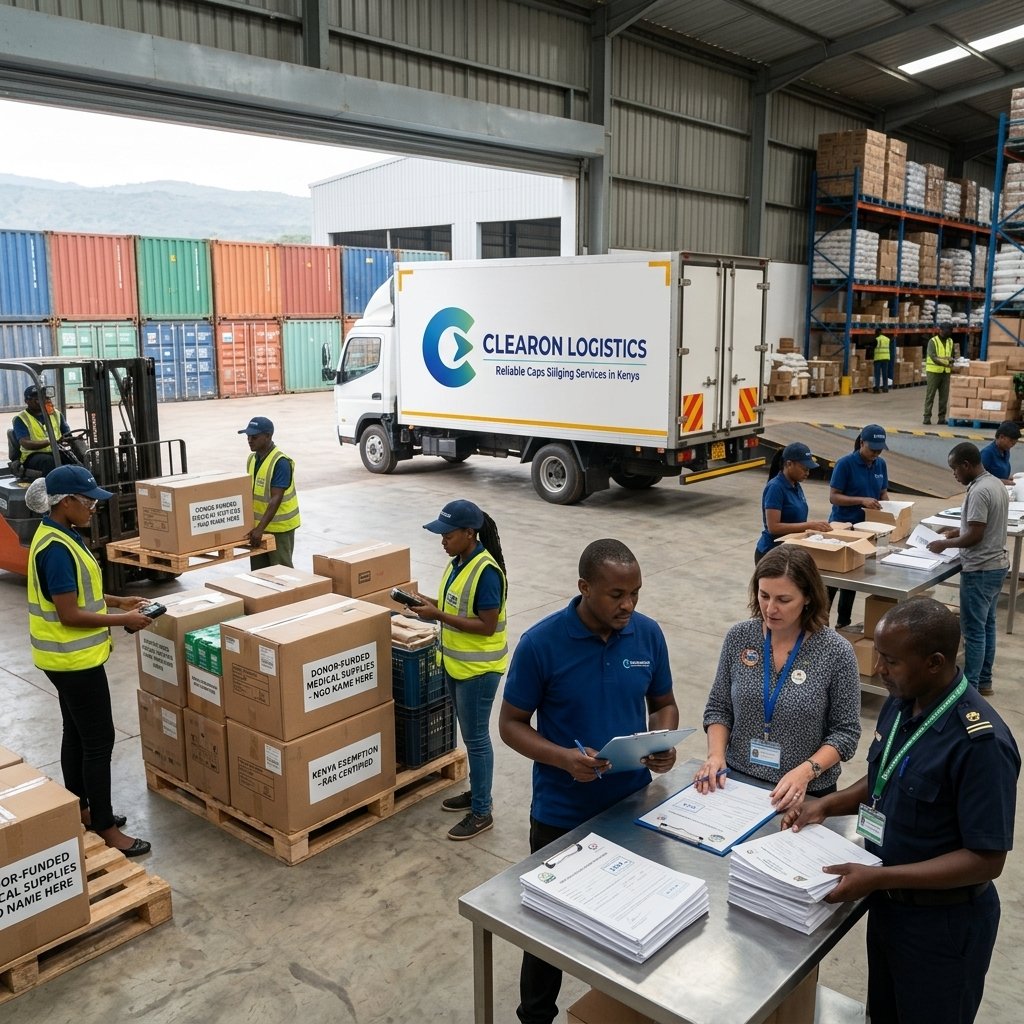
A clearing agent for NGOs and institutions works in a space where exemptions exist but must be claimed correctly and early. Donor-funded programmes, accredited organisations, schools and hospitals often import vehicles, equipment, books and supplies, and the difference between paying duty and not paying it can be a large share of a grant. But exemption frameworks are strict, and misuse has consequences.
Table of Contents
Different Institutions, Different Routes
Accredited international organisations and certain NGOs operating under agreements with Kenya fall under the exemptions regime described in our diplomatic and NGO exemptions guide. Schools and learning institutions may benefit from VAT treatment on educational materials, as in our books and educational materials guide. Hospitals and clinics import medical equipment through the regulators in our medical equipment guide. Establish which route applies before you order.
Exemptions Need Approval Before the Goods Ship
Relief under the privileged persons and institutions framework depends on approvals from the relevant ministry and supporting documents, and these take weeks. Starting after the cargo lands means storage charges while paperwork catches up. Build the lead time into your project timeline and budget.
Documentation Differs From Commercial Imports
You’ll typically need accreditation or agreement evidence, exemption approval, a KRA PIN, invoices and the usual transport documents. Some privileged imports are exempt from requirements that commercial importers face, such as the Certificate of Origin, but this should be confirmed per case, since exemptions don’t always cover everything. Our Certificate of Conformity guide explains where product standards may still apply.
Vehicles and Resale Restrictions
Duty-free vehicles carry conditions. Selling or transferring an exempt vehicle can trigger duty even after years, so plan the disposal rules before importing. Never assume time alone releases the obligation; see our exemptions guide for how this works.
Donations, Used Goods and Compliance Risk
Donated and used goods still need to meet product rules where they apply: medical equipment may need regulator approval, electronics may need compliance with proposed age limits, and food needs certification. Don’t let a donor ship before checking; the cost of returning or destroying goods can exceed their value. See our used electronics guide.
Audit-Ready Records
Exempt imports are scrutinised for proper use. Keep exemption approvals, delivery proof, asset registers and disposal records. KRA can review imports for up to five years; see our post-clearance audit guide.
Working With Clearon Logistics for NGOs and Institutions
We help organisations identify the right exemption route, prepare the documentation early, plan clearance around programme timelines, and keep records that stand up to scrutiny.
Importing equipment or supplies for an NGO, school or institution? Talk to Clearon Logistics before your order ships, and we’ll confirm the exemption route and timeline.
Frequently Asked Questions
Are NGO imports automatically duty-free? No. Relief depends on accreditation or agreements and on approvals obtained before import, with conditions on use.
Can an exempt vehicle be sold later? Selling or transferring one can trigger duty, even after years. Plan disposal rules before importing.
Do schools get tax relief on imported books? Educational materials such as textbooks are VAT-exempt, but standard documentation still applies.
Can donors ship used equipment freely? No. Used and donated goods still need to meet applicable regulator and certification requirements.
Further Reading
- Kenya Revenue Authority (external, dofollow)
- Ministry of Foreign and Diaspora Affairs (external, dofollow)
- Related on our blog: Diplomatic and NGO Duty Exemptions Kenya
- Related on our blog: Importing Books into Kenya: VAT Exemption
- Related on our blog: Clearing Agent for Medical and Laboratory Equipment
- Our service: Clearing and Forwarding Services in Kenya

Leave a Reply