
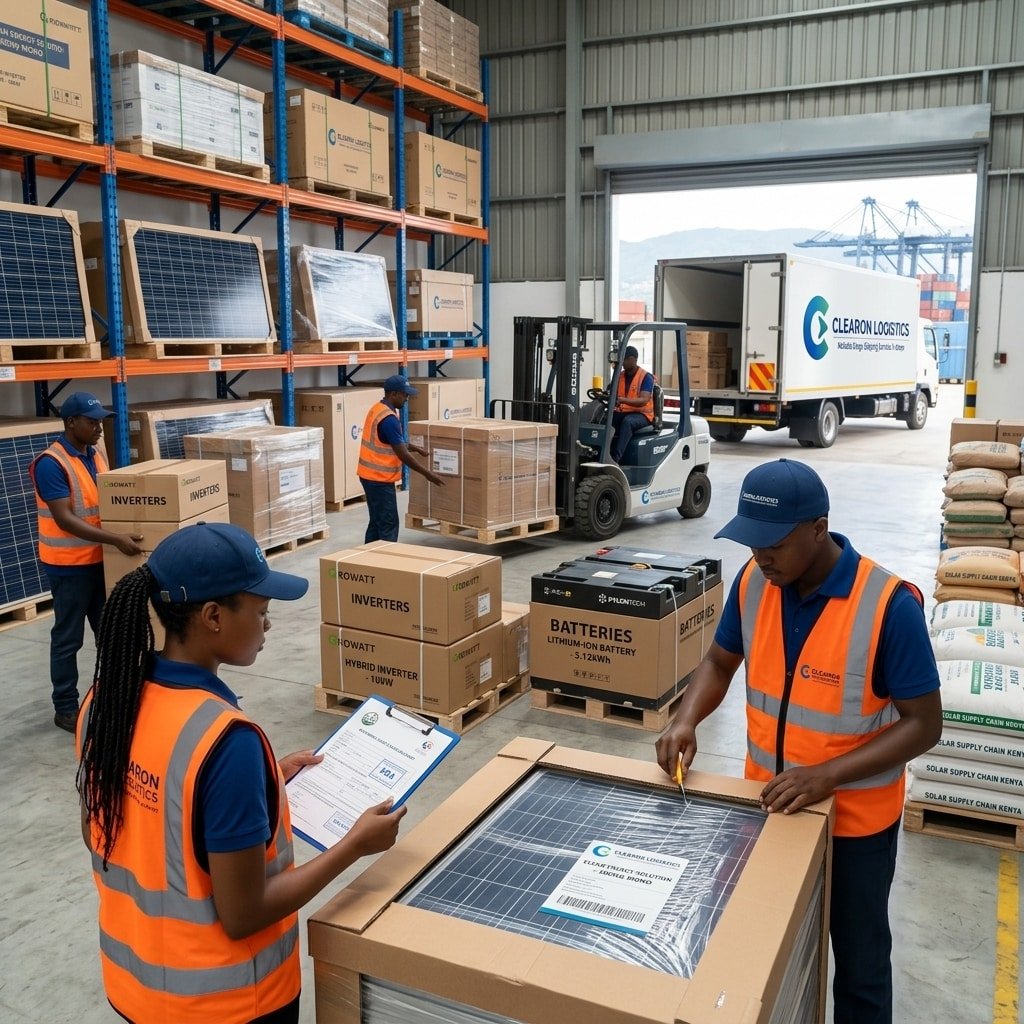
A clearing agent for solar and energy equipment has to coordinate more regulators than almost any other cargo type: customs, KEBS, EPRA, and environmental rules for batteries. Commercial solar installers, distributors and EPC contractors also work to project deadlines where a delayed shipment stalls a whole installation crew. Here’s what to confirm before your next shipment.
Table of Contents
Solar Is a Multi-Regulator Import
A solar consignment can involve KRA for duty and levies, KEBS for conformity, EPRA for vendor licensing, and NEMA-linked EPR rules for batteries. Missing any one can hold an otherwise compliant shipment. A specialist agent maps these requirements for your specific bill of materials before you order, rather than reacting once containers land.
What Currently Clears Duty-Free, and What to Watch
Under current treatment, solar panels and solar lithium batteries clear duty-free and VAT-exempt, and our own recent clearance of a solar lithium battery consignment from China through Mombasa carried only the Import Declaration Fee, the Railway Development Levy and the applicable MSS levy. That is genuinely favourable, and our solar equipment guide explains it in full. Two cautions: this category has changed direction before, so confirm treatment close to your ship date, and inverters, charge controllers, mounting structures and cabling have historically classified differently from panels.
Licences and Certificates Before Stock Lands
Commercial importers of solar PV products need an EPRA Solar PV vendor licence, and shipments generally need KEBS conformity documentation arranged at origin. Batteries also fall under Kenya’s Extended Producer Responsibility rules. Sort these before the vessel sails; applying after arrival is how projects slip.
Mixed Shipments: Declare Component by Component
A complete system contains items with different tariff treatment. Shipping them under one blended description invites reassessment of the whole consignment. Ask your supplier for itemised invoices and packing lists per component, and have your agent agree the HS split in advance. This is the single most common avoidable error on solar imports.
Batteries Need Their Own Plan
Lithium batteries are dangerous goods in sea and air transport and need correct packing, labelling and carrier acceptance. Lead-acid batteries carry heavy environmental accountability, as our guide to lead-acid battery imports explains. Decide early how end-of-life collection will be handled, since EPR places responsibility on importers.
Timing Cargo to Project Schedules
EPC contractors often work to financing and commissioning milestones. Staged shipments, early document checks and realistic port timelines protect those dates. Peak-season congestion can add weeks, so build buffer into your schedule and review the 2026 compliance changes that now apply to every consignment.
Working With Clearon Logistics on Energy Equipment
We’ve cleared solar battery cargo ourselves, so we speak from direct experience of how this category is treated at the port. We confirm classification by component, licences and certificates before shipping, and give you a transparent, itemised cost picture.
Importing solar panels, inverters, batteries or other energy equipment? Talk to Clearon Logistics before you order, and we’ll confirm exactly what applies to your bill of materials.
Frequently Asked Questions
Are solar panels and batteries duty-free in Kenya? Currently panels and solar lithium batteries clear duty-free and VAT-exempt, with statutory levies still applying. This category has shifted before, so confirm close to your shipment date.
Do I need a licence to import solar equipment commercially? Yes, an EPRA Solar PV vendor licence is required for commercial importers, alongside KEBS conformity documentation.
Why shouldn’t I declare a complete solar system under one description? Components can classify differently, and a blended description risks reassessment of the entire shipment.
Further Reading
- Energy and Petroleum Regulatory Authority (EPRA) (external, dofollow)
- Kenya Renewable Energy Association (external, dofollow)
- Related on our blog: Solar Equipment Import Kenya: Duty-Free Clearance in 2026
- Related on our blog: EPR Import Certificate Kenya
- Related on our blog: Importing Lead-Acid Batteries into Kenya
- Our service: Clearing and Forwarding Services in Kenya




Leave a Reply