
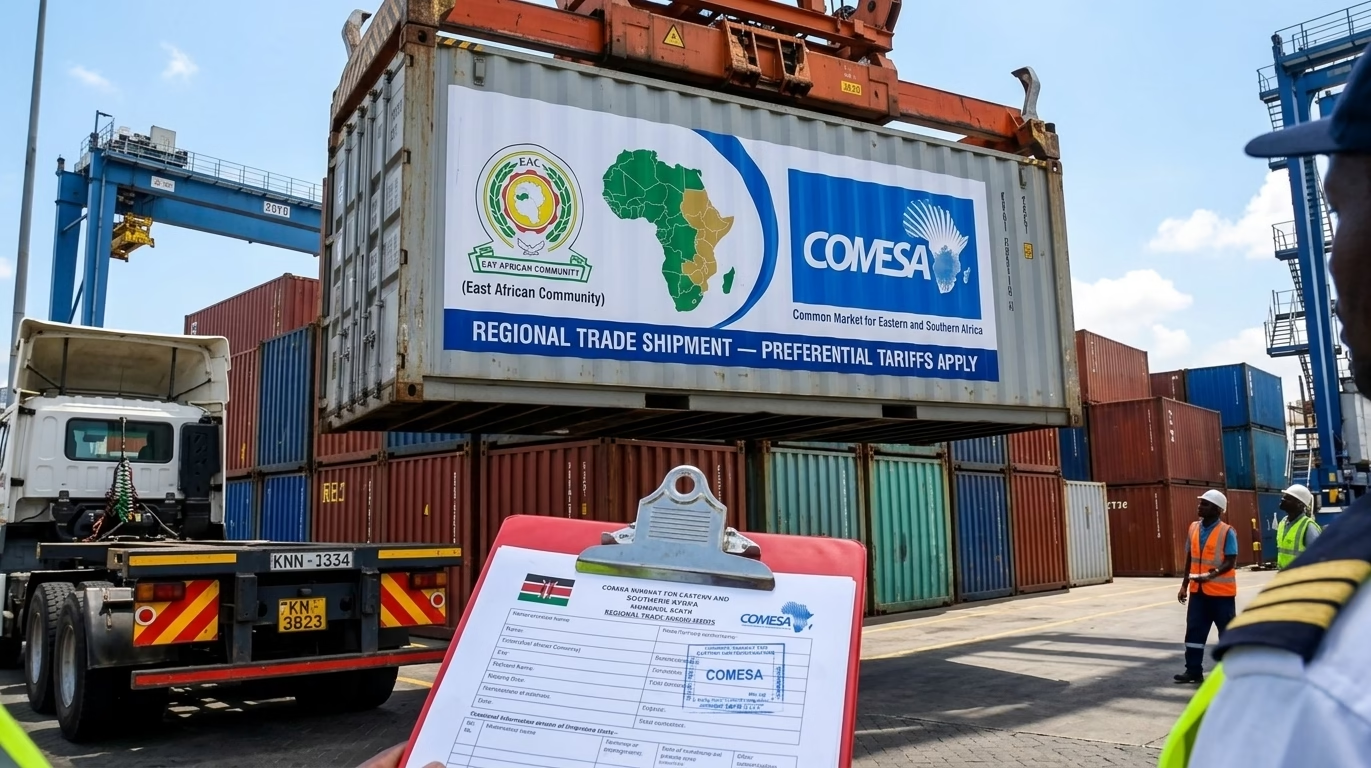
COMESA and EAC preferential tariffs are one of the most underused ways Kenyan importers can legally reduce their landed costs — and most first-time importers have never heard of them. If you’re sourcing from a country within one of these trade blocs and paying full standard duty anyway, you may be leaving real money on the table with every shipment.
Table of Contents
How Kenya’s Standard Duty Works First
Kenya applies the EAC Common External Tariff (CET) on goods imported from outside the bloc, structured in three bands: 0% for raw materials and capital goods, 10% for intermediate goods, and 25% for finished goods — on top of VAT, excise where applicable, and processing levies. This is the baseline every importer pays unless a preferential agreement applies instead. If you’ve been budgeting duty using the standard CET bands without checking whether your goods qualify for a reduced rate, this is exactly the kind of cost review worth doing before your next order — something we walk through with clients as part of the transparent cost breakdown we provide at every stage of a shipment.
What COMESA Preferential Tariffs Offer
Kenya is a member of the Common Market for Eastern and Southern Africa (COMESA), a 21-member trade bloc. Goods genuinely produced within COMESA member states can qualify for reduced or eliminated import duty when brought into Kenya, provided they meet COMESA’s Rules of Origin. The specific discount varies by country and product — for goods from Ethiopia, for example, Kenya applies a generalised duty reduction, though the exact rate depends on the product category and applicable legal notice.
What EAC Preferential Tariffs Offer
Goods originating from fellow East African Community partner states — Uganda, Tanzania, Rwanda, Burundi, and South Sudan — generally move within the bloc under preferential, often duty-free, treatment, provided they meet the EAC’s own Rules of Origin. This is separate from, and generally more favourable than, the COMESA arrangement, since EAC states form a full customs union rather than just a free trade area.
The Certificate That Unlocks It
None of this happens automatically. To claim either preference, you need a valid Certificate of Origin — a COMESA Certificate or an EAC Certificate, depending on the trade route — issued by the exporting country’s recognised authority, and in Kenya’s case, verified and issued through KRA’s Rules of Origin section. Without it, customs simply applies the standard EAC Common External Tariff rate, preference or no preference.
This is a related but distinct requirement from the Certificate of Origin, now mandatory for every import into Kenya regardless of tariff preference — worth understanding as a separate, additional layer if you’re specifically trying to claim a reduced rate rather than just meeting the baseline entry requirement.
4 Ways Importers Can Actually Benefit
- Check your supplier’s country against COMESA and EAC membership before you assume standard duty applies. A surprising number of importers never ask this question and simply budget for full CET rates by default.
- Confirm the goods genuinely meet Rules of Origin — this isn’t just about where the goods shipped from, but where they were substantially produced or transformed. A product merely repackaged or lightly processed in a member state may not qualify.
- Build certificate lead time into your supplier relationship. Ask your supplier directly whether they can provide a compliant Certificate of Origin, and confirm this before finalising your purchase order, not after goods have shipped.
- Get a duty comparison before you commit to a purchase. Knowing the actual cost difference between standard CET and a preferential rate can change which supplier or country makes the most financial sense for a given order.
Where This Fits Into Your Bigger Sourcing Decisions
Preferential tariffs are one input into a much larger sourcing decision — alongside freight cost, lead time, and product quality. But for importers regularly sourcing from within COMESA or the EAC, the duty savings can be significant enough to shift where it makes sense to buy from at all.
At Clearon Logistics, this is exactly the kind of advice we give clients before they commit to an order — not just clearing the cargo once it arrives, but helping you understand upfront whether a preferential route could genuinely lower your landed cost, and what it would take to qualify.
Sourcing from within the EAC or COMESA region? Talk to Clearon Logistics about whether your next shipment qualifies for a reduced duty rate.
Further Reading
- KRA — Preferential Tariff Treatment Guide (external, dofollow)
- East African Community — official trade portal (external, dofollow)
- Related on our blog: What Is a Certificate of Origin and Why Does It Matter in Kenya Import Clearance?
- Related on our blog: HS Codes Explained: Why They Matter for Imports and Exports
- Our service: Clearing and Forwarding Services in Kenya
Frequently Asked Questions
Do I automatically get a lower duty rate if my supplier is in a COMESA or EAC country? No — you need a valid Certificate of Origin confirming the goods meet the bloc’s Rules of Origin. Without it, standard EAC Common External Tariff rates apply regardless of where the goods shipped from.
Is the EAC preference better than the COMESA preference? Generally, yes, for goods from full EAC partner states, since the EAC operates as a customs union with typically more favourable treatment than the broader COMESA free trade area — but this depends on the specific product and route.
Who issues a COMESA or EAC Certificate of Origin? For Kenyan exporters shipping to fellow member states, KRA’s Rules of Origin section issues these certificates. For imports into Kenya, the certificate needs to come from the recognised authority in the country of origin.
Does claiming a preferential tariff replace the general Certificate of Origin requirement for all Kenyan imports? No — the general COO requirement applies to every import regardless of preference. A COMESA or EAC certificate is an additional document specifically needed to claim the reduced rate.







Leave a Reply