
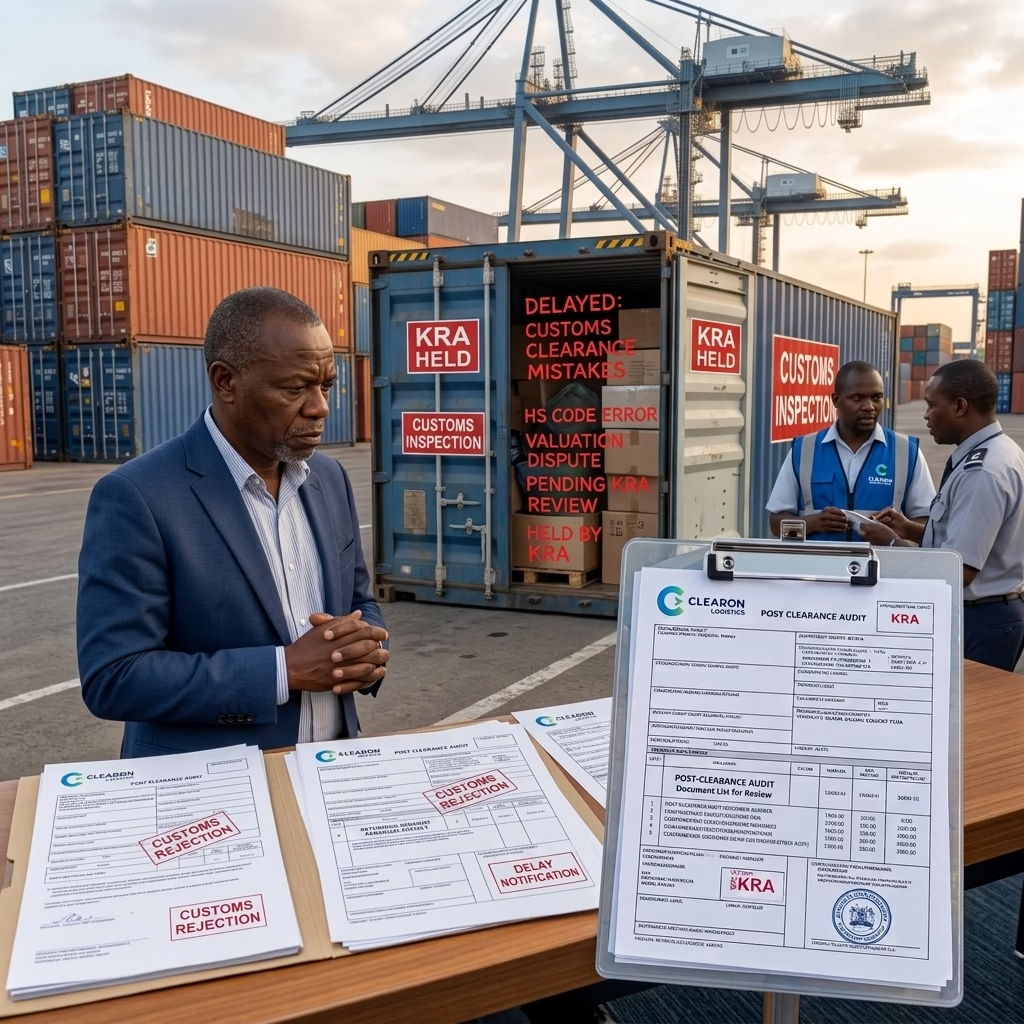
Customs clearance mistakes in Kenya rarely come from dishonesty — they come from not knowing what wasn’t checked until it’s too late. After handling shipments across nearly every category of goods and every entry point into the country, the same handful of errors show up again and again, and they’re almost always avoidable with the right advice at the right time — ideally before cargo ever leaves origin.
Table of Contents
1. Guessing the HS Code Instead of Confirming It
The HS code determines your duty rate, whether permits apply, and how customs treats your goods on arrival — yet many importers accept whatever code their supplier assigns, without verifying it against Kenya’s own tariff schedule. A misclassified shipment can mean paying the wrong duty entirely, or triggering a permit requirement nobody planned for.
2. Shipping Before Checking Permits or Restrictions
Some goods are simply not allowed into Kenya. Others need a specific regulatory permit before they can clear at all. The mistake isn’t usually ignorance of the law — it’s assuming a product is “probably fine” without checking the specific list of prohibited and restricted goods that applies to that category. By the time this gets discovered, the goods are often already at sea.
3. Forgetting the Certificate of Origin
Since full enforcement began in October 2025, every single shipment into Kenya requires a Certificate of Origin — not just shipments claiming a preferential tariff. Importers who haven’t updated their supplier instructions since this changed are still discovering the requirement the hard way, at the point of clearance rather than before shipping.
4. Not Nominating a CFS
As of December 2025, cargo left un-nominated for a Container Freight Station is automatically allocated by the CFSA rather than chosen by the importer. Importers who assume they can still clear at the port directly, or who forget to confirm the nomination clause on their Bill of Lading, lose control over where and how their cargo is handled.
5. Ignoring Peak Season Timing
Shipping into November or December without accounting for Mombasa Port’s predictable peak-season congestion is one of the most avoidable mistakes on this list, precisely because the pattern repeats every single year. Importers who ship the same way in September as they do in November often find one shipment sails through and the other sits at anchor for weeks.
6. Underestimating Landed Cost
Duty is only one line in your actual landed cost. VAT, IDF, RDL, excise where applicable, storage, demurrage if delayed, and clearance fees all add up — and importers who budget only for the purchase price and freight are routinely surprised by the final number. A proper cost breakdown, done before you commit to an order, avoids this entirely.
7. Treating Clearance as a One-Time Transaction
The importers who run into the most trouble treat customs clearance as something that happens once, at the port, rather than a process that starts with the purchase decision and continues through delivery. Choosing a freight forwarder and a clearing agent who work together — or one provider who does both — closes the gaps that open up when responsibility is split across parties who aren’t actually talking to each other.
8. Assuming Your File Is Closed After Clearance
Even after your cargo clears and leaves the port, your documentation isn’t done. KRA can open a post-clearance audit on any import up to five years later, and importers who didn’t retain organised records find themselves scrambling to substantiate a declaration they can barely remember making. Treating documentation as an ongoing discipline, not a filing exercise, is what protects you here.
The Common Thread
Almost every mistake on this list traces back to the same root cause: information arriving too late to act on. The HS code gets confirmed after the goods are already made. The permit gets discovered after shipping. The peak-season risk gets noticed after the vessel is already delayed. In every case, the fix isn’t more paperwork — it’s earlier conversation.
This is the whole reason Clearon Logistics builds its process around walking with clients from before shipping even begins, not just at the point cargo arrives. We give a clear, honest breakdown of cost at every stage, flag permits and compliance issues before you order, keep you updated with real information rather than silence, and treat every client as a relationship, not a transaction to process. Most of the mistakes above are only expensive because they’re caught late — and catching them early is exactly the value an experienced, proactive clearing agent adds.
Want a second set of eyes on your next shipment before it ships? Talk to Clearon Logistics — we’d rather answer your questions now than fix a problem later.
Further Reading
- KRA — Customs & Border Control overview (external, dofollow)
- Kenya Trade Information Portal (external, dofollow)
- Related on our blog: Essential Shipping and Customs Documentation in Kenya
- Related on our blog: Best Clearing Agent in Kenya: How to Choose the Right Partner
- Our service: Clearing and Forwarding Services in Kenya
Frequently Asked Questions
What’s the single most common customs clearance mistake in Kenya? Guessing or accepting an unverified HS code from a supplier, since it affects duty rate, permit requirements, and how the shipment gets treated at customs — often without the importer realising until clearance.
Can these mistakes really be avoided, or are delays just part of importing into Kenya? Most of them are avoidable with early planning — confirming HS codes, permits, and documentation before shipping, rather than after, resolves the majority of the issues on this list.
Is it worth using a clearing agent even for a simple, low-risk shipment? Even simple shipments benefit from a quick pre-shipment check on HS code, permits, and documentation — the time cost is small, and it removes the risk of an otherwise straightforward import getting held up over something easily checked in advance.
How far back can a mistake made at clearance come back to affect me? KRA can conduct a post-clearance audit on import records up to five years after clearance, so documentation errors from years ago can still resurface as a compliance issue.






Leave a Reply