
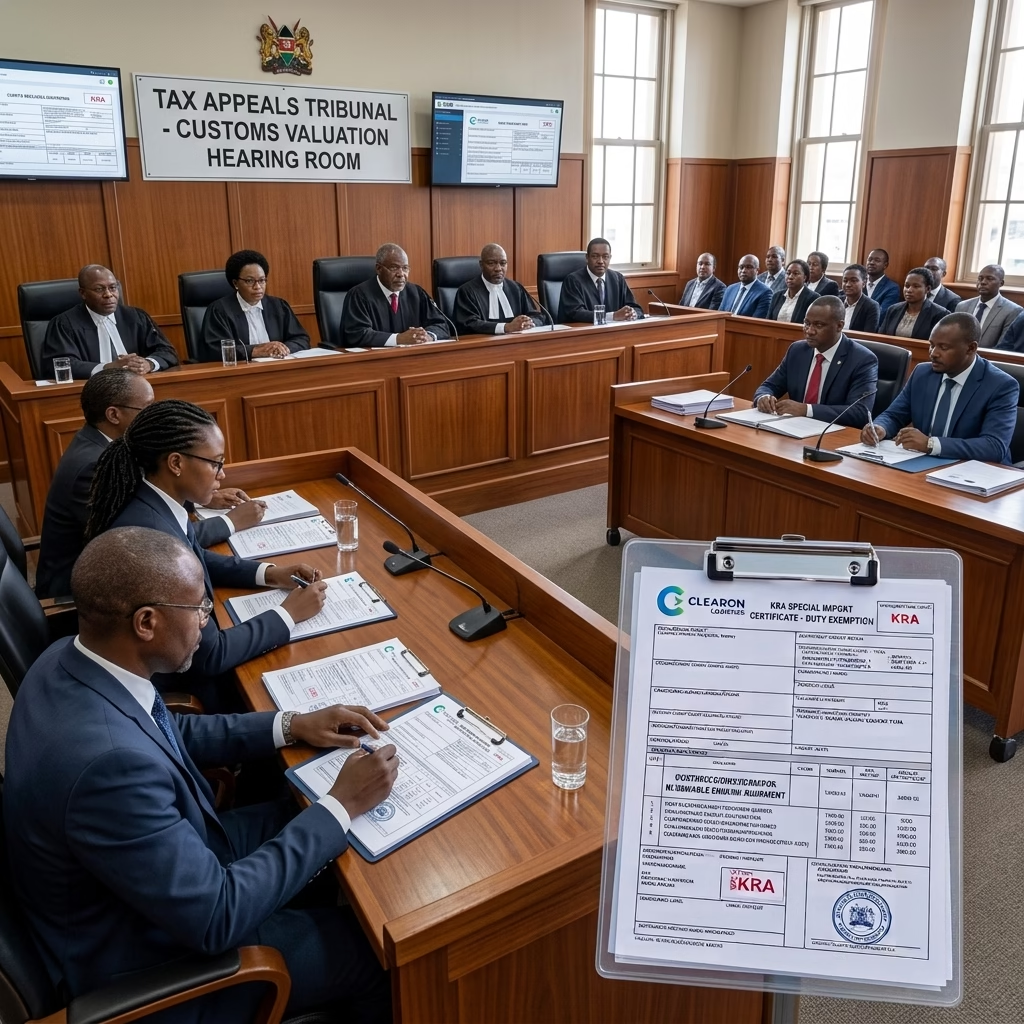
Customs valuation disputes in Kenya don’t have to end with an importer simply paying whatever KRA assesses. When you genuinely believe a valuation, classification, or duty assessment is wrong, Kenya has a structured, independent process for challenging it — the Tax Appeals Tribunal. Few importers realise this process exists, or how strict its deadlines are, until they’re already facing an assessment they disagree with.
Table of Contents
What the Tax Appeals Tribunal Actually Is
The Tax Appeals Tribunal (TAT) is an independent, quasi-judicial body established under the Tax Appeals Tribunal Act, Cap 469A, specifically to resolve disputes between taxpayers and KRA. Its remit explicitly covers customs and excise matters alongside income tax and VAT — meaning a disagreement over how your imported goods were valued, classified, or assessed for duty falls squarely within what the Tribunal is designed to hear. It’s built to be faster and less formal than going straight to the High Court, while still producing binding, legally reasoned decisions.
Step One: You Must Object to KRA First
You can’t go straight to the Tribunal. If you disagree with a customs valuation or assessment — including one that might follow a post-clearance audit or a dispute over the current cargo valuation benchmark — you first need to lodge a formal notice of objection directly with KRA. The Commissioner is then required to make an objection decision within 60 days of receiving your notice (or any further information requested from you) — and if that deadline passes without a decision, the objection is deemed allowed in your favour by default.
Step Two: Filing Your Appeal to the Tribunal
If KRA’s objection decision still doesn’t resolve things in your favour, you can escalate to the Tribunal — but the procedural requirements here are strict and unforgiving of delay:
- A written notice of appeal must be submitted within 30 days of receiving the Commissioner’s decision
- You must pay the tax not in dispute, or have a formal arrangement with the Commissioner to do so, at the time you lodge your appeal — you cannot use the appeal to withhold payment of amounts you don’t actually contest
- A refundable fee (commonly cited around KSh 20,000) is payable when filing
- A statement of facts setting out your reasons and supporting documents generally needs to be filed within 30 days of the appeal being accepted, and a copy served on the Commissioner
Missing the 30-day appeal window is one of the most common and entirely avoidable reasons a legitimate dispute never gets heard — the Tribunal’s procedural deadlines don’t bend for a strong underlying case if the paperwork itself arrives late.
What the Tribunal Can Actually Decide
Once a hearing takes place, the Tribunal can affirm, vary, or set aside KRA’s assessment or decision entirely. This isn’t a rubber-stamp process — Tribunal decisions actively shape Kenyan tax and customs jurisprudence, and a well-documented, well-argued case genuinely has a meaningful chance of overturning or reducing an incorrect assessment.
If You’re Still Not Satisfied
The Tribunal isn’t the final word. Either party — the taxpayer or KRA — can appeal a Tribunal decision further to the High Court, and beyond that, the Court of Appeal, if the dispute remains unresolved. In practice, most customs valuation disputes are resolved at the Tribunal stage, since the cost and time of escalating further generally only makes sense for disputes involving substantial sums.
What Makes an Appeal Succeed or Fail
Based on how these disputes generally play out, a few factors consistently separate successful appeals from unsuccessful ones:
- Clear, well-organised documentation — the same discipline that matters for surviving a post-clearance audit matters even more here, since your case is only as strong as the records supporting it
- Meeting every procedural deadline precisely — the 30-day appeal window, the requirement to pay undisputed tax, and the statement of facts deadline are all strict
- Genuine engagement with the objection process first, rather than treating it as a formality to rush through before getting to the Tribunal
- Professional representation — a tax consultant or lawyer experienced specifically in customs disputes tends to materially improve outcomes, given how procedural and evidence-driven the process is
Deciding Whether a Dispute Is Worth Pursuing
Not every disagreement with a customs assessment justifies a formal appeal — the time, cost, and effort involved need to be weighed against the amount actually in dispute. But for a genuinely incorrect valuation or classification, especially on a significant shipment, the Tribunal process exists precisely so importers aren’t simply required to accept whatever figure KRA initially assesses.
At Clearon Logistics, when a valuation or classification looks wrong to us, we say so honestly and help clients understand whether a formal objection or appeal is genuinely worth pursuing — rather than either accepting an incorrect assessment quietly, or encouraging a dispute that isn’t likely to succeed. Where a client has a real case, we help make sure the documentation and deadlines are handled properly from the start.
Disagree with a customs valuation or assessment on your shipment? Talk to Clearon Logistics about whether an objection or appeal makes sense for your situation.
Frequently Asked Questions
Can I appeal directly to the Tax Appeals Tribunal without objecting to KRA first? No — you must first lodge a formal notice of objection with KRA and receive (or be deemed to have received) their decision before appealing to the Tribunal.
How long do I have to file an appeal with the Tribunal? 30 days from the date you receive the Commissioner’s objection decision — this deadline is strictly enforced.
Do I have to pay the disputed duty before my appeal is heard? You need to pay the tax that is not in dispute (or arrange to do so) at the time you lodge your appeal — you’re not required to pay the specific amount you’re actually contesting.
What happens if I disagree with the Tribunal’s decision? You can appeal further to the High Court, and beyond that to the Court of Appeal, though most customs valuation disputes are resolved at the Tribunal stage.
Further Reading
- Kenya Law — Tax Appeals Tribunal Case Law (external, dofollow)
- Tax Appeals Tribunal Act, Cap 469A (external, dofollow)
- Related on our blog: KRA Post-Clearance Audit: 5 Critical Steps to Protect Your Business
- Related on our blog: KRA’s New Cargo Valuation Benchmark: What It Means for Kenyan Importers
- Our service: Clearing and Forwarding Services in Kenya












Leave a Reply