Importing heavy industrial machinery into Kenya is very different from importing ordinary commercial goods.
The shipment may involve high-value equipment, specialised documentation, regulatory requirements, customs procedures, port operations, and complex inland transportation.
For importers, getting the logistics right before the cargo leaves the country of origin can make a significant difference to the overall cost and smoothness of the process.
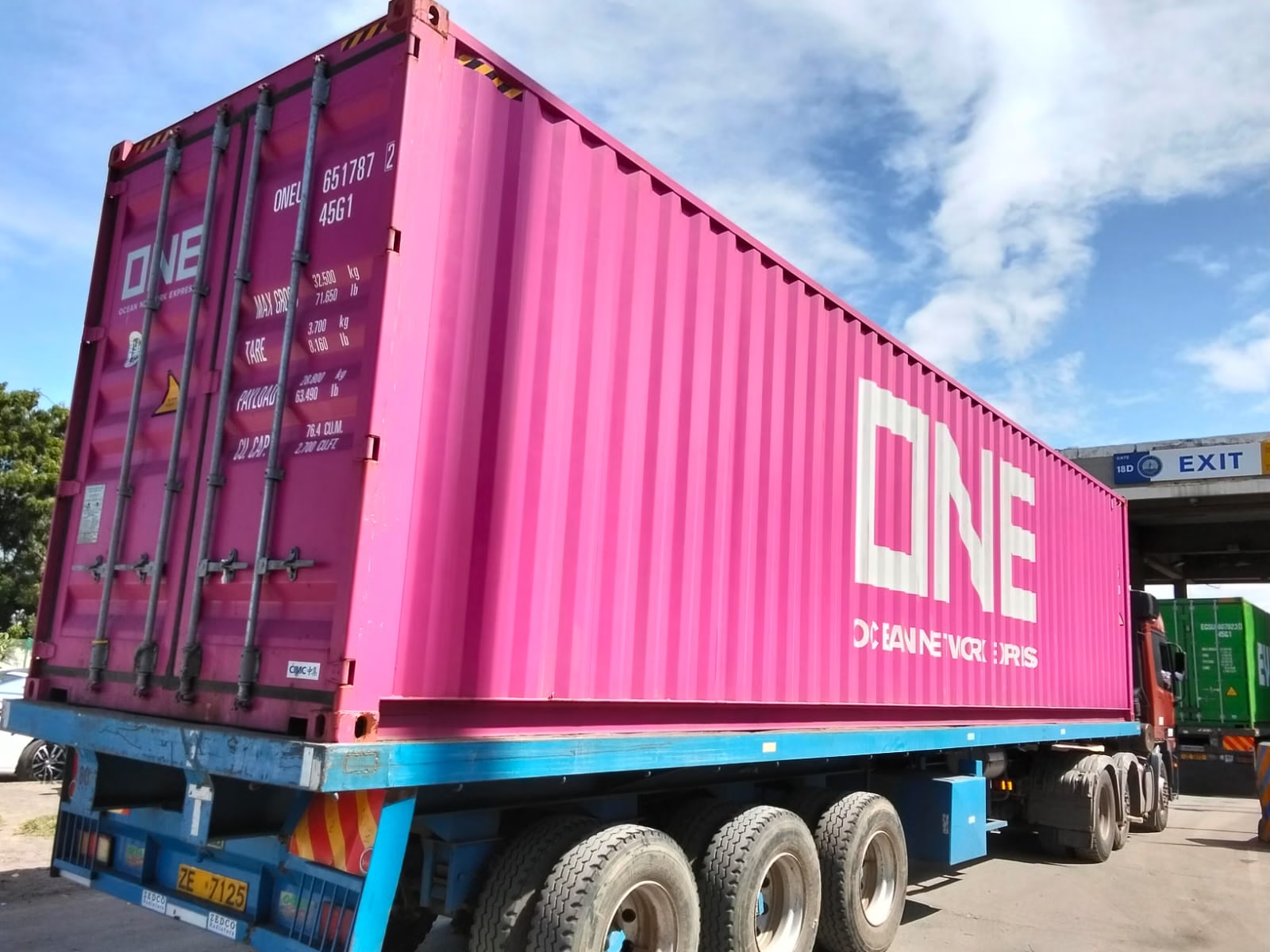
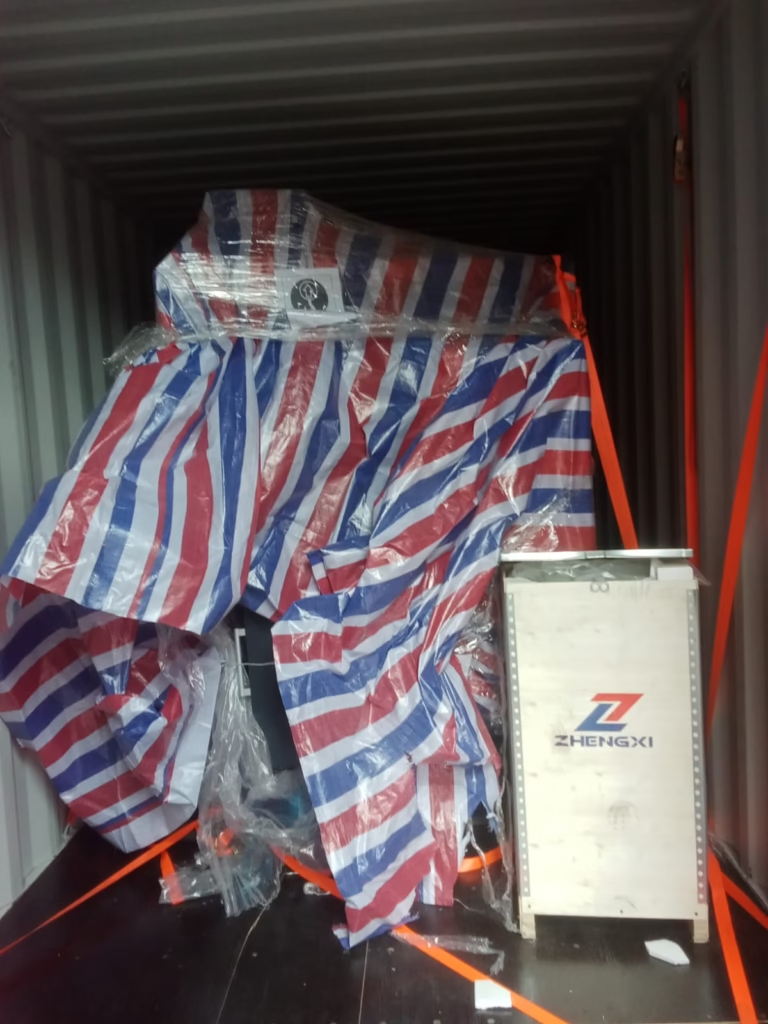
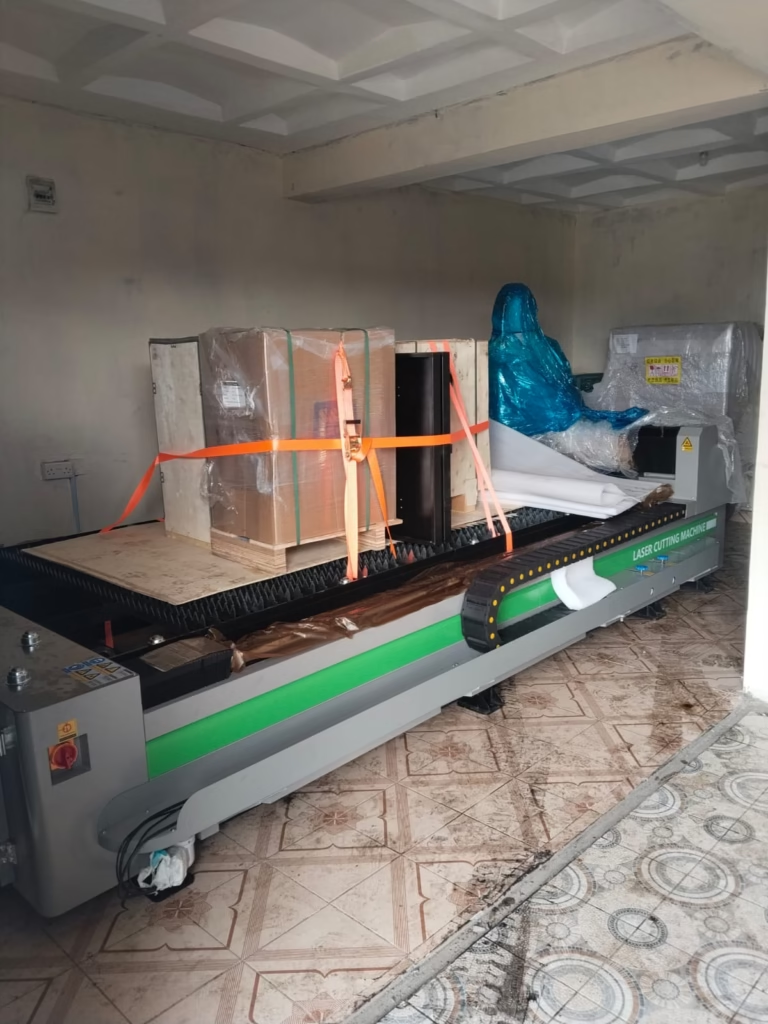
Recently, Clearon Logistics handled the customs clearance and delivery of a 40ft container carrying a fiber laser cutting machine and an NC bending machine imported from China to Kenya.
The shipment presented an interesting challenge.
By the time the customer approached us, the container had already been loaded onto the vessel and had departed China.
The customer had not received sufficient guidance about some of the documentation and regulatory requirements that needed to be addressed before the cargo left China.
One of the most important requirements in this case was the KEBS Pre-Export Verification of Conformity (PVoC) process.
Because the required conformity verification had not been completed at origin, the situation required a different approach once the machinery arrived in Kenya.
This case demonstrates why engaging a clearing and forwarding company early—ideally before goods are shipped—can help importers avoid unnecessary costs and complications.
It also demonstrates how an experienced logistics partner can step in when a shipment is already in transit and help bring the process to a successful conclusion.
The Shipment: A 40ft Container of Industrial Machinery
The shipment consisted of industrial equipment imported from China to Kenya.
The 40ft container contained:
- A fiber laser cutting machine
- An NC bending machine
These are specialised industrial machines commonly used in metal fabrication and manufacturing environments.
Because of their size, value, and technical nature, such equipment requires careful planning throughout the importation process.
The journey does not end when the machines leave the supplier’s facility.
The shipment must move through several stages, including:
- Export documentation
- Origin-side compliance requirements
- International shipping
- Import documentation
- Customs processing
- Regulatory compliance
- Port clearance
- Cargo release
- Inland transportation
- Final delivery
For this shipment, Clearon Logistics became involved after the vessel had already departed China.
That created an immediate challenge.
The Challenge: The Container Had Already Left China
Ideally, an importer should engage a clearing and forwarding partner before the goods are shipped.
This allows the logistics partner to review the shipment in advance and identify any documentation or regulatory requirements that need to be completed before the cargo leaves the country of origin.
In this case, the customer approached Clearon Logistics after the container had already been loaded onto the vessel and had departed China.
At that point, some of the required origin-side compliance processes could no longer be completed.
The most significant issue involved the KEBS PVoC requirement.
The PVoC and Certificate of Conformity Challenge
For many categories of imported goods, Kenya’s KEBS requirements need to be considered before the goods are shipped.
The PVoC process is designed to verify that applicable products comply with the relevant Kenyan standards before they are exported to Kenya.
In the case of this shipment, the required Certificate of Conformity had not been obtained before the container left China.
This was a problem because the necessary origin verification could not simply be completed after the vessel had already departed.
The machinery was already on the way to Kenya.
The importer therefore had to deal with the consequences of an issue that should ideally have been addressed before shipment.
This is one of the most important lessons from this case.
Customs clearance begins before the vessel sails.
The work of a good clearing and forwarding partner is not limited to processing documents after cargo arrives at Mombasa.
A significant part of successful importation is identifying potential problems before they become expensive problems.
The Financial Consequence for the Importer
Because the required conformity process had not been completed at origin, the shipment had to undergo the applicable destination inspection process in Kenya.
This resulted in an additional cost to the importer.
The client was required to pay a 5% penalty based on the customs value in connection with the destination inspection process. This figure amounted to Ksh100,000+
This additional cost could have been avoided if the conformity requirements had been identified and addressed before the container was shipped from China.
For the importer, this was an important financial lesson.
A small amount of planning before shipment can sometimes prevent significant additional costs after the cargo arrives.
Clearon Logistics Takes Over the Process
Once Clearon Logistics was engaged, our priority was to take control of the remaining process and ensure that the shipment could move forward as smoothly as possible.
Although the PVoC issue could no longer be resolved at origin, there were still many other aspects of the importation process that needed to be handled correctly.
Our team immediately focused on preparing the documentation and ensuring that the shipment was properly positioned for customs processing upon arrival.
This included working on the necessary import documentation and securing IDF approval before the cargo arrived.
Preparing documentation in advance is an important part of effective customs clearance.
The objective is simple:
Don’t wait for the container to arrive before starting the clearance process.
By preparing early, potential documentation issues can be identified before the cargo reaches the port, reducing unnecessary delays and allowing the clearance process to begin as soon as possible.
Preparing for the Arrival of the Container
While the container was still in transit, Clearon Logistics worked on the documentation required for the importation process.
This included:
- Reviewing the shipment documentation
- Preparing the import declaration process
- Securing IDF approval
- Reviewing customs requirements
- Preparing for the applicable KEBS destination inspection
- Coordinating the clearance process ahead of vessel arrival
This advance preparation meant that the shipment did not arrive in Kenya to find a clearing team starting from zero.
The groundwork had already been done.
Customs Clearance at the Port of Mombasa
Once the vessel arrived and the cargo became available for processing, Clearon Logistics proceeded with the remaining clearance procedures.
The shipment required the relevant customs and regulatory processes to be completed before the container could be released.
Despite the initial PVoC challenge, the rest of the clearance process proceeded smoothly.
The applicable taxes and charges were assessed and paid, and the required customs procedures were completed.
The most important thing at this stage was maintaining proper coordination.
A container sitting at the port is not simply a box waiting to be collected.
Every additional day can potentially expose an importer to additional costs depending on the circumstances, including storage, demurrage, and other port-related charges.
This is why preparation and timely action matter.
An Important Advantage: Most Industrial Machinery Have Zero Import Duty
One positive aspect of this particular shipment was the applicable import duty treatment for the machinery.
The fiber laser cutting machine and NC bending machine qualified for zero import duty under the applicable HS code tariff classification.
This is an important point for businesses importing industrial machinery into Kenya.
However, importers should not assume that every machine automatically attracts zero import duty.
The applicable tax treatment depends on the specific product, tariff classification, customs valuation, and current Kenyan tax and regulatory requirements.
Correct classification is therefore critical.
A machine may have a significant purchase price, but that does not necessarily mean the importer will pay import duty at the standard rates applicable to other categories of goods.
At the same time, zero import duty does not mean that the shipment is completely tax-free.
Other applicable taxes, levies, fees, and regulatory charges such as VAT 16%, RDL 2%, IDF 2.5% still apply depending on the specific circumstances of the importation.
This is why importers should obtain professional advice before finalising their shipping arrangements.
From Mombasa to Nairobi: The Final Stage
Clearing cargo at the Port of Mombasa is only one part of the job.
The machinery still had to travel from Mombasa to the customer’s location in Nairobi.
Transporting industrial machinery requires careful consideration.
The equipment was shipped in a 40ft container, meaning inland transportation had to be coordinated appropriately.
After the container was released from the port, Clearon Logistics arranged for the cargo to be transported by truck from Mombasa all the way to Nairobi.
This completed the journey:
China → International Ocean Freight → Port of Mombasa → Customs Clearance → Cargo Release → Truck Transportation → Nairobi
The shipment successfully reached its final destination and the empty container returned.
What This Shipment Teaches Kenyan Importers
This case provides several important lessons for anyone importing machinery into Kenya.
Lesson 1: Engage a Clearing Agent Before Shipping
The earlier your clearing and forwarding partner becomes involved, the better.
Ideally, the logistics team should review your shipment before the supplier loads the goods.
This provides an opportunity to identify:
- Customs requirements
- KEBS requirements
- PVoC requirements
- Documentation requirements
- Import permits
- Applicable taxes
- Tariff classification considerations
Problems are generally easier and cheaper to solve before cargo leaves the country of origin.
Lesson 2: Don’t Assume Your Supplier Knows Kenyan Import Requirements
A supplier in China may understand how to export goods from China.
That does not necessarily mean they understand every requirement for importing those goods into Kenya.
The responsibility for successful importation ultimately involves coordination between the exporter, importer, and logistics professionals familiar with the destination country’s requirements.
A supplier may tell you:
“The goods are ready to ship.”
That does not necessarily mean:
“The goods are ready to enter Kenya without complications.”
There is a major difference.
Lesson 3: Documentation Should Be Prepared Early
The earlier the documentation is reviewed, the more time there is to correct errors.
This is particularly important for high-value machinery.
A missing or incorrect document can cause unnecessary delays once cargo arrives.
Lesson 4: Customs Classification Matters
Industrial machinery can be expensive.
The applicable taxes, duties, and regulatory treatment depend heavily on correct classification.
Importers should not rely on assumptions based solely on the machine’s purchase price.
A proper assessment should be conducted before shipment.
Lesson 5: Logistics Doesn’t End at the Port
Clearing the container is only part of the process.
After release, the cargo still needs to reach the importer.
For heavy industrial machinery, inland transportation must be properly coordinated to ensure the equipment moves safely from Mombasa to its final destination.
Why Early Planning Could Have Saved the Customer Money
The most important lesson from this shipment is not about the difficulties we encountered.
It is about what could have been avoided.
Had Clearon Logistics been engaged before the container left China, we could have reviewed the shipment requirements in advance and identified the PVoC and Certificate of Conformity issue before the machinery was loaded onto the vessel.
Because the shipment had already departed, the origin inspection process was no longer possible.
The importer therefore incurred an additional 5% destination inspection penalty.
This is precisely why we encourage importers to involve their clearing and forwarding partner before shipping, not when the vessel is already at sea.
Clearon Logistics: Supporting Importers from Planning to Delivery
At Clearon Logistics, our role is not simply to clear containers at the Port of Mombasa.
We help businesses navigate the entire import process.
Depending on the shipment, this can involve:
- Pre-shipment guidance
- Import documentation
- IDF processing
- Customs declaration
- KEBS compliance coordination
- Customs clearance
- Tax assessment and payment coordination
- Cargo release
- Inland transportation
- Final delivery
For businesses importing machinery, industrial equipment, construction materials, spare parts, and other commercial cargo, early planning can make a significant difference.
Our objective is to identify potential issues as early as possible, prepare documentation ahead of cargo arrival, and coordinate the clearance and delivery process efficiently.
Thinking of Importing Machinery from China to Kenya?
If you are planning to import a fiber laser cutting machine, NC bending machine, industrial equipment, manufacturing machinery, or other commercial cargo from China, consider engaging your clearing and forwarding partner before your supplier ships the goods.
The best time to ask:
“What documents and approvals do I need?”
is before the container leaves China.
Not after the vessel has already departed.
At Clearon Logistics, we help importers plan their shipments, coordinate customs clearance, manage regulatory requirements, and arrange transportation from the Port of Mombasa to destinations across Kenya.
If your cargo is already in transit, it is still not too late to seek professional assistance.
Planning to import machinery from China to Kenya? Talk to Clearon Logistics today!
Leave a Reply