
Importing machinery into Kenya is not simply about arranging freight and waiting for the shipment to arrive at the Port of Mombasa.
For machinery and commercial equipment, what happens before the cargo leaves the supplier can have a significant effect on what happens when the shipment eventually reaches Kenya.
A recent shipment we handled as Clearon Logistics provides a practical example.
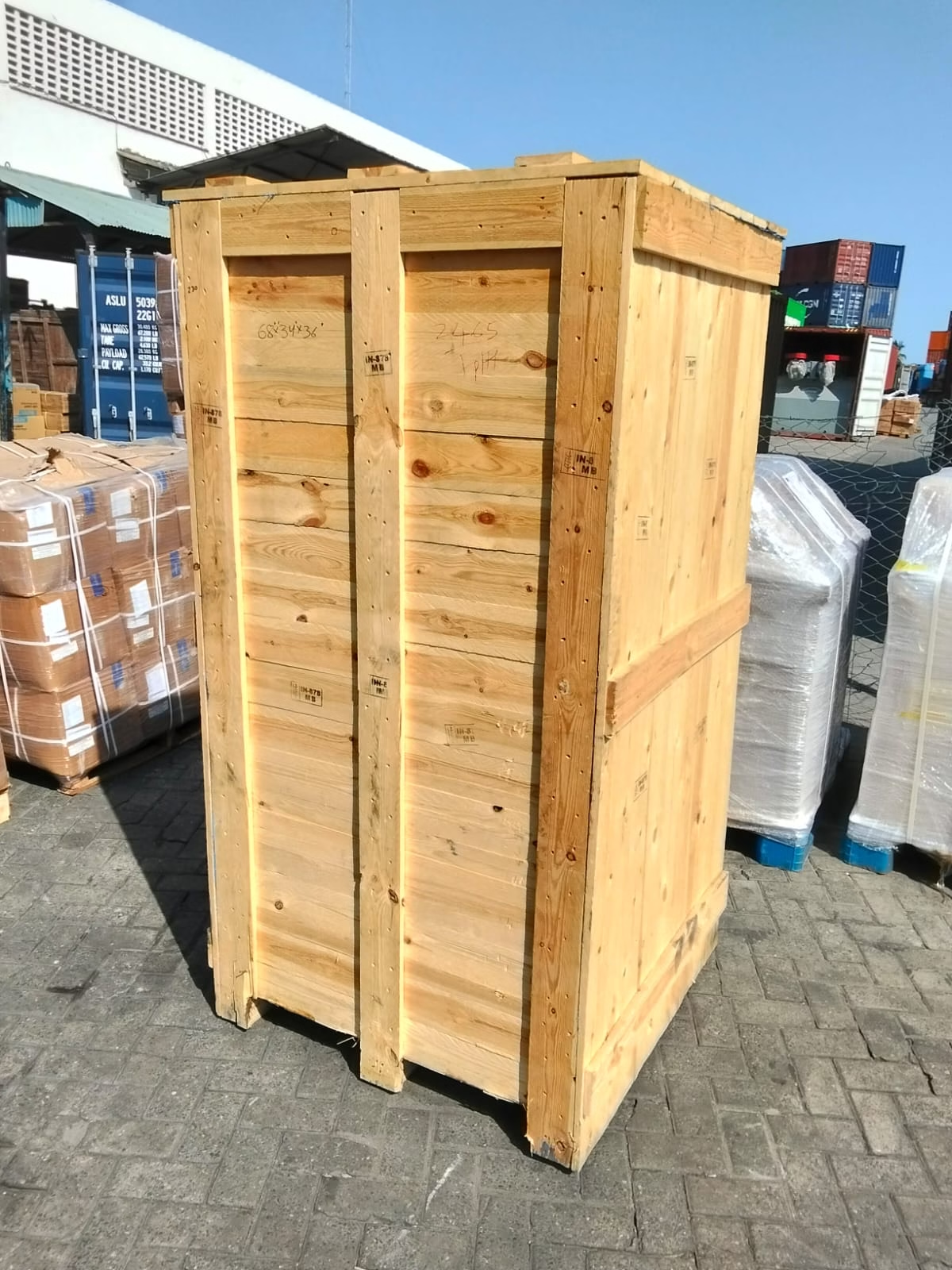
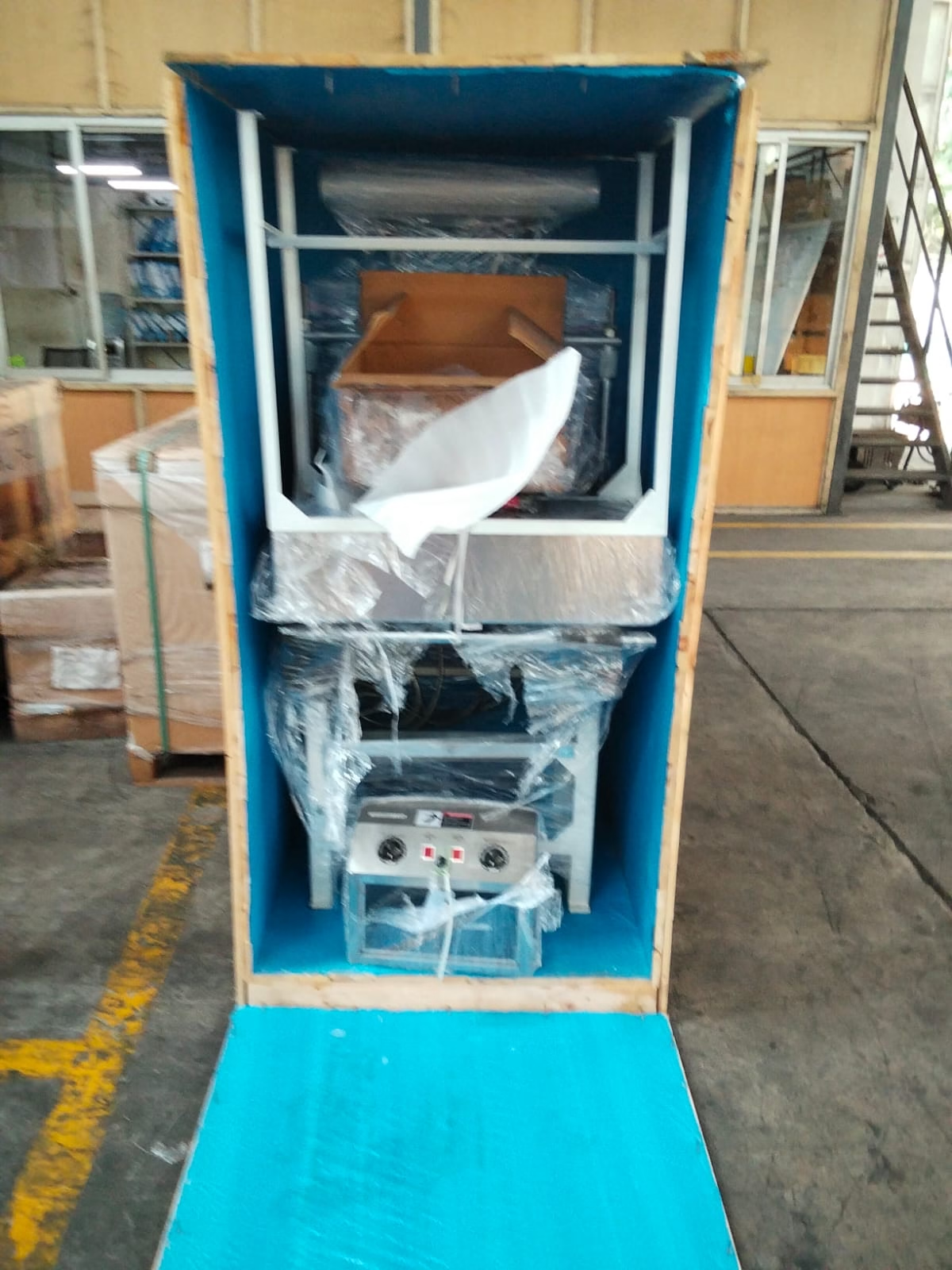
We recently assisted a client importing an ice cream baking machine and its spare parts from India to Kenya. The shipment was handled as Less than Container Load (LCL) sea cargo and was eventually cleared through the Port of Mombasa before being delivered to the client’s premises in Nairobi.
What made this shipment particularly instructive was not the size of the cargo.
It was the preparation.
The client engaged Clearon Logistics before the machine left the supplier, giving us an opportunity to review the import requirements and address an important compliance issue before shipment.
That early intervention helped the shipment move through the subsequent stages without the complications that can arise when critical requirements are discovered only after cargo has arrived.
The Shipment: Ice Cream Baking Machine
The client was importing an ice cream baking machine together with it’s spare parts from India.
Because the shipment did not require an entire container, it was handled as Less than Container Load (LCL) cargo.
For an LCL shipment, the physical movement of cargo is only one part of the process.
The importer also needs to ensure that the documentation, regulatory requirements, customs declarations, and inspection processes are properly coordinated.
This is particularly important for machinery because the shipment may involve technical descriptions, spare parts, manufacturer information, and regulatory requirements that need to correspond with the actual goods.
The Most Important Decision Was Made Before Shipping
The client engaged Clearon Logistics at an early stage.
This is one of the most useful lessons from the shipment.
Many importers contact a clearing and forwarding agent only after their cargo has already arrived at Mombasa.
By then, the available options can be limited.
In this case, we were involved before the machine left India.
That gave us time to review the shipment and identify a critical compliance consideration: Kenya’s Pre-Export Verification of Conformity (PVoC) requirements.
Instead of waiting for the machine to arrive in Kenya and dealing with the issue at destination, the requirement was addressed while the cargo was still at the supplier’s location.
Why PVoC Was Important for This Shipment
The Pre-Export Verification of Conformity, commonly referred to as PVoC, is an important part of Kenya’s import conformity framework for applicable regulated products.
For goods subject to the relevant requirements, verification should be addressed before shipment.
In this particular case, Clearon reviewed the cargo and advised the client on the need to address the applicable PVoC requirement.
This was particularly important because failure to meet applicable conformity requirements can result in additional procedures and costs when cargo reaches Kenya.
The objective was therefore not simply to clear the cargo.
It was to make sure the necessary compliance process was handled before the cargo travelled.
The Certificate of Conformity Was Obtained Before Shipment
Following the review, the inspection process was arranged while the machine was still with the supplier in India.
The inspection was completed and a Certificate of Conformity (CoC) was issued before the machine left the supplier.
This was a significant milestone in the shipment.
Instead of discovering a conformity issue after the cargo had reached Mombasa, the relevant verification had already been completed at origin.
For importers, this illustrates an important principle:
Customs clearance should begin before the ship arrives—not when the ship arrives.
The physical clearance process may happen at the destination, but much of the preparation can and should happen earlier.
We Also Worked Directly With the Supplier
International shipments often involve more than the Kenyan importer and the clearing agent.
The overseas supplier is responsible for providing important information and documents relating to the cargo.
Clearon therefore engaged the Indian supplier to coordinate the documentation required for the shipment.
This included working through the necessary documentation and ensuring that the supplier understood what was required for the Kenyan import process.
One important document was the Certificate of Origin (COO).
Certificate of Origin: Why It Matters
The Certificate of Origin identifies the country in which the goods originate.
For this shipment, the Certificate of Origin was coordinated with the supplier as part of the documentation process.
For Kenyan importers, documentation should not be treated as paperwork to be collected at the last minute.
Documents should be reviewed against the actual cargo and transaction before shipment.
A small discrepancy between documents can create unnecessary questions during customs processing.
This is why early document coordination is so valuable.
IDF Application Was Also Handled Before Arrival
Another important stage was the Import Declaration Form, commonly known as the IDF.
The IDF was applied for and approved before the shipment arrived in Kenya.
This meant that another important part of the import process had already been progressed before the cargo reached Mombasa.
This is a recurring principle in effective customs planning:
Use the time before arrival to complete whatever can legitimately be completed before arrival.
Waiting until cargo lands to begin every process can unnecessarily compress the clearance timeline.
What Happened When the Cargo Arrived in Mombasa?
By the time the shipment arrived, several important pieces were already in place.
The shipment had:
- Been reviewed before shipping.
- Gone through the applicable conformity verification process.
- Obtained the Certificate of Conformity before departure.
- Had supplier documentation coordinated.
- Had the Certificate of Origin addressed.
- Had the IDF applied for and approved.
The remaining destination processes could therefore proceed in an organised manner.
Customs entry was made after arrival, and the clearance process proceeded without hindrance.
The cargo was subsequently released and arranged for delivery to the client in Nairobi.
From Port of Mombasa to Nairobi
The shipment did not end when customs released the cargo.
The client’s objective was to receive the ice cream baking machine and spare parts in Nairobi.
Clearon therefore coordinated the final stage of the shipment.
After customs clearance, the cargo was delivered to the client’s location in Nairobi.
This illustrates an important distinction in international logistics.
Port clearance and final delivery are two different stages of the supply chain.
An importer ultimately needs the goods at their business premises—not simply released from customs at Mombasa.
What This Shipment Teaches Kenyan Importers
The shipment provides several practical lessons for businesses importing machinery into Kenya.
1. Engage a Clearing Agent Before Shipping
Perhaps the most important lesson is timing.
The earlier a clearing and forwarding professional becomes involved, the more opportunity there is to identify documentation and compliance requirements before the cargo leaves the supplier.
In this case, early engagement allowed the PVoC requirement to be identified and addressed before shipment.
2. Don’t Treat PVoC as an Afterthought
Where PVoC requirements apply to the goods, importers should address them before the shipment leaves the country of export.
For applicable cargo, obtaining the Certificate of Conformity at origin can help avoid problems that might otherwise arise when the shipment reaches Kenya.
3. Documentation Should Be Coordinated With the Supplier
The Kenyan importer may not have direct control over every document.
The supplier needs to understand what is required.
Clear communication between the importer, supplier, and clearing agent can prevent documentation gaps.
4. Start the IDF Process Early
Where applicable, progressing the IDF before cargo arrival allows the importer to prepare for destination clearance instead of starting from zero after the shipment lands.
5. LCL Does Not Mean “Simple Cargo”
Because LCL shipments are smaller than full container loads, some importers assume they require little planning.
That is not necessarily true.
An LCL shipment still involve:
- Regulatory compliance.
- Inspection.
- Certificates.
- Customs documentation.
- Customs valuation.
- Port processes.
- Final delivery.
The size of the shipment does not eliminate the need for proper preparation.
What Could Have Happened Without Early Preparation?
Consider the alternative.
Suppose the importer had shipped the machine without first reviewing the applicable conformity requirements.
The cargo arrives in Mombasa.
Only then does the importer discover that an important pre-export requirement has not been properly addressed.
The situation may then require additional intervention and potentially expose the importer to additional costs, procedures, delays, or penalties depending on the circumstances and applicable requirements. The penalty of lacking COC is 5% of customs value and possibly cargo rejection.
The principle is straightforward:
A problem discovered before shipment is generally easier to manage than the same problem discovered after arrival.
Customs Clearance Is a Planning Exercise
This shipment demonstrates why customs clearance should not be viewed as a single event.
It is a process that begins with information.
Before cargo moves, the importer should understand:
- What exactly is being imported?
- Where is it coming from?
- How is it packaged?
- What documents are available?
- Does the cargo require regulatory verification?
- What certificates are required?
- What customs declarations will be needed?
- What is the expected arrival timeline?
- Where will the cargo ultimately be delivered?
The answers determine how the shipment should be prepared.
How Clearon Logistics Approaches Machinery Imports
At Clearon Logistics, we don’t view our role as simply waiting for a vessel to arrive before beginning clearance.
We encourage clients to engage us early.
For machinery and other commercial cargo, we can review the shipment information, identify documentation and compliance considerations, coordinate with overseas suppliers, and prepare the clearance process before arrival.
Depending on the shipment, our work can involve:
- International freight coordination.
- Supplier communication.
- Cargo documentation.
- PVoC coordination where applicable.
- Certificate of Origin coordination.
- IDF processing.
- Customs entry.
- Customs clearance.
- Cargo release.
- Final delivery.
The exact process depends on the nature of the goods and the applicable Kenyan requirements.
The Bigger Lesson for Kenyan Importers
A smooth customs clearance is rarely the result of what happens at the customs desk alone.
It is usually the result of decisions made much earlier.
In this shipment, the client did something that every serious importer should consider:
They involved their clearing and forwarding partner before the cargo left the supplier.
That gave Clearon Logistics an opportunity to review the shipment, address the applicable PVoC requirement, coordinate the Certificate of Conformity, work with the supplier on documentation, and have the IDF approved before arrival.
When the machine eventually reached Mombasa, the groundwork had already been done.
The customs entry was made, clearance proceeded without hindrance, the cargo was released, and the machine and spare parts were delivered to Nairobi.
That is the difference between simply reacting to a shipment and actually planning one.
Planning to Import Machinery Into Kenya?
If you are importing machinery, production equipment, spare parts, or other commercial cargo into Kenya, don’t wait until the vessel is approaching Mombasa to contact a clearing agent.
Engage your logistics partner while you are still communicating with the supplier.
At Clearon Logistics, we support importers with international freight, customs clearance, documentation coordination, and final delivery from major sourcing markets including India, China, the United Kingdom, the United States, and Dubai.
Your shipment may be small enough for LCL or large enough to require a full container.
Either way, the principle remains the same:
Good customs clearance starts before the cargo leaves the supplier.
Leave a Reply