
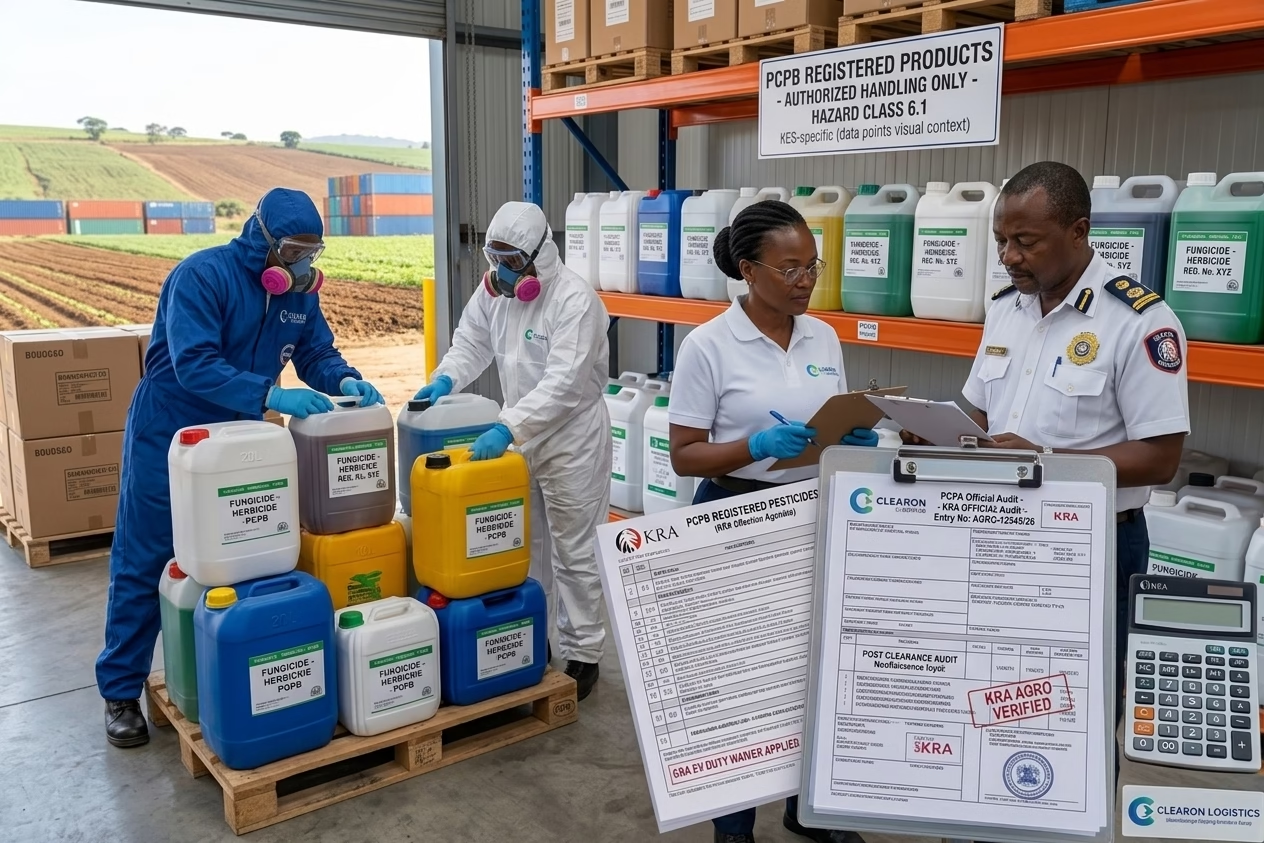
Importing agrochemicals and pesticides into Kenya runs through a regulator entirely separate from the agencies covered elsewhere on our blog — the Pest Control Products Board (PCPB), operating under its own dedicated Act since 1982. If you’re bringing in crop protection products, insecticides, fungicides, or related agricultural chemicals, PCPB registration isn’t an add-on to standard import compliance — it’s the primary gate the product has to pass through before customs treatment even becomes relevant.
Table of Contents
What PCPB Actually Regulates
The Pest Control Products Board was established under the Pest Control Products Act, Cap 346, specifically to regulate the importation, exportation, manufacture, distribution, transportation, sale, disposal, and use of pest control products in Kenya — a considerably broader mandate than “approving pesticides” alone. Its scope spans products used in agriculture, animal health, forestry, and public health, reflecting how widely “pest control products” actually extends beyond crop-spraying chemicals to include products used in livestock management and public health pest control as well.
The Product Must Be Registered Before Any Import Happens
This is the core principle underpinning everything else: no pest control product can be legally imported, manufactured, distributed, or sold in Kenya without prior PCPB evaluation and registration. Every product on PCPB’s registered list has gone through evaluation for safety, efficacy, quality, and economic value before approval — meaning a product legally sold in another country, even a major agricultural market, has no automatic standing in Kenya until it clears this same evaluation independently. Registration is managed through PCPB’s own dedicated Pest Control Products Registration System, a web-based platform that has fully automated the registration process, and applications also route through Kenya’s broader Trade Facilitation Platform for coordination with other trade processes.
Who Can Register a Product
PCPB registration is open to manufacturers, importers, exporters, distributors, or users of pest control products — a broader category of eligible applicant than some other regulated categories covered on our blog, which often restrict registration to licensed importers specifically. That said, the practical requirements for a successful application are substantial, and casual or one-off importers of agrochemicals are considerably less likely to navigate this process successfully than an established agricultural inputs business with the technical documentation PCPB expects.
The Evidence PCPB Actually Requires
A registration application typically needs to demonstrate the product’s safety and efficacy through:
- Efficacy, toxicological, physical, and chemical study data — PCPB maintains a list of accredited institutions authorised to carry out these studies on the Board’s behalf
- A Certificate of Free Sale, generally confirming the product is legally sold in its country of origin or manufacture
- Full description and intended use documentation for the specific pesticide or insecticide
- Clinical data and test reports supporting the product’s safety and efficacy claims, to the standard Kenyan law requires
This is a considerably more technical and evidence-intensive process than most standard commercial import registrations, reflecting the genuine environmental and health stakes involved in approving a new pest control product for use in Kenya.
Using Products Outside Their Registered Label Is Its Own Violation
A detail worth understanding clearly: PCPB registration approves a product for specific, registered uses — the crops, pests, and application methods listed on its approved label. Using a registered pesticide in a manner inconsistent with its approved label directions is itself a violation, separate from the question of whether the underlying product is registered at all. A product legitimately registered for use on roses, for example, isn’t automatically approved for use on a different crop entirely without a formal label extension process. For importers and distributors, this means understanding not just whether a product is registered, but what it’s registered for, since misrepresenting or misapplying approved use isn’t a grey area under Kenyan pesticide law.
How This Fits With Standard Customs Requirements
PCPB registration operates alongside, not instead of, Kenya’s standard customs and trade documentation:
- Standard customs documentation — IDF, Certificate of Origin, commercial invoice — still applies to agrochemical shipments
- Correct HS code classification determines duty treatment, separate from the PCPB registration question entirely
- Hazardous goods handling and transport considerations may apply depending on the specific chemical classification, given the inherent hazard profile of many pest control products
A product can be perfectly compliant on customs paperwork while still being entirely unregistered — and therefore illegal to import — with PCPB, since these are genuinely separate compliance tracks that both need to be satisfied.
Getting Agrochemical Imports Right From the Start
Given how evidence-intensive PCPB registration is, and how long product evaluation can realistically take, this is a category where compliance planning needs to begin well before any shipment is contemplated — confirming whether your specific product is already registered, and if not, understanding the genuine timeline and evidentiary requirements to get it there.
At Clearon Logistics, we help agrochemical and pesticide importers confirm PCPB registration status for their specific products before committing to an import, and coordinate the standard customs documentation that still applies alongside PCPB compliance — so a fully registered product doesn’t get held up on the customs side, and vice versa.
Importing agrochemicals or pesticides into Kenya? Talk to Clearon Logistics to confirm PCPB registration status before you order.
Frequently Asked Questions
Can I import a pesticide that’s already approved and widely sold in another country? Not automatically — PCPB registration is independent of approval elsewhere, meaning even a widely used product in a major agricultural market needs its own separate Kenyan registration and evaluation before legal import.
Who is eligible to register a pest control product with PCPB? Manufacturers, importers, exporters, distributors, or users of pest control products can apply, though the technical and evidentiary requirements make this considerably more accessible to established agricultural inputs businesses than casual importers.
Is using a registered pesticide on a different crop than what’s listed on the label allowed? No — using a pest control product inconsistent with its approved label directions is itself a violation, separate from whether the underlying product is registered. A formal label extension process is required to add new approved uses.
Does PCPB registration replace standard customs documentation for agrochemical imports? No — PCPB registration and standard customs requirements (IDF, Certificate of Origin, correct HS classification) are separate compliance tracks that both need to be satisfied for a fully compliant shipment.
Further Reading
- Pest Control Products Board (PCPB) (external, dofollow)
- PCPB — Pest Control Products Registration System (external, dofollow)
- Related on our blog: Importing Agricultural Machinery into Kenya: 4 Duty Facts to Know
- Related on our blog: Importing Food and Beverage Products into Kenya: 5 Rules to Know
- Our service: Clearing and Forwarding Services in Kenya







Leave a Reply