
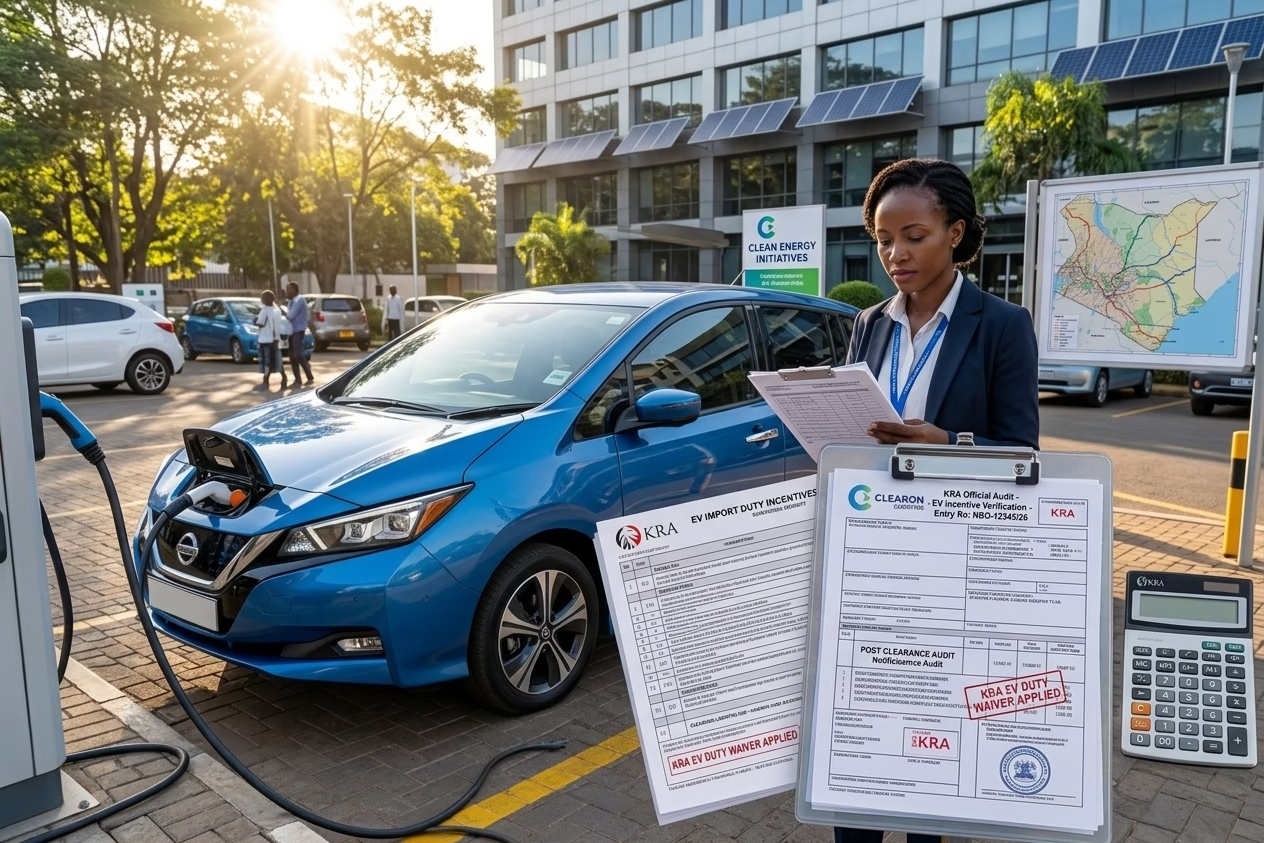
Importing electric vehicles into Kenya currently sits in one of the most favourable — and fastest-moving — corners of Kenyan trade policy. Between reduced excise duty, a major presidential duty waiver, and a brand-new National e-Mobility Policy, the incentives for EVs are genuinely significant right now. They’re also shifting fast enough that what applied three months ago may not apply to your shipment today.
Table of Contents
The Baseline: How EVs Are Taxed Differently From Petrol Cars
Under the standard framework, electric passenger vehicles benefit from a reduced excise duty rate — commonly cited around 10%, compared to 20-35% for petrol vehicles depending on engine size — while import duty and VAT generally follow standard treatment unless a specific exemption applies. Electric buses, motorcycles, bicycles, and lithium-ion batteries have gone further under the Finance Act 2025, moving to zero-rated VAT with excise duty cut to zero entirely — a meaningfully better position than full electric passenger cars occupy on their own.
The Duty Waiver on the First 100,000 EVs
In May 2026, President Ruto announced that the first 100,000 electric vehicles imported into Kenya — covering both private and public service vehicles — would be exempt from import duty entirely, framed as a direct response to a sharp rise in fuel prices and Kenya’s broader push to reduce petroleum import dependence. This is a genuinely significant incentive if it applies to your specific import, but presidential announcements of this kind typically need to work through formal implementation before they’re fully reflected in day-to-day customs practice at Mombasa Port or JKIA. If you’re timing a purchase around this waiver, confirming its current implementation status with a clearing agent before you commit is worth the five-minute conversation.
Zero-Rated vs Exempt: A Distinction Worth Understanding
The Finance Bill 2026 has proposed moving some EV-related items — likely including batteries, in line with the same shift affecting solar lithium batteries — from zero-rated to VAT-exempt status. At the till, this looks identical: no VAT charged either way. The difference sits upstream — a zero-rated importer can still reclaim VAT paid on their own inputs (shipping, components, services), while an exempt importer loses that ability. For EV assemblers and importers bringing in components at scale, this technical shift can meaningfully affect build costs even though it doesn’t change what the end buyer pays.
Used EV Import Rules Are Stricter Than Standard Vehicles
If you’re importing a used electric vehicle, the standard 8-year age rule and RHD requirement that apply to petrol vehicles still apply — but used EVs carry an additional condition: a minimum battery capacity requirement, commonly cited around 80% of original capacity. This is a meaningful extra verification step beyond what a standard used vehicle import requires, and it’s worth confirming with your supplier and clearing agent before committing to a specific used unit, since battery health isn’t always something a listing photo or mileage figure can confirm on its own.
Valuation Still Runs Through CRSP
Regardless of the incentive landscape, EV valuation for duty purposes still runs through the same Current Retail Selling Price (CRSP) mechanism used for standard vehicles, adjusted for the vehicle’s age. This means your actual duty liability — even accounting for reduced excise or a duty waiver — is based on KRA’s benchmark valuation for the model, not simply your purchase invoice.
What to Confirm Before You Import
Given how quickly this policy area has moved in 2026 alone — a new national e-Mobility policy, a major duty waiver announcement, and a Finance Bill proposing technical VAT changes, all within the same year — a few things are worth confirming close to your actual shipment date rather than relying on information even a few months old:
- Whether the 100,000-unit duty waiver is currently active for your specific import, and how it’s being implemented in practice
- The current excise duty and VAT treatment for your specific EV category (passenger car, motorcycle, bus, or bicycle each may differ)
- Battery capacity documentation, if importing a used EV
- Current CRSP valuation for your specific model and age
Navigating a Genuinely Fast-Moving Incentive Landscape
Few categories in Kenyan trade policy have moved this fast in a single year. That’s good news if you’re buying an EV — the incentives are real — but it also means outdated information is a real risk if you’re planning a purchase based on what you read even a few months ago.
At Clearon Logistics, we track this kind of fast-moving policy landscape closely, confirming current incentive status, valuation, and documentation requirements for EV imports before a client commits to a purchase — so you know what you’re actually paying, not what applied under an earlier version of the policy.
Considering an EV import into Kenya? Talk to Clearon Logistics to confirm current incentives and duty treatment before you buy.
Frequently Asked Questions
Are all electric vehicles duty-free in Kenya right now? Not automatically — a presidential announcement in May 2026 proposed waiving import duty on the first 100,000 EVs imported, but it’s worth confirming current implementation status for your specific import before assuming it applies.
Do used electric vehicles follow the same 8-year rule as petrol cars? Yes, the same age and RHD requirements apply, plus an additional minimum battery capacity requirement (commonly cited around 80%) specific to used EVs.
Why does it matter whether an EV incentive is “zero-rated” or “exempt”? Both mean no VAT is charged to the buyer, but a zero-rated importer can still reclaim VAT paid on their own inputs, while an exempt importer cannot — a distinction that affects business costs upstream even though it looks the same at the till.
Is duty calculated on what I actually pay for the EV? No — valuation still runs through KRA’s CRSP (Current Retail Selling Price) benchmark for the specific model and age, not your purchase invoice, the same as standard vehicle imports.
Further Reading
- Ministry of Roads and Transport — National e-Mobility Policy (external, dofollow)
- Energy and Petroleum Regulatory Authority (EPRA) (external, dofollow)
- Related on our blog: Importing a Used Car to Kenya: The 8-Year Rule Explained
- Related on our blog: Solar Equipment Import Kenya: Duty-Free Clearance in 2026
- Our service: Clearing and Forwarding Services in Kenya







Leave a Reply