
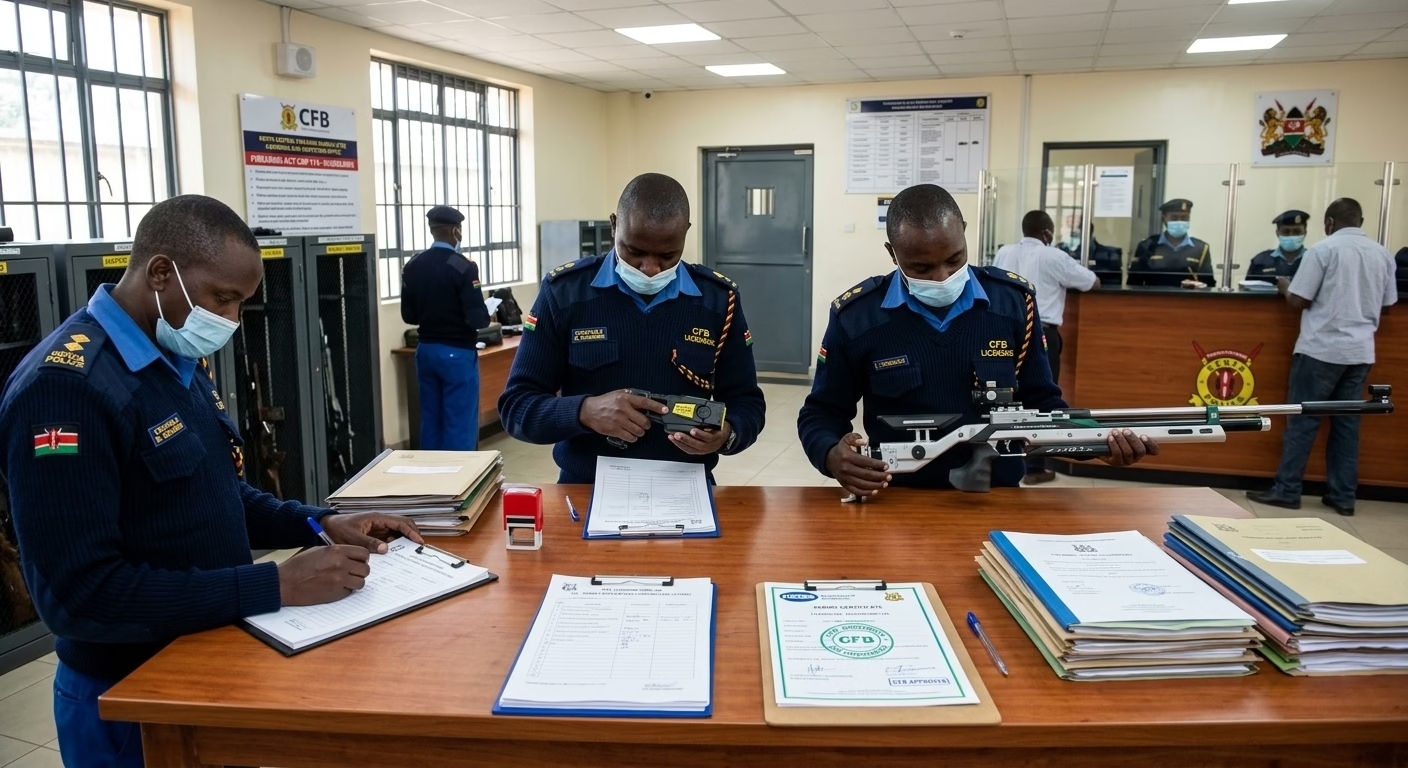
Importing firearms and ammunition into Kenya sits under one of the strictest, most tightly personalised licensing regimes in the country — closer in process to a background-checked personal authorisation than a standard commercial import. Under the Firearms Act, Chapter 114, no person may import or export a firearm or ammunition except under and in accordance with an import or export permit — and getting to that permit requires clearing a multi-agency vetting process most other regulated categories on our blog simply don’t involve.
Table of Contents
Why Firearms Sit Outside Standard Import Rules Entirely
Firearms and ammunition don’t move through KEBS PVoC inspection, a standard customs declaration process, or any of the sector regulators covered elsewhere on our blog. They move through the Firearms Licensing Board (FLB), via the Central Firearms Bureau, under legislation focused entirely on public safety and security — meaning the entire compliance framework is built around personal vetting of the individual involved, not just the specifications of the product being imported.
The Firearm Certificate You Need Before an Import Permit Is Even Relevant
Before an import permit is remotely relevant, you generally need a valid firearm certificate — the foundational authorisation to possess a firearm in Kenya at all. Obtaining one requires:
- A valid National ID or passport
- An up-to-date Certificate of Good Conduct from the Directorate of Criminal Investigations (DCI)
- A psychiatric report from a recognised government health institution
- A current Tax Compliance Certificate from KRA
- A six-month bank statement
First-time applicants must apply in person at the Firearms Bureau in Nairobi, following a vetting process conducted at the Police Pavilion in South C — this isn’t something that can be handled remotely or through an agent on your behalf.
The Vetting Chain
Once an application is submitted, it moves through a genuinely multi-layered review: vetting by the District Security Intelligence Committee and County Security Committee, before the list of cleared applicants is forwarded to the Inspector General of Police, who holds final authority over whether licensing proceeds. This structure reflects a deliberate design choice — no single official or office can unilaterally approve a firearm licence, and the process is built to involve multiple independent layers of security review before any import consideration even begins.
Fees Involved
Kenya’s firearm-related fees are specific and relatively modest compared to the rigour of the vetting process itself:
- Rifle or shotgun permit — KSh 2,000
- Pistol or revolver permit — KSh 5,000
- Each round of ammunition — KSh 100
Retail prices for the firearms themselves run considerably higher — commonly cited in the range of KSh 100,000–300,000 for handguns and KSh 160,000–350,000 for shotguns — meaning the licensing fees are a small fraction of the overall cost of legally acquiring and importing a firearm in Kenya.
Visitors Bringing Firearms Temporarily
For non-residents — typically hunters or competitive sport shooters — Kenya provides a separate temporary entry permit process, distinct from full resident firearm certification. This permit is issued in booklet form, carrying the applicant’s photograph and official police headquarters stamp, and critically, the holder must take the firearm and any unused ammunition back out of Kenya at the conclusion of their hunting or sporting activity — it cannot be transferred to anyone else within the country, and it specifically excludes surplus military firearms, permitting only weapons genuinely suited to sporting purposes. A local permit is similarly required to bring a firearm back into Kenya if it was previously taken out under proper authorisation.
Ongoing Obligations After Licensing
Firearm ownership in Kenya carries continuing responsibilities beyond the initial licence:
- Secure storage is mandatory when the firearm isn’t in use
- Loss or theft must be reported to the nearest police station immediately upon discovery
- A change of permanent address must be reported to the licensing officer within 21 days
- Licence renewal follows its own defined procedure, and a certificate can be cancelled or revoked if the Chief Licensing Officer determines the holder is unfit to be entrusted with a firearm under the Act
A Category Where “Clearing Agent” Isn’t the Right Frame
Unlike virtually every other regulated category on our blog, firearms and ammunition import in Kenya isn’t primarily a customs clearance challenge — it’s a personal licensing and security vetting process that happens well before customs becomes relevant at all. A clearing agent’s role here is limited compared to categories like pharmaceuticals or agrochemicals, where agent expertise genuinely accelerates the process — firearms licensing runs through personal, in-person engagement with the Firearms Bureau and multiple security agencies that no third party can complete on an applicant’s behalf.
At Clearon Logistics, while firearms licensing itself sits outside standard clearing agent services, we can advise on how the customs and logistics side of an already-licensed import interacts with the broader shipping and clearance process, once your Firearms Bureau authorisation is properly in place.
Have questions about how firearms import licensing fits into your broader logistics needs? Talk to Clearon Logistics about the customs side of an already-authorised shipment.
Frequently Asked Questions
Can I apply for a firearm import permit without first holding a firearm certificate? Generally no — a valid firearm certificate, itself requiring extensive vetting, is the foundational authorisation that needs to be in place before an import permit becomes relevant.
Can a clearing agent handle firearms licensing on my behalf? No — first-time applicants must apply in person at the Firearms Bureau in Nairobi and complete personal vetting at the Police Pavilion in South C; this process cannot be delegated to a third party.
What happens to a firearm brought into Kenya temporarily for hunting or sport once the activity ends? The holder must take the firearm and any unused ammunition back out of Kenya at the conclusion of the activity — the temporary entry permit does not allow transfer to anyone else within the country.
How long does the firearms licensing vetting process typically take? It varies, but involves multiple sequential review stages — District and County Security Committee vetting followed by Inspector General clearance — making it a genuinely lengthy process compared to most other import licensing frameworks in Kenya.
Further Reading
- Firearms Licensing Board (FLB) Kenya (external, dofollow)
- Kenya Law — Firearms Act, Chapter 114 (external, dofollow)
- Related on our blog: Prohibited and Restricted Goods Kenya: The Essential 2026 Import Checklist
- Related on our blog: Temporary Importation into Kenya: 4 Essential Facts About the Bond System
- Our service: Clearing and Forwarding Services in Kenya









Leave a Reply