
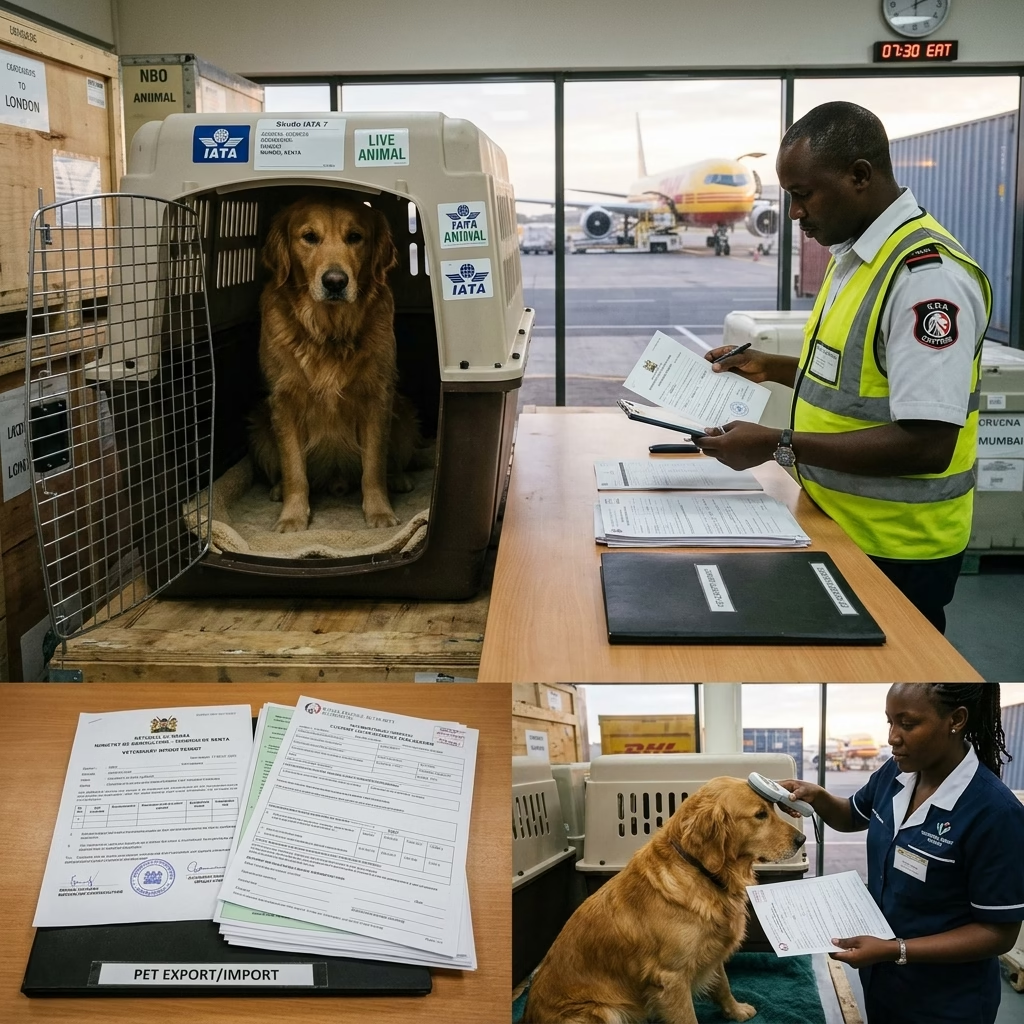
Importing and exporting live animals in Kenya — whether it’s a family relocating with their dog, a breeder importing bull semen, or a business bringing in livestock — runs through the Directorate of Veterinary Services (DVS), under a framework built around one central goal: preventing disease introduction, not simply processing paperwork. The specific requirements differ considerably depending on what kind of animal you’re moving, but the underlying principle — health certification, permits, and genuine veterinary oversight — applies across the board.
Table of Contents
Pets: Dogs and Cats Get Their Own Dedicated Pathway
Dogs and cats have the most established, well-documented pathway of any animal category — an International Health Certificate and Movement Permit, issued specifically for these two species, distinct from how “domestic” or “wildlife” animals more broadly are classified and regulated. Under Kenya’s Animal Disease and Rabies Act, Chapters 364 and 365, an import permit is required before travel, obtained from Kenya’s Directorate of Veterinary Services (or through Kenyan missions abroad), and it’s typically valid for 90 days and for one consignment only — meaning the timing of your application needs to align with your actual travel plans, not be arranged far in advance.
The Documents a Pet Import Actually Requires
A compliant pet import generally needs:
- A veterinary health certificate, issued by a licensed vet in the country of origin, signed close to travel — commonly within 3-5 days of departure, depending on destination-specific requirements
- Rabies vaccination documentation, including vaccine type, manufacturer, batch number, and date — booster vaccinations should fall within 12 months of travel
- A rabies-free area certificate, if the vaccination occurred less than six months before arrival, confirming no rabies cases within a defined radius of the animal’s origin in the preceding six months
- A carrier’s certificate, confirming the animal didn’t leave the aircraft or vessel between embarkation and arrival, and remained isolated from other canine or feline animals throughout the journey
- The import permit itself, secured in advance
One detail worth knowing if you’re relocating with a bird as well: pet birds are prohibited entirely, regardless of documentation — a hard restriction, not a permit-based one.
What Happens Without Proper Documentation: Quarantine
This is the consequence worth understanding clearly before you travel: any animal arriving in Kenya without the required certificates can be placed in quarantine for up to six months, entirely at the owner’s expense. Given how disruptive and costly this is compared to simply preparing the correct documentation in advance, treating pet import paperwork as a genuine pre-departure priority — not something to sort out on arrival — is essential. Animals arriving anywhere other than by sea at Mombasa or by air at Nairobi must also be reported to the nearest veterinary office within three days of arrival, a requirement easy to overlook if entering through a different port.
Other Animals: Livestock, Genetics, and Trophies
Beyond pets, DVS regulates a wide range of other live animal and animal-product movements, each with its own specific permit and fee:
- International veterinary health certificates for live cattle, camel, pig, or donkey
- Import permits for bull semen and embryo, relevant to livestock breeding operations importing genetic material rather than whole animals
- Import permits for trophies with animal-derived products, and skins of game, relevant to the hunting and taxidermy trade
Each of these carries its own defined fee structure and documentation requirements, distinct from the pet pathway, reflecting the genuinely different risk profiles and use cases involved.
Exporting Animals Out of Kenya
The export side mirrors the import framework in structure. An Export Health Certificate is required for live animals or animal products leaving Kenya, completed by an accredited veterinarian who certifies the herd or individual animal’s health status based on required tests. This certificate must be endorsed by a Veterinary Services area office to be valid — and given that export requirements change relatively frequently, official guidance consistently recommends confirming current requirements directly with the local Veterinary Services office before each shipment, rather than relying solely on information from brokers, exporters, or even a previous successful shipment.
Why “Ask a Broker” Isn’t Enough Here
This category is a genuine exception to how most other product imports work: live animal movement is fundamentally a veterinary compliance process, not primarily a customs or logistics one. A standard clearing agent’s expertise, however extensive in other categories, doesn’t substitute for direct engagement with a licensed veterinarian and the Directorate of Veterinary Services — the health certification at the centre of this process has to come from a qualified veterinary professional, not an agent, however experienced.
At Clearon Logistics, while veterinary certification itself sits outside standard clearing agent services, we help coordinate the logistics and any customs-adjacent aspects of live animal movement — working alongside your veterinarian and DVS engagement rather than attempting to replace it.
Relocating with a pet, or importing/exporting livestock and animal genetics into or out of Kenya? Talk to Clearon Logistics about coordinating the logistics side alongside your veterinary documentation.
Frequently Asked Questions
How long is a Kenyan pet import permit valid for? Typically 90 days, and for one consignment only — meaning it needs to be timed closely to your actual travel plans rather than obtained well in advance.
What happens if my pet arrives in Kenya without the correct documentation? It can be placed in quarantine for up to six months, entirely at the owner’s expense — a considerably more costly and disruptive outcome than preparing the required certificates before departure.
Can I bring a pet bird into Kenya? No — pet birds are prohibited entirely, regardless of documentation, unlike dogs and cats which are permitted with the correct import permit.
Is livestock import handled the same way as pet import? No — livestock, animal genetics (semen, embryos), and trophies each have their own specific permits and fee structures under DVS, distinct from the dedicated dog and cat pathway.
Further Reading
- Directorate of Veterinary Services, Kenya (external, dofollow)
- International Pet and Animal Transportation Association (IPATA) (external, dofollow)
- Related on our blog: Returning Resident Personal Effects Clearance: The Ultimate Kenya Guide
- Related on our blog: Kenya Dairy Board Licensing: 4 Facts Dairy Importers Need
- Our service: Clearing and Forwarding Services in Kenya





Leave a Reply