
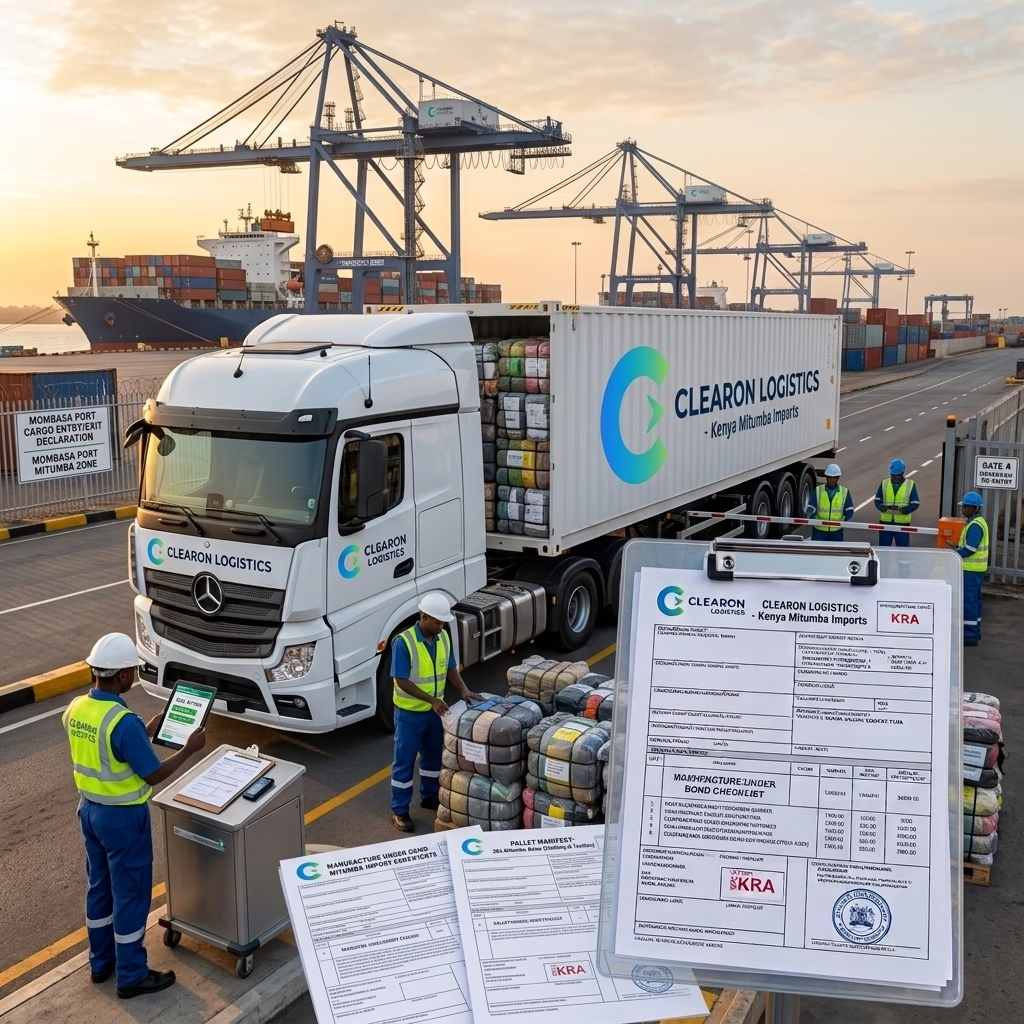
Importing mitumba into Kenya is one of the country’s largest and most politically sensitive trade categories — Kenya is Africa’s largest importer of second-hand clothing, bringing in goods worth tens of billions of shillings a year, and a trade that directly supports millions of Kenyans, from traders and transporters to port workers and tailors. It’s also a category currently in the middle of a genuine policy debate, with new tax proposals moving through Parliament that could change what importers pay.
Table of Contents
Why Mitumba Matters So Much to Kenya’s Economy
Kenya imported second-hand clothes and textiles worth an estimated Sh38.5 billion in 2023 alone, making it the largest mitumba importer on the continent, ahead of Ghana, South Africa, Uganda, and Nigeria. Industry estimates suggest roughly 24 million Kenyans regularly buy or wear mitumba clothing, and the trade supports employment for millions more — traders, transporters, port workers, and tailors across the value chain. This scale is exactly why any policy change in this category tends to generate significant public and political attention.
Current Duty and Classification
Second-hand clothing and footwear (classified under tariff heading 6309, among related headings) currently attracts a standard import duty around 30% in Kenya — already one of the higher duty categories compared to many general consumer goods, reflecting the government’s ongoing effort to balance affordable second-hand clothing access against protecting the domestic textile industry.
Is Kenya Going to Ban Mitumba?
Despite periodic proposals and regional pressure — some East African Community member states have floated joint restrictions on second-hand clothing over the years — Kenya’s government has repeatedly and explicitly ruled out an outright ban. As recently as January 2026, the President reaffirmed that Kenya will maintain what’s been described as a “market balance” policy: allowing mitumba to continue alongside efforts to grow the domestic textile industry, rather than restricting the trade outright. The stated rationale is straightforward — a large share of the population depends directly on affordable second-hand clothing, and the trade supports too many livelihoods to remove without a viable, cheaper domestic alternative already in place.
That said, “no ban” doesn’t mean “no changes” — which brings us to what’s currently being proposed instead.
What’s Actually Changing: The Finance Bill 2026 Proposal
Rather than a ban, the government’s approach has shifted toward taxation. The draft Finance Bill 2026 initially proposed a 5% tax on income from imported second-hand clothes, charged at the point of importation and treated as a final tax — meaning importers wouldn’t be able to claim further deductions against it. Industry representatives, through the Mitumba Consortium Association of Kenya (MCAK), pushed back on the framing but notably didn’t oppose taxation outright — instead proposing the same 5% presumptive tax themselves as a predictable, gradual alternative to more extreme measures like an outright ban or steeper taxation, arguing it would let traders plan their businesses without fear of sudden policy shifts.
This is a live legislative process, and the final structure — whether it’s the 5% rate as proposed, an adjusted figure, or a different mechanism entirely — is worth confirming close to your shipment date rather than assuming any one version is final. Bills of this nature have historically been amended, and in at least one prior case, a proposed mitumba tax change was pulled from a Finance Bill entirely after public pushback over affordability concerns.
The AGOA Factor
There’s an added layer of complexity here that’s easy to miss: the United States is both a major source of Kenya’s second-hand clothing imports and the primary market for Kenya’s growing new-textile export sector under the African Growth and Opportunity Act (AGOA). When some EAC neighbours previously pushed for a joint mitumba import ban, the US Trade Representative opened a formal review, ultimately leading to Rwanda’s AGOA apparel benefits being suspended after it maintained restrictions, while Tanzania and Uganda backed down. Kenya’s continued “no ban” stance is, in part, a deliberate choice to protect its own AGOA-linked export trade — a reminder that mitumba policy in Kenya doesn’t exist in isolation from Kenya’s broader trade relationship with the US.
What This Means If You Import Mitumba
- Budget for the current 30% duty rate, and watch for confirmation of any additional tax under the finalised Finance Bill, since a 5% presumptive tax — if enacted — would apply on top of existing duty
- Don’t assume policy stability. This category has seen genuine proposals, pushback, and reversals within a single legislative cycle before — the safest approach is confirming current rules close to each shipment rather than working from what applied even a few months ago
- Keep documentation clean and complete. With a category this politically visible, compliance scrutiny tends to be higher, not lower, making accurate, complete import documentation more important than in less contested trade categories
- Watch the US-Kenya trade relationship. Given the AGOA connection, developments in that relationship can have knock-on effects on Kenya’s domestic mitumba policy
Navigating a Moving Regulatory Target
Few import categories in Kenya combine this much economic scale with this much active policy uncertainty. For mitumba importers, the practical challenge isn’t understanding today’s rules — it’s staying current as those rules shift, sometimes within a single Finance Bill cycle.
At Clearon Logistics, we track exactly this kind of fast-moving regulatory landscape so our clients aren’t operating on outdated assumptions, and we give a transparent, current breakdown of duty and any applicable taxes before you commit to an order — because in a category this politically active, “what applied last year” is not a safe planning basis.
Importing second-hand clothing into Kenya and want confirmation of current duty and tax rules? Talk to Clearon Logistics before your next shipment.
Frequently Asked Questions
Is mitumba banned in Kenya? No — the Kenyan government has repeatedly and explicitly ruled out a ban, most recently reaffirmed in January 2026, citing the millions of Kenyans who depend on affordable second-hand clothing and the trade’s role in employment.
What duty currently applies to imported second-hand clothing? Second-hand clothing and footwear currently attracts a standard import duty around 30%, among the higher rates applied to general consumer goods categories.
Is a new tax on mitumba definitely coming? A 5% tax on mitumba import income was proposed in the draft Finance Bill 2026, and industry bodies have proposed a similar rate themselves as an alternative to harsher measures — but the final legislative outcome should be confirmed close to your shipment date, since proposals in this category have changed before.
Why does US trade policy affect Kenya’s mitumba rules? The US is a major source of Kenya’s second-hand clothing imports and the key market for Kenya’s AGOA-linked textile exports, giving Kenya a strong incentive to avoid measures — like an outright mitumba ban — that could trigger US trade retaliation against its own export sector.
Further Reading
- Mitumba Consortium Association of Kenya (MCAK) (external, dofollow)
- AGOA.info — African Growth and Opportunity Act (external, dofollow)
- Related on our blog: Customs Clearance Mistakes Kenya: 8 Costly Errors Importers Must Avoid
- Related on our blog: Prohibited and Restricted Goods Kenya: The Essential 2026 Import Checklist
- Our service: Shipping from China to Kenya






Leave a Reply