Importing toys and children’s products into Kenya carries a safety burden that most other consumer goods categories simply don’t — the end user is a child, often too young to recognise or report a hazard themselves, which is exactly why KEBS treats this category with particular seriousness. Between 2021 and 2023, KEBS seized over 17 tonnes of non-compliant toys, mostly imported plastic items, some found to contain lead levels up to 12 times the legal limit. If you’re importing toys or children’s products for the Kenyan market, understanding what actually gets checked, and why, matters considerably more than in most categories.
Table of Contents
The Scale of the Non-Compliance Problem
The 17-tonne seizure figure isn’t an isolated event — it reflects a persistent pattern specifically concentrated in low-cost markets and unbranded online listings, where price competition tends to push suppliers toward cutting corners on exactly the kind of material safety testing that costs money but doesn’t show up in a product photo. Lead content is a particular concern in imported plastic toys, since it’s invisible to a buyer or even a casual inspection, only detectable through proper laboratory testing — precisely the testing PVoC inspection and KEBS certification are designed to catch before the product ever reaches a Kenyan child.
What Actually Gets Tested
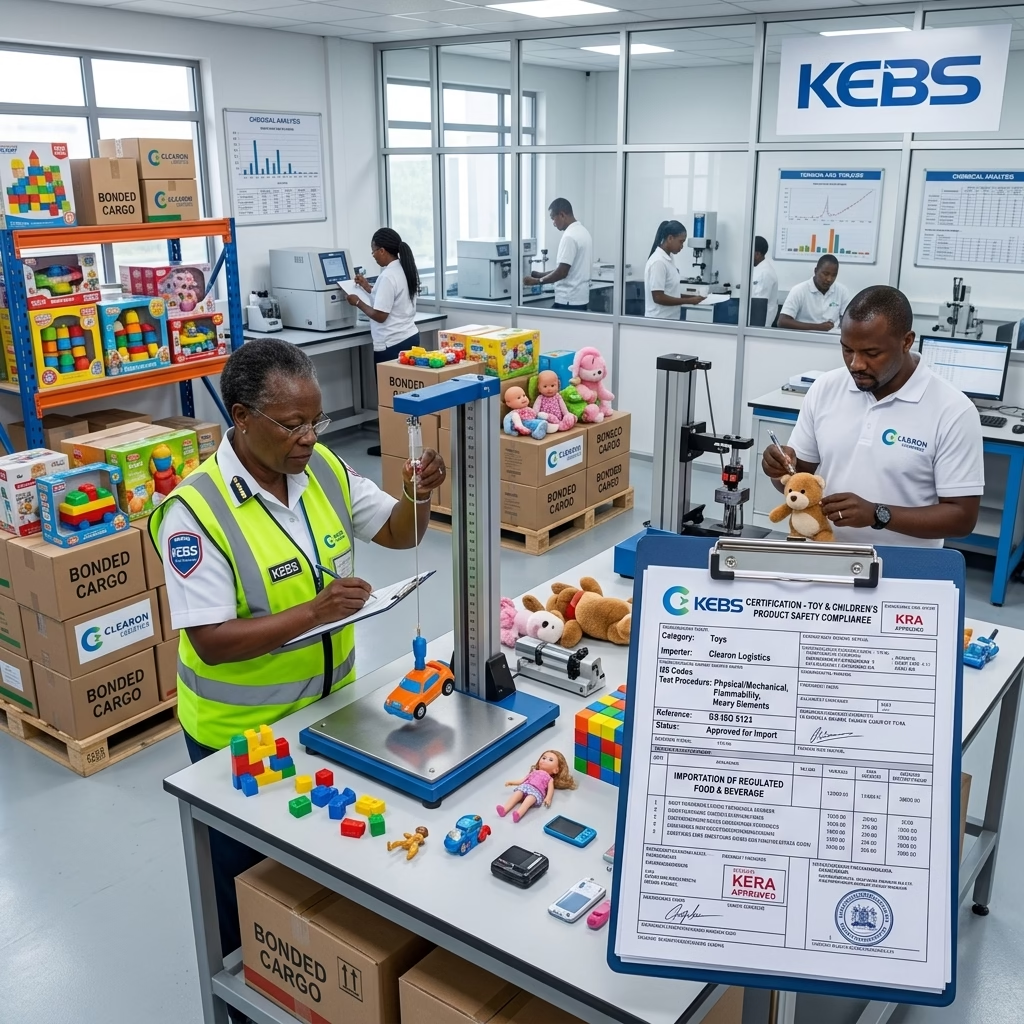
Toys and children’s products imported into Kenya fall under KEBS’s regulated product categories requiring Pre-Export Verification of Conformity (PVoC) inspection before shipment, resulting in a Certificate of Conformity (CoC) and the Import Standardization Mark on arrival — the same underlying framework covered elsewhere on our blog, but with materials testing that’s particularly critical for this category:
- Heavy metal content, particularly lead, in paints, coatings, and plastics
- Phthalate levels, chemical plasticisers linked to health concerns, particularly relevant in soft plastic toys
- Physical construction safety, including small parts, sharp edges, and structural durability
Genuine KEBS certification means the product carries the official KEBS mark — a blue-and-white shield logo — with a traceable registration number, distinct from a counterfeit or self-applied mark that isn’t backed by actual testing.
The Choking Hazard Standard
This is a specific, measurable requirement worth knowing precisely: for any toy intended for children under three years old, no detachable part may be smaller than 31.7 millimetres in diameter — roughly the size of a toilet paper roll core, the internationally recognised benchmark for choking hazard risk. This isn’t a subjective judgement call left to inspectors — it’s a defined physical standard that applies specifically to age-appropriate design, meaning a toy’s small components, detachable pieces, and overall construction need to be evaluated against this exact threshold before import, not assessed loosely at the point of sale.
Where Products Have to Pass Inspection
Toys and children’s products are explicitly listed among the product categories where KEBS’s secure Quality Marks and Track and Trace verification system applies — alongside categories like electrical fittings, appliances, and food products, reflecting genuine health and safety stakes. Products arriving without the mandatory Certificate of Conformity and Import Standardization Mark can be delayed and even prohibited from admission into the country entirely — not simply flagged for a minor correction, given how directly this category ties to child safety outcomes.
Labelling Requirements Specific to Children’s Products
Beyond material safety, toys and children’s products require clear, age-appropriate labelling — indicating the intended age range and any relevant safety warnings, so consumers can make informed choices about which products suit which children. This mirrors regulatory approaches in more established markets, like the UK’s Toys (Safety) Regulations, which cover manufacturer, importer, and distributor obligations explicitly — a framework Kenya’s own regulatory conversation has referenced as a benchmark worth working toward, given ongoing public concern about gaps in enforcement consistency.
Why This Category Deserves Extra Diligence, Not Less
Given how price-sensitive the toy market can be, there’s a genuine temptation to source the cheapest available supplier without probing too deeply into their testing and certification practices — but this is precisely the category where that shortcut carries the most serious consequences. A cost saving on an uncertified toy shipment isn’t just a compliance risk to your business; given the documented lead content findings in non-compliant imports, it’s a genuine health risk to the children who end up using the product.
Getting Toy and Children’s Product Imports Right
Because this category combines genuine health stakes with active KEBS enforcement — including seizure and destruction of non-compliant stock — sourcing decisions here deserve the same rigour as any other regulated product category, arguably more, given who the end user actually is.
At Clearon Logistics, we help toy and children’s product importers confirm their supplier can produce genuine, verifiable test results and PVoC certification before shipment, rather than accepting a supplier’s assurance at face value — because in this category, getting it wrong doesn’t just cost you a delayed shipment, it puts a real product in a child’s hands.
Importing toys or children’s products into Kenya? Talk to Clearon Logistics to confirm your supplier’s testing and certification before you order.
Frequently Asked Questions
What’s the actual lead content problem with imported toys in Kenya? KEBS seized over 17 tonnes of non-compliant toys between 2021 and 2023, with some imported plastic items found to contain lead levels up to 12 times the legal limit — concentrated particularly in low-cost markets and unbranded listings.
What’s the specific choking hazard standard for toys aimed at young children? For toys intended for children under three, no detachable part may be smaller than 31.7 millimetres in diameter — a defined, measurable threshold, not a subjective judgement.
Can toys be sold in Kenya without KEBS certification? No — toys and children’s products fall under KEBS’s regulated categories requiring PVoC pre-shipment inspection and the Import Standardization Mark; products arriving without these can be delayed or prohibited from entry entirely.
How can I verify a toy supplier’s KEBS certification is genuine rather than counterfeit? Genuine certification includes a traceable registration number linked to KEBS’s Track and Trace verification system — a legitimate supplier should be able to provide this, and it can be checked rather than simply taken on trust.
Further Reading
- Kenya Bureau of Standards (KEBS) — Import Inspection (external, dofollow)
- KEBS Consumer Complaints — 0800 721 999 / consumers@kebs.org (external, dofollow)
- Related on our blog: KEBS Marks Explained: 4 Certifications Importers Must Understand
- Related on our blog: What Happens If You Ship Goods to Kenya Without a Certificate of Conformity?
- Our service: Clearing and Forwarding Services in Kenya
Leave a Reply