
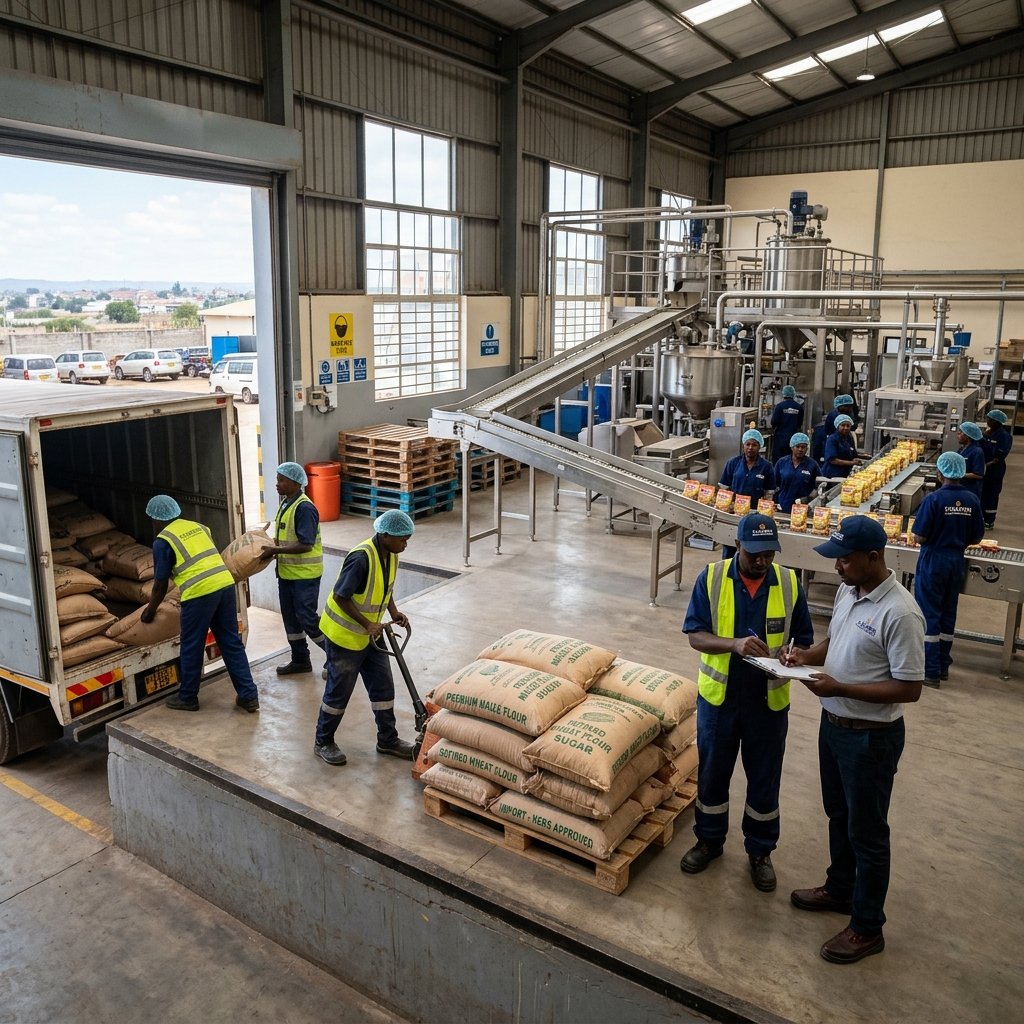
A clearing agent for food and beverage processors manages two very different import streams at once: production equipment, which follows machinery rules, and ingredients and packaging, which follow food-safety, policy and environmental rules. Get either wrong and a plant stops, whether because a filler line is stuck at the port or a key ingredient fails shelf-life or classification checks.
Table of Contents
Stream One: Production Equipment
Mixers, fillers, bottling lines, packaging machines and refrigeration follow the classification, certification and logistics rules in our industrial machinery guide. Manufacturing incentives such as bonded manufacturing, duty remission and zone regimes can reduce equipment cost but must be arranged before importing; see our incentives guide. Food-contact materials and electrical components should be checked for certification.
Stream Two: Ingredients
Ingredients can attract KEBS, KEPHIS, veterinary, dairy, biosafety or port-health oversight depending on what they are, as covered in our food and beverage guide. Shelf-life on landing must exceed the required fraction, grains need moisture and aflatoxin compliance (see our maize guide), and products derived from approved GMO categories need biosafety clearance (see our GMO guide). Ask for certificates of analysis and production dates before you order.
Policy-Sensitive Inputs
Sugar, edible oils, rice and cereals have seen quota, duty and enforcement changes. Industrial sugar users may rely on time-limited waiver windows for authorised firms; edible oil imports have been under scrutiny for misclassification. Review the current position for your key inputs using our guides to sugar, cooking oil and rice, and don’t price annual contracts from last year’s duty.
Packaging, Labels and Excise
Packaging falls under Extended Producer Responsibility, labels must meet content and net-quantity requirements (weights and measures guide), and some beverages need excise stamps (excise stamps guide). Processors that import their own packaging materials should check each of these before ordering.
Manufacturer Costs After Import
Beverage manufacturers were specifically named among sectors expected to feel the expanded KEBS Standards Levy, a turnover-based cost on top of import charges. Your own premises also need public health licensing (food hygiene guide). Model all of these in your cost of goods, not just border charges.
Documentation Pack for Processors
- Itemised invoices for equipment, ingredients and packaging
- Certificates of analysis, production and expiry dates for ingredients
- Phytosanitary, veterinary or other permits where applicable
- Scheme approvals (bonded manufacturing, remission, zone) for equipment and inputs
- Certificates of Conformity or exemption letters
- Certificate of Origin, export declaration document and Advance Cargo Declaration reference
- Local marine cargo insurance certificate
Working With Clearon Logistics for Processors
We map each input and machine to its regulator and scheme, check shelf-life and classification before shipping, and itemise every cost so production planning rests on real numbers.
Importing production lines or ingredients for a food or beverage plant? Talk to Clearon Logistics with your equipment and ingredient lists, and we’ll map the compliance route for each.
Frequently Asked Questions
Can processors import machinery duty-free? Sometimes through incentive schemes, but these must generally be arranged before import and depend on eligibility.
Why must I check shelf life before ordering ingredients? Imported goods with limited shelf life must arrive with a minimum fraction of shelf life remaining, so ingredients can fail even when technically in date.
Do I pay the Standards Levy at the border? No. It’s a turnover-based levy paid by manufacturers, separate from import charges.
Does my factory need a food hygiene licence? Yes. Premises handling food need public health licensing separate from import clearance.
Further Reading
- Kenya Bureau of Standards (KEBS) (external, dofollow)
- Kenya Association of Manufacturers (external, dofollow)
- Related on our blog: Importing Food and Beverage Products into Kenya
- Related on our blog: KEBS Standards Levy Kenya
- Related on our blog: Food Hygiene Licensing Kenya
- Our service: Clearing and Forwarding Services in Kenya


Leave a Reply