
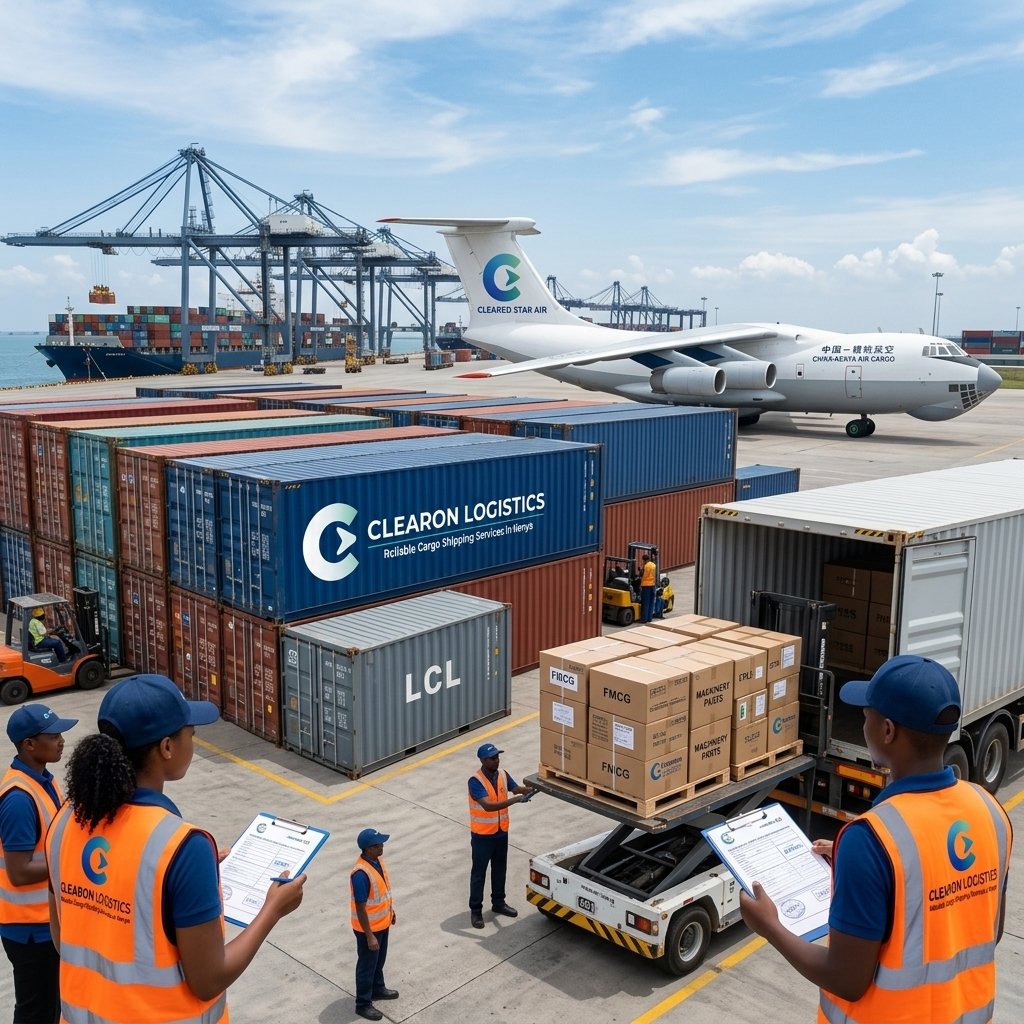
Shipping from China to Kenya is the backbone of commercial importing for most Kenyan businesses, and the choice you make at the start, full container, shared container or air, shapes your cost, your timeline and the paperwork your cargo needs. We move commercial cargo from China to Kenya by sea in full container loads (FCL) and shared containers (LCL), and by air, on both EXW and FOB terms. This guide explains how the options compare and what to settle before your supplier ships.
Table of Contents
Three Ways to Move Cargo From China to Kenya
Each mode suits a different shipment:
| FCL (full container) | LCL (shared container) | Air freight | |
|---|---|---|---|
| Best for | Steady, larger volumes | Smaller or mixed volumes | Urgent, high-value or light cargo |
| Time | Weeks | Weeks, plus consolidation time | Days |
| Priced by | Container | Cubic metre or tonne | Chargeable weight (kg) |
| Watch out for | Container fill and port choice | Valuation scrutiny and cut-off dates | Volumetric weight |
There is no universally best choice. Volume, urgency, product value and cash flow decide it, and our air versus sea comparison and FCL versus LCL guide go deeper on the trade-offs.
Where We Ship From
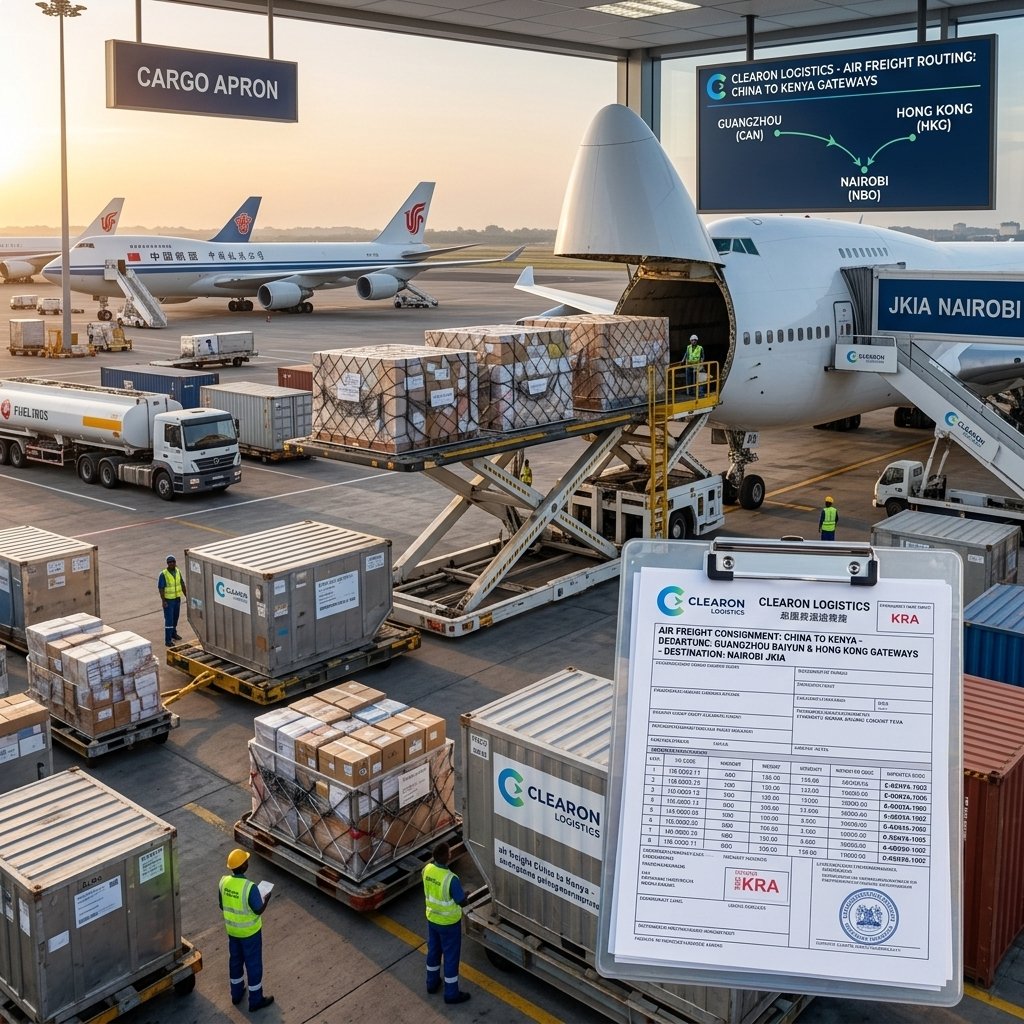
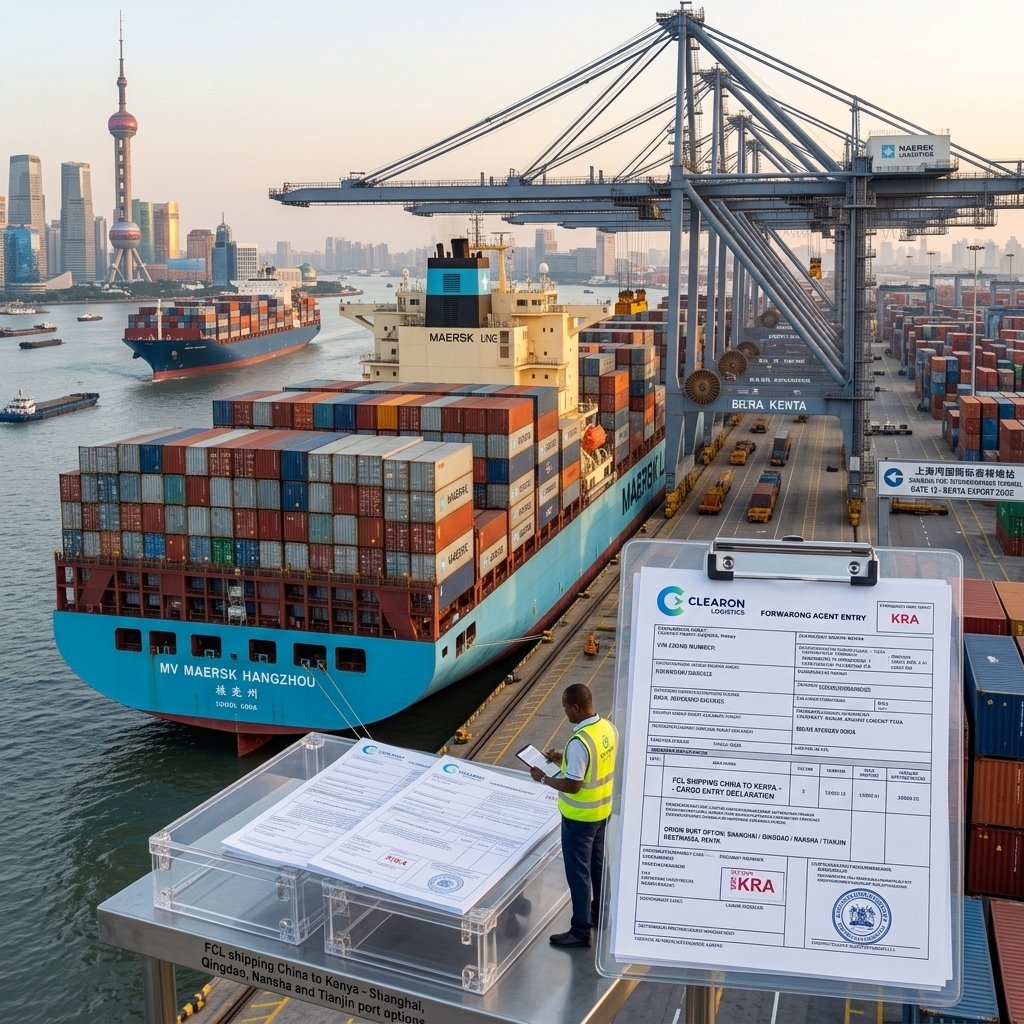
For sea freight our main China ports are Shanghai, Qingdao, Nansha (Guangzhou) and Tianjin; for air freight we ship through Guangzhou Baiyun and Hong Kong. The right gateway follows your supplier’s location, because trucking cargo a long way inland to a distant port adds cost and time. Read our guides to choosing between the four ports and the two airports before you agree a pickup point with your supplier.
EXW or FOB: Settle It Before You Pay a Deposit
We handle both EXW and FOB shipments. The term on your supplier’s quotation decides who arranges pickup, inland transport, Chinese export clearance and loading, and it changes what a quote really costs. Our guide to EXW versus FOB for China to Kenya sets out who does what, and our Incoterms guide covers the other terms.
What Kenya Now Requires Before Your Cargo Leaves China
Several Kenyan requirements have to be satisfied on the China side, before loading, not after arrival:
- An Advance Cargo Declaration reference for containerised sea cargo, endorsed on the Bill of Lading, since carriers validate it before loading
- A Certificate of Origin for every shipment
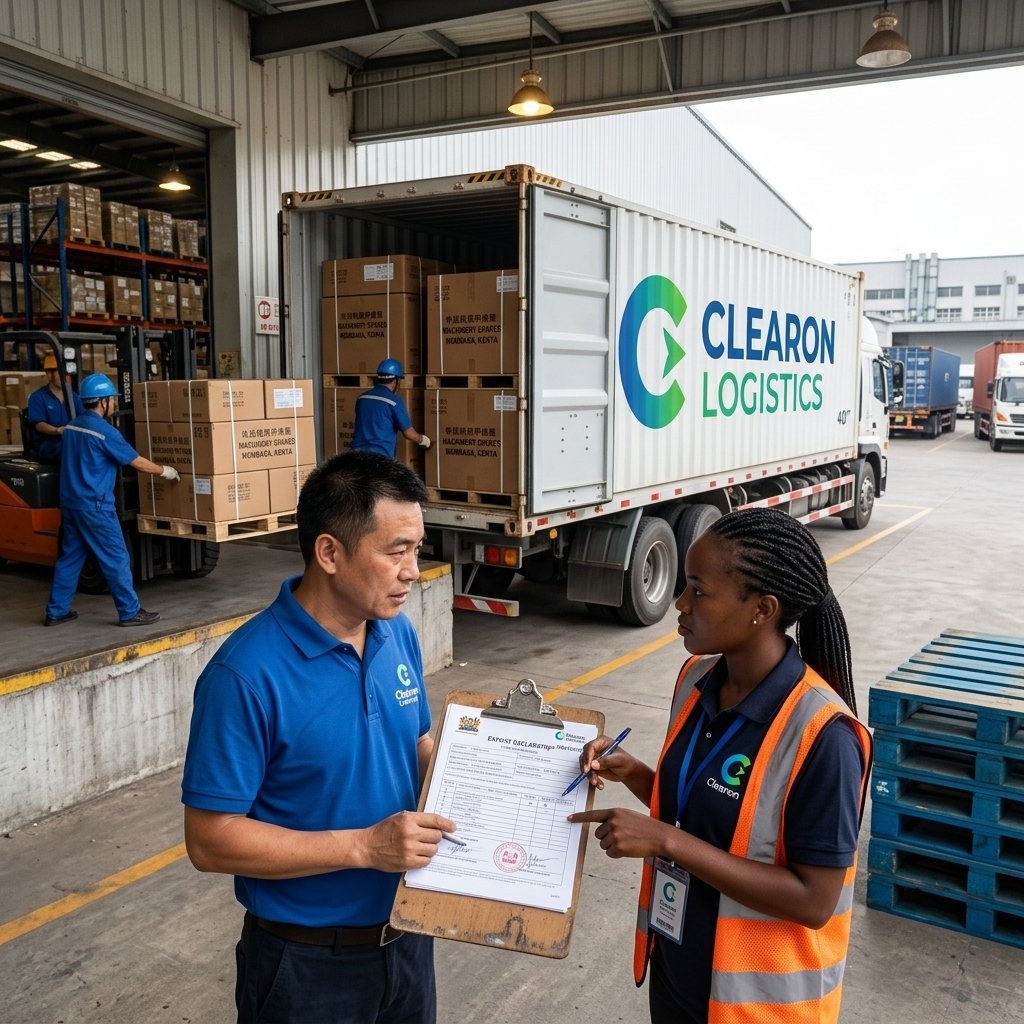
- An export declaration document issued by Chinese customs, which importers must keep for five years
- Valid local marine cargo insurance from a Kenya-licensed insurer
- A Certificate of Conformity from pre-export inspection for regulated products
- Compliant wood packaging under ISPM 15, if you use wooden crates or pallets
- A CFS nomination on the Bill of Lading for sea cargo
Your supplier needs to know about these from the first order. Our 2026 compliance overview explains each requirement.
How a Shipment Moves, Step by Step
- Check the product. Confirm the HS code, permits and certification before ordering.
- Choose mode and term. Decide FCL, LCL or air, and EXW or FOB.
- Get a quote. Give us the details listed below, and we’ll confirm routing options.
- Cargo readiness. Goods are produced, packed and made ready for pickup or delivery to the consolidation point or port.
- Documents. Export documents, the ACD reference for sea containers, certificates and invoices are prepared and checked against each other.
- Sailing or flight. Cargo is loaded and moves to Kenya.
- Arrival and clearance. Cargo arrives at Mombasa or JKIA and is cleared; see our guides to Mombasa Port and JKIA.
- Delivery. Cargo moves on to your premises.
Four Questions That Choose Your Mode
How urgent is it? If a delay costs more than the freight premium, air is justified. How much is there? Larger, regular volumes favour full containers. What is it? Batteries, liquids and some other goods need special handling, particularly by air. What does cash flow allow? Sea freight ties up money in transit for weeks; our landed cost guide helps you count the real cost of each choice.
What We Need to Quote Your Shipment
The more complete your first message, the faster we can respond with real options:
- What the product is, and its HS code if you know it
- Where your supplier is (city and province), since this decides the port or airport
- Cargo size: number of cartons, total cubic metres (CBM) and gross weight in kg. Minimum chargeable weight for Air freight- 45Kg while LCL minimum 1CBM.
- Packaging type (cartons, pallets, wooden crates) and whether goods are fragile or heavy
- The Incoterm on your supplier’s quotation (EXW or FOB) and the supplier’s contact
- Your target arrival date, and any permits or certificates your product needs
Importing from China for your business? Request a quote from Clearon Logistics with those details, and we’ll come back with routing options for your cargo. You can also read about our China to Kenya shipping service.
Frequently Asked Questions
Which China ports and airports do you ship from? Sea freight from Shanghai, Qingdao, Nansha and Tianjin, and air freight through Guangzhou Baiyun and Hong Kong.
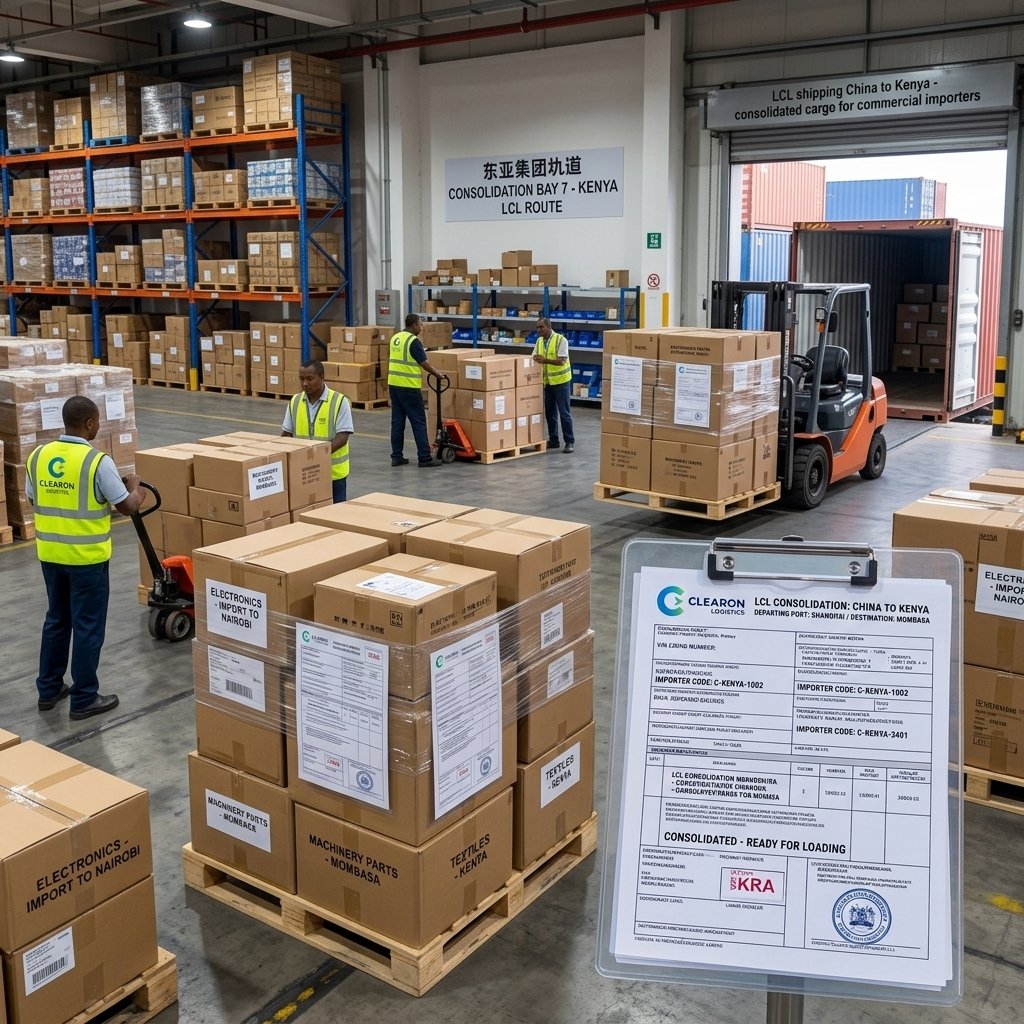
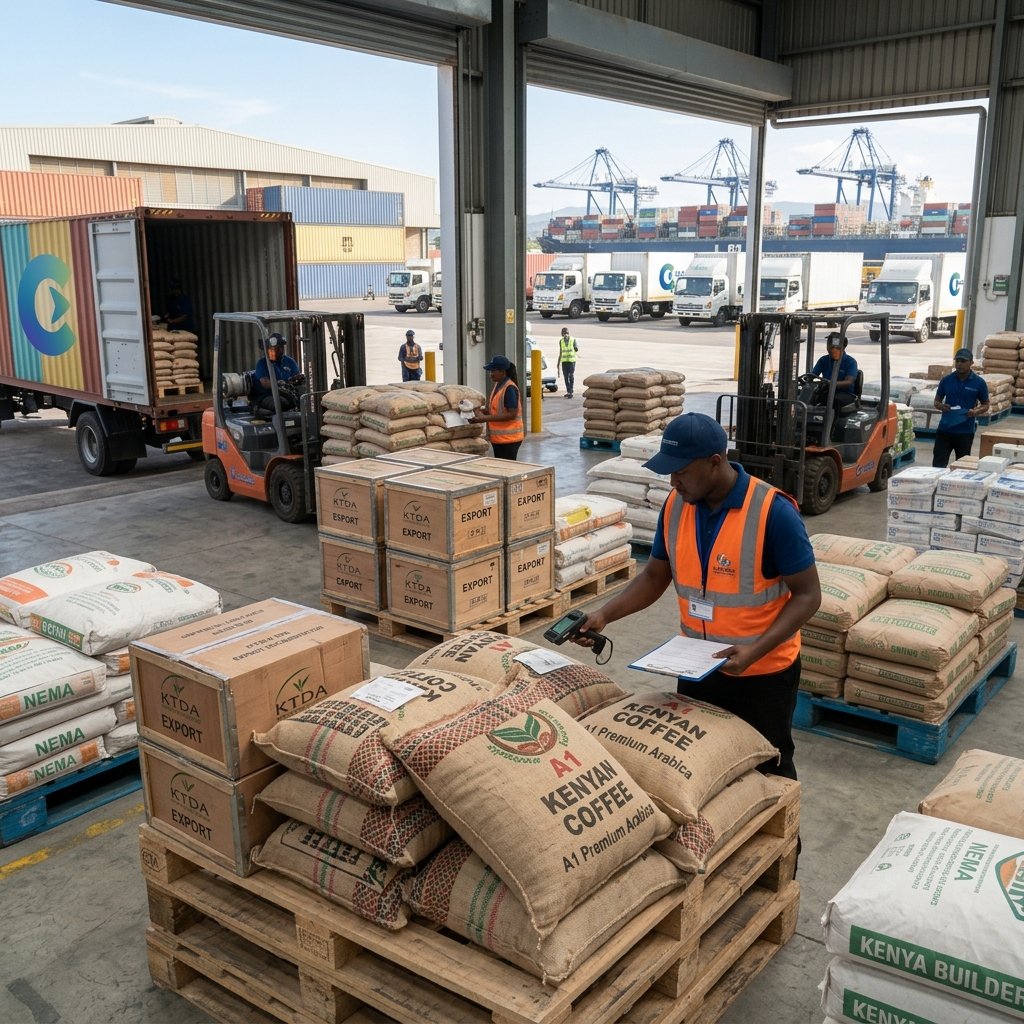
Do you handle both FCL and LCL? Yes. We offer full container loads and shared container (LCL) shipments by sea, plus air freight.
Can I ship on EXW terms? Yes. We handle both EXW and FOB shipments. Tell us the term on your supplier’s quotation and we’ll explain who does what.
What should I do before my supplier ships? Confirm the HS code, check permits and certification, and make sure your supplier can provide the Certificate of Origin and export declaration document, plus the ACD reference for sea containers.
Further Reading
- Kenya Revenue Authority: Advance Cargo Declaration platform (external, dofollow)
- Kenya Ports Authority (external, dofollow)
- Related on our blog: EXW vs FOB for China to Kenya
- Related on our blog: FCL Shipping from China to Kenya: Choosing a Port
- Related on our blog: LCL Shipping from China to Kenya
- Related on our blog: Air Freight from China to Kenya
- Our service: Clearing and Forwarding Services in Kenya


Leave a Reply