
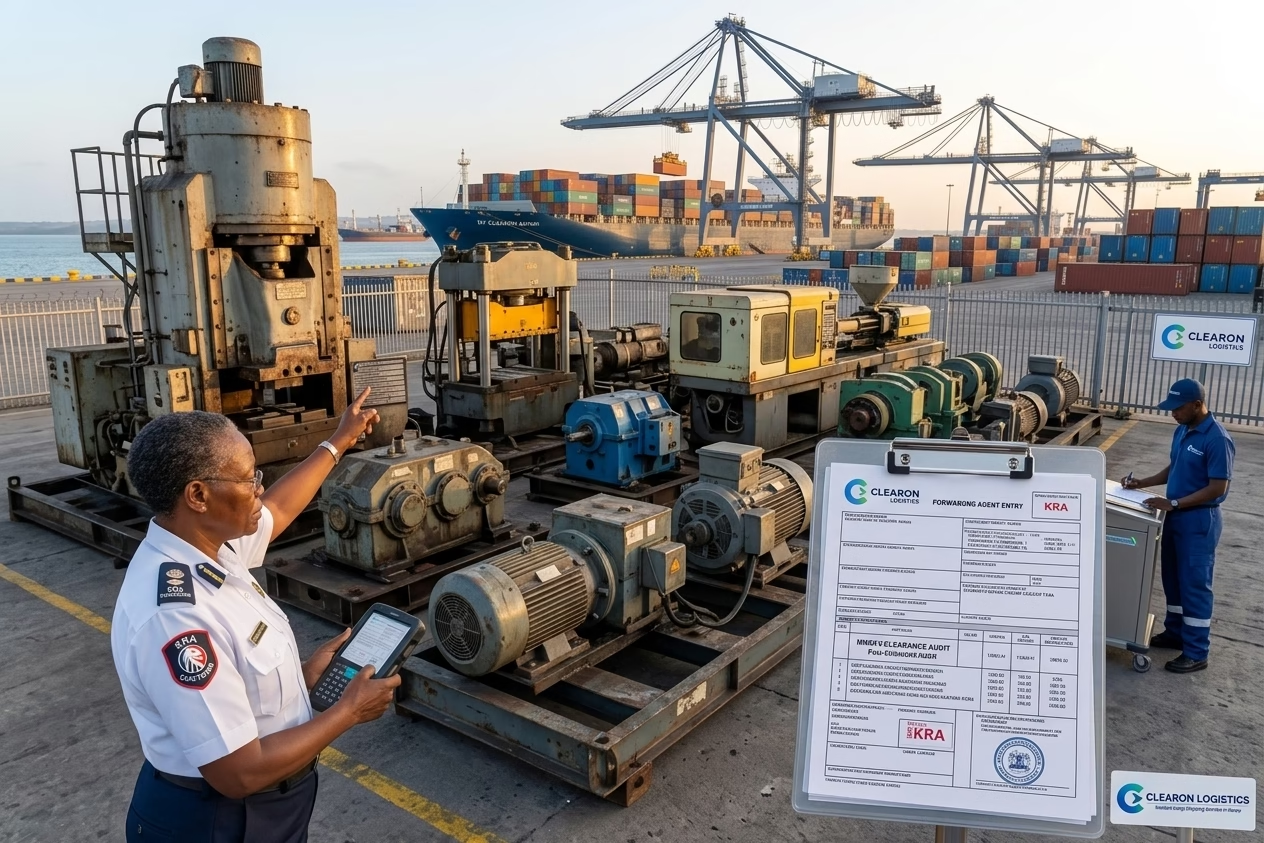
Importing used machinery into Kenya raises a question many buyers assume has the same answer as importing a used car: is there an age limit? The honest answer is more nuanced than that, and getting it wrong — either by assuming a restriction that doesn’t apply, or missing one that does — can affect your sourcing decisions significantly.
Table of Contents
No Blanket Age Limit — But Don’t Assume That Means No Scrutiny
Kenya’s well-known eight-year age rule applies specifically to motor vehicles, under KS 1515:2000 — the Kenya Standard Code of Practice for Inspection of Road Vehicles. This is a vehicle-specific standard. There isn’t an equivalent, uniformly published age-limit rule that applies across all categories of used industrial machinery and equipment the way there is for cars.
That doesn’t mean used machinery gets a free pass — it means the compliance framework works differently, built around standards, valuation, and safety verification rather than a fixed age cutoff.
What Actually Applies to Used Machinery
Rather than an age limit, used machinery imports are governed by the same general frameworks that apply to most regulated imports into Kenya:
- Pre-Export Verification of Conformity (PVoC) — most machinery categories require inspection and a Certificate of Conformity from a KEBS-appointed agent before shipment, confirming the equipment meets relevant Kenyan standards
- Import Standardization Mark (ISM) — required for machinery sold into the local market, confirming KEBS verification of the specific consignment
- Standard customs documentation — IDF, commercial invoice, and the now-mandatory Certificate of Origin, same as any other commercial import
For machinery and equipment classified as equity capital or acquired through loan-financed purchases, prior approval is generally required before import — local banks won’t issue shipping guarantees for clearance without this approval already in place, which is worth confirming with your financing arrangement well before your equipment ships.
Valuation Is Where Used Equipment Gets Complicated
Unlike a new machine with a clean invoice value, used equipment valuation can draw more scrutiny from customs, since a supplier’s asking price for second-hand machinery is inherently less standardised than a new-equipment price list. Expect customs to potentially question or independently assess declared value more closely than they would for an equivalent new import — meaning clean, well-documented purchase records and, where relevant, an independent valuation or condition report can meaningfully strengthen your position if your declared value is questioned.
Sector-Specific Rules Still Apply
Depending on what the machinery is for, sector-specific rules can layer on top of the general framework:
- Environmental and safety standards for equipment used in manufacturing or industrial processes
- NEMA considerations for machinery that could have environmental implications, particularly older equipment that may not meet current emissions or efficiency standards
- Sector regulator requirements for specialised equipment — medical, agricultural, or telecommunications machinery each have their own additional oversight beyond general customs and KEBS requirements
If You’re Importing Under an Investment Incentive Scheme
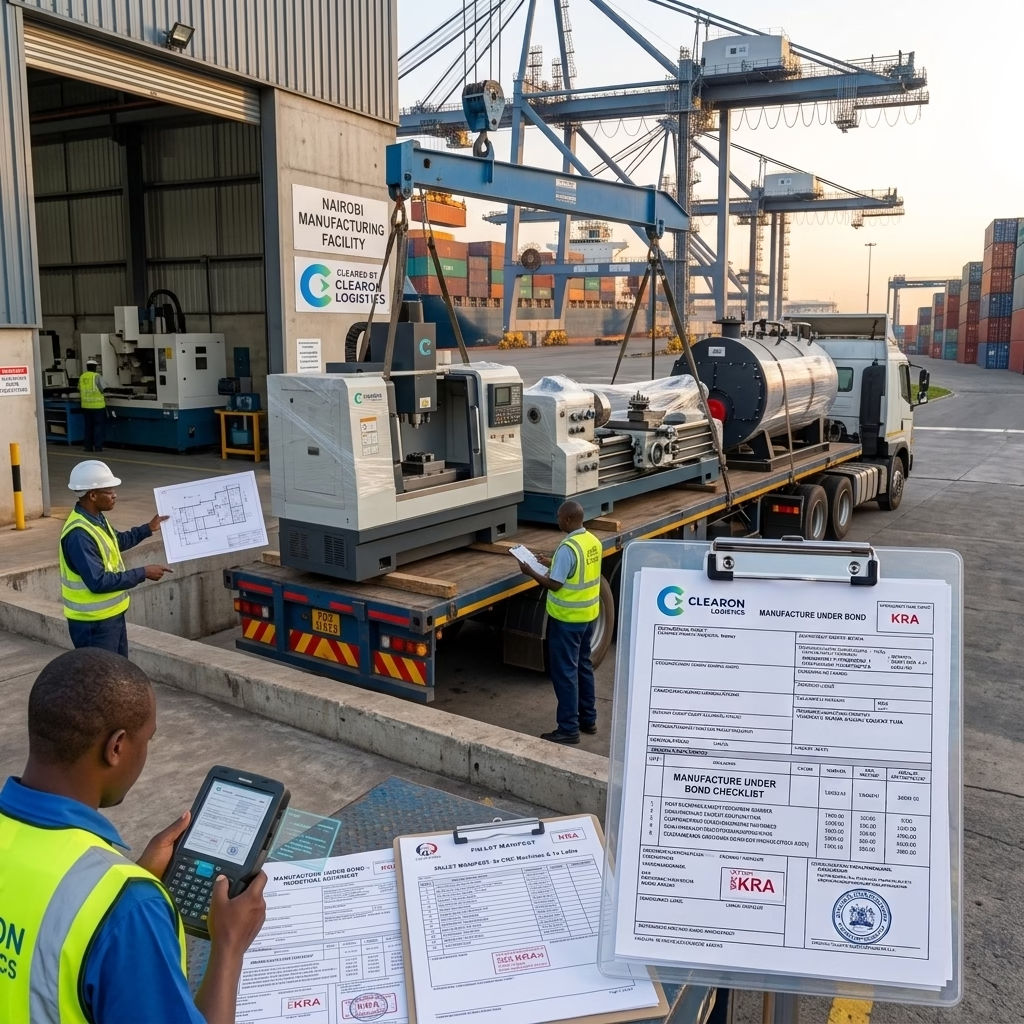
If you’re bringing in used machinery as part of setting up or expanding a manufacturing operation, it’s worth checking how this interacts with schemes like Manufacture Under Bond or the Duty Remission Scheme — these frameworks are generally built around machinery and equipment more broadly, but the specifics of how used equipment is valued and treated under a bond or remission arrangement are worth confirming directly with your clearing agent before committing to a purchase, since this can differ meaningfully from how new equipment is handled under the same scheme.
Practical Steps Before You Buy Used Equipment
- Don’t assume an age limit exists the way it does for vehicles — but also don’t assume the absence of one means no compliance requirements apply
- Arrange PVoC inspection for your specific equipment category before shipment, rather than risking a more disruptive destination inspection
- Keep thorough purchase and condition documentation, since used equipment valuation tends to face more scrutiny than new equipment
- Confirm financing approval requirements early if the machinery is being acquired through equity capital or loan financing
- Check whether your specific equipment category has sector-specific requirements beyond general customs and KEBS rules
Getting Used Machinery Imports Right
Because there’s no single, published rule covering used machinery the way there is for vehicles, this category rewards careful, case-by-case verification rather than assuming a general framework applies uniformly. What’s true for one type of industrial equipment may not be true for another.
At Clearon Logistics, we help importers confirm exactly what applies to their specific used machinery before they commit to a purchase — PVoC requirements, valuation considerations, financing approvals, and any sector-specific rules — so the compliance picture is clear before your equipment ships, not discovered once it’s already at the port.
Importing used machinery or industrial equipment into Kenya? Talk to Clearon Logistics to confirm what applies to your specific equipment before you buy.
Frequently Asked Questions
Is there an age limit for importing used machinery into Kenya, like there is for vehicles? No — the eight-year age rule applies specifically to motor vehicles under KS 1515:2000. There isn’t an equivalent uniform age-limit standard published for general used industrial machinery.
Do I need a Certificate of Conformity for used machinery? Generally yes — most machinery categories fall under the PVoC programme requiring pre-shipment inspection and certification, regardless of whether the equipment is new or used.
Why might customs question the declared value of used equipment more than new equipment? Used machinery pricing is inherently less standardised than new-equipment price lists, so customs may scrutinise declared value more closely — clean purchase documentation and an independent valuation, where relevant, help support your declared figure.
Does buying used machinery affect eligibility for schemes like Manufacture Under Bond? It can — the treatment of used equipment under investment incentive schemes is worth confirming directly for your specific situation, since it may differ from how new equipment is handled under the same scheme.
Further Reading
- Kenya Bureau of Standards (KEBS) (external, dofollow)
- Kenya Investment Authority (KenInvest) (external, dofollow)
- Related on our blog: Importing Machinery into Kenya: Manufacture Under Bond and Investment Incentives
- Related on our blog: Importing Construction Materials into Kenya: The KEBS Standards You Can’t Skip
- Our service: Clearing and Forwarding Services in Kenya


Leave a Reply