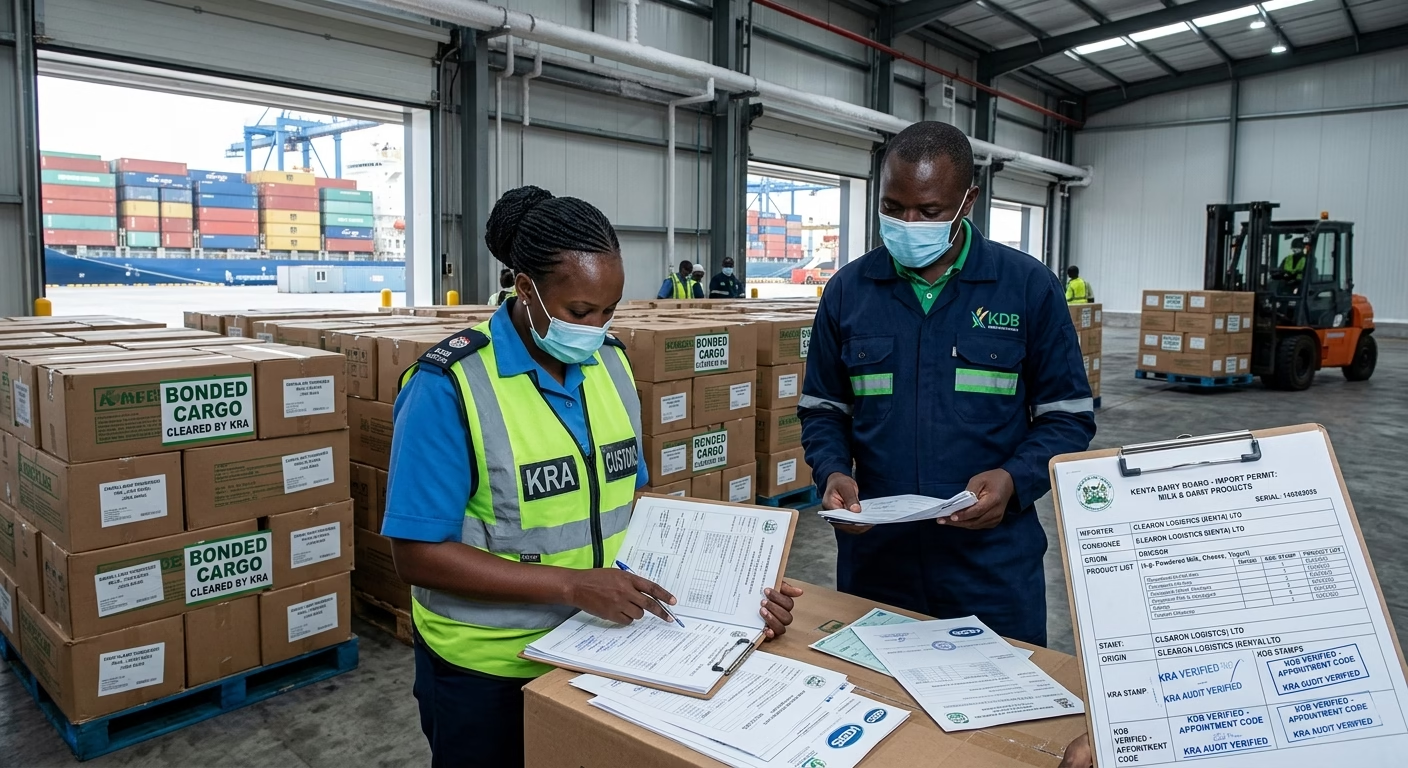
Kenya Dairy Board licensing governs one of the more tightly monitored agricultural trade categories in the country — and for good reason: Kenya is Africa’s leading dairy industry player, with a domestic sector the Kenya Dairy Board (KDB) actively works to protect through controlled, deliberate import and export permitting rather than open market access.
Table of Contents
Why Dairy Imports Aren’t Simply Approved on Request
Under the Dairy Industry (Imports and Exports) Regulations, 2021, made under the Dairy Industry Act (Cap 336), the Kenya Dairy Board doesn’t issue import permits automatically upon application. The Board is explicitly required to weigh several factors before granting one, including whether there is a deficit or surplus of the specific dairy produce in the Kenyan market, and the general risk involved in the proposed importation. This means dairy import permits function partly as a market-management tool — protecting domestic producers when local supply is adequate, while allowing imports when there’s a genuine market gap — rather than a straightforward customs formality available to anyone who applies.
The Veterinary “No Objection” Requirement
Before KDB can even consider issuing an import permit, the applicant must first obtain a certificate of no objection from the Directorate of Veterinary Services. This is a distinct, prior step — KDB’s own regulations specifically state the Board may not issue an import permit without this veterinary sign-off already in place. For an importer, this means the practical sequence starts with Veterinary Services, not directly with KDB, and skipping ahead to apply to KDB before securing this clearance simply won’t result in an approved permit.
Where Your Product Must Come From
This is a detail with real sourcing implications: for meat, dairy, and related animal-derived products, Kenya requires that the originating facility — the processing plant or equivalent — be approved and designated by the “highest veterinary authorities” of the country of origin. This needs to be demonstrated as part of the application for the Directorate of Veterinary Services’ no-objection certificate, meaning your specific overseas supplier’s facility needs its own recognised veterinary approval in its home country before your import application in Kenya can even proceed.
The Import Clearance Certificate Sequence
Once all requirements are satisfied — veterinary no-objection, KDB import permit, and confirmation that relevant KEBS or sanitary standards are met — the Board issues an import clearance certificate. This document functions as confirmation that the full regulatory sequence has been properly completed, not just that an application was submitted. Notably, the regulations also require a health certificate from the competent authority in the exporting country to accompany dairy shipments, layering an additional origin-side certification requirement onto the process.
Ongoing Reporting Obligations, Not Just a One-Time Permit
Dairy importers face a recurring compliance obligation that many other import categories don’t: anyone licensed to import or export dairy produce must file reports, returns, or estimates with the Board no later than the tenth day of the month following each import or export transaction. This isn’t a one-time permit-and-forget arrangement — it’s an ongoing monthly reporting relationship with the regulator, meaning dairy importers need internal processes to track and report their trade activity consistently, not just at the point of initial licensing.
Licensing Premises, Not Just Products
Separately from import/export permitting, anyone handling milk and dairy products within Kenya — processing, distributing, retailing — needs a KDB premises licence, categorised by scale and activity: retail outlets, manufacturing businesses (with specific tiers based on daily handling capacity, such as 500kg to 10,000kg per day), and farm-level processing enterprises each have their own licence category. Premises are physically inspected before licensing to confirm compliance with milk quality and safety requirements, with routine follow-up inspections afterward — and non-compliance can lead to licence revocation. By the end of 2021, KDB had issued permits to 35 processors, 42 mini dairies, 132 cottage industries, 226 milk dispensers, 1,069 milk bars, and 282 cooling plants — illustrating just how granular and widespread this licensing framework actually is across the dairy value chain.
Navigating a Deliberately Controlled Import Category
Because dairy import permitting is explicitly designed around market-management considerations, not simple regulatory approval, timing and market conditions can genuinely affect whether a permit is granted — a very different dynamic from most other regulated import categories on our blog, where compliance alone determines the outcome.
At Clearon Logistics, we help dairy importers navigate the full sequence — Veterinary Services no-objection, KDB import permit application, and the ongoing reporting obligations that follow — so the process moves through each required step correctly rather than stalling at a stage that could have been avoided with earlier preparation.
Importing milk or dairy products into Kenya? Talk to Clearon Logistics to understand the full KDB and veterinary clearance sequence before you order.
Frequently Asked Questions
Can I apply for a KDB import permit directly, without going through Veterinary Services first? No — KDB’s own regulations specify the Board may not issue an import permit unless the applicant has already obtained a certificate of no objection from the Directorate of Veterinary Services.
Does KDB automatically approve dairy import applications that meet all documentation requirements? Not automatically — the Board also weighs market factors, including whether there’s a deficit or surplus of the specific dairy produce in the Kenyan market, meaning permit approval isn’t purely a compliance checkbox.
Do dairy importers have ongoing reporting obligations after receiving their import permit? Yes — licensed importers must file reports, returns, or estimates with KDB no later than the tenth day of the month following each import or export transaction, an ongoing monthly obligation, not a one-time requirement.
Does the overseas facility supplying dairy products need its own certification? Yes — the processing facility must be approved and designated by the highest veterinary authorities in its own country of origin, which needs to be demonstrated as part of the Kenyan application process.
Further Reading
- Kenya Dairy Board (KDB) (external, dofollow)
- Kenya Law — Dairy Industry (Imports and Exports) Regulations, 2021 (external, dofollow)
- Related on our blog: Importing Food and Beverage Products into Kenya: 5 Rules to Know
- Related on our blog: Importing Pharmaceuticals into Kenya: 5 Critical PPB Steps to Know
- Our service: Clearing and Forwarding Services in Kenya



Leave a Reply