
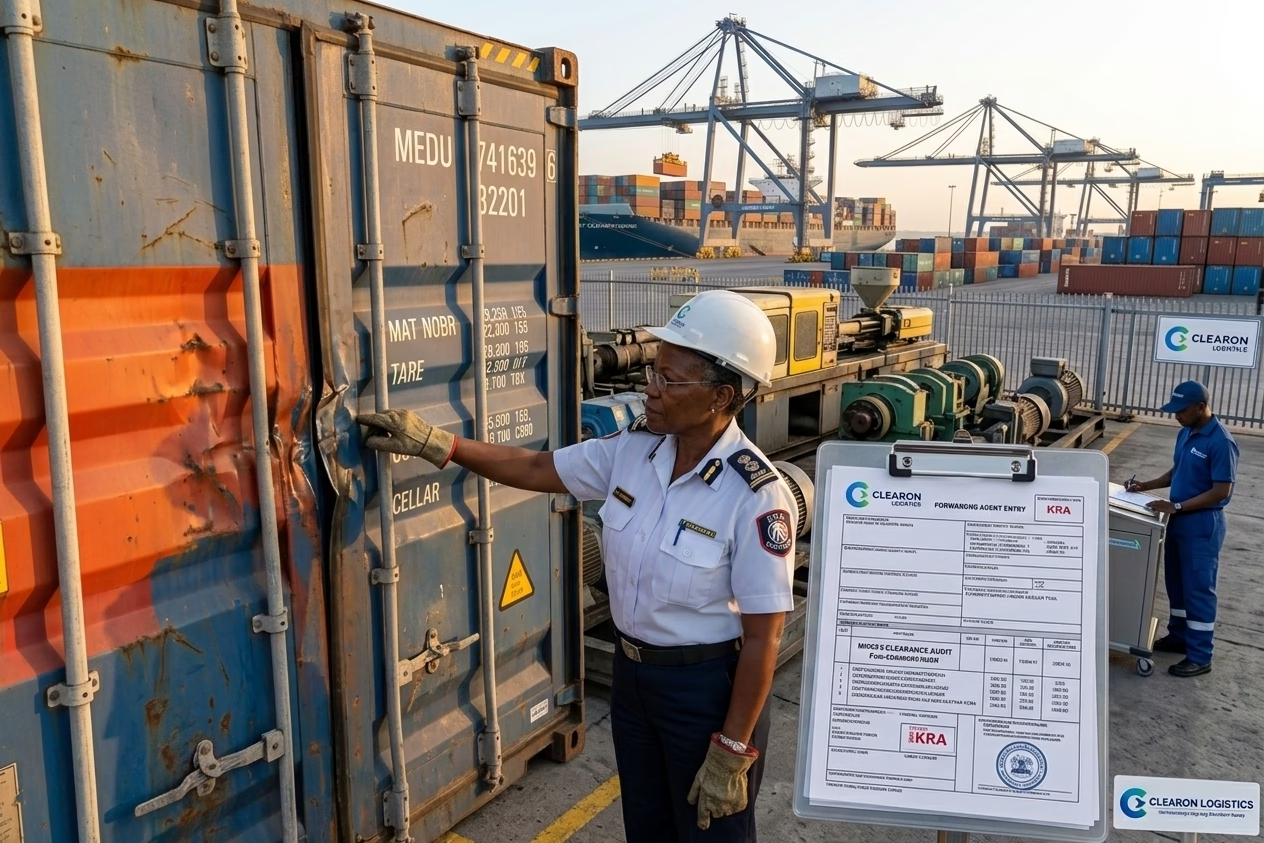
Marine cargo insurance claims in Kenya only matter to most importers in theory — right up until the moment a container arrives with water damage, a pallet shows up crushed, or a shipment simply doesn’t turn up at all. Now that local marine cargo insurance is mandatory for commercial imports, more importers have a policy in place than ever before — but having cover and successfully claiming on it are two different things, and the claims process rewards speed and documentation far more than most people expect.
Table of Contents
What Marine Cargo Insurance Actually Covers
Standard marine cargo policies in Kenya typically provide “warehouse to warehouse” coverage — meaning your goods are covered from the moment they leave the seller’s warehouse, through the full transit journey, including temporary storage at ports and container freight stations, right through to your own warehouse. Coverage generally falls into two broad types: policies covering all risks except specifically excluded perils (broader, more expensive), and policies covering only specifically listed risks (narrower, cheaper). Knowing which type of policy you actually hold matters enormously once you’re filing a claim — a narrow policy simply won’t pay out for a cause of loss it doesn’t list, however genuine the loss is.
The First 24 Hours Matter Most
Timing is the single biggest factor separating a smooth claim from a rejected or reduced one. As soon as damage or loss is discovered:
- Notify your insurer immediately — delayed reporting is one of the most common reasons claims face difficulty, since insurers expect prompt notification as a condition of the policy
- Notify all carriers involved — this protects your right to pursue recovery against the party actually responsible for the damage, separate from your insurance claim itself
- Document the damage on the spot — photographs, notes on visible condition, and, where relevant, notation on the delivery receipt at the point damage is first noticed
Acting within this window isn’t just good practice — some policy clauses specifically limit your ability to claim if notification and documentation aren’t handled promptly.
The Documents You’ll Need
A complete claim submission generally requires:
- The original insurance policy or certificate
- Commercial invoice and packing list
- Bill of Lading or Air Waybill
- A survey report, where damage is visible — prepared by an appointed marine surveyor, explaining the cause and extent of the damage
- Delivery receipt or outturn report, evidencing the cargo’s condition at the point of delivery
- Correspondence with carriers or third parties regarding the loss
- A completed claim form and a claim bill or statement of loss, summarising the amount being claimed
Missing documents don’t necessarily kill a claim outright, but they slow the assessment process considerably, and gaps in the paper trail are exactly where insurers have room to question or reduce a payout.
How the Claim Actually Gets Assessed
Once submitted, the insurer reviews your claim form and supporting documentation to determine whether the loss is genuinely covered under your specific policy terms. For visible physical damage, a marine surveyor’s report plays an outsized role in this assessment, since it provides an independent account of cause and extent — this is why arranging a survey promptly, rather than relying solely on your own description of the damage, matters so much for a contested or high-value claim.
Common Reasons Claims Get Rejected or Reduced
- Delayed notification, weakening the insurer’s ability to verify the cause and extent of loss
- Damage attributed to inherent vice or the nature of the goods themselves — a standard exclusion across most marine policies, meaning damage caused by the product’s own characteristics (not the transit itself) generally isn’t covered
- Insufficient or unsuitable packing — another standard exclusion, which is why proper export packing matters not just for physical protection but for insurance eligibility
- Ordinary wear, leakage, or loss in weight/volume — routine, expected loss types are generally excluded, distinct from a genuine transit incident
- Vessel unseaworthiness, unless caused by a lack of due diligence on the part of the vessel’s owners or managers — a more technical exclusion, but relevant for total-loss claims
The 30-Day Documentation Clause
Many Kenyan marine policies include a specific clause requiring supporting documentation for a claim to be submitted within 30 days of the date of loss. This is a meaningful deadline — treating claim documentation as something to assemble at leisure, rather than a time-sensitive task starting the moment damage is discovered, risks the claim itself, regardless of how genuine the underlying loss is.
Reducing the Chance You Ever Need to Claim
The best claims process is the one you never have to use. Proper packing suited to the actual mode and duration of transit, accurate declared cargo value, and choosing a policy type that genuinely matches your risk profile all reduce both the likelihood of a claim and the likelihood of a dispute if one does arise.
At Clearon Logistics, we help clients understand what their marine cargo insurance actually covers before a shipment moves, not after something goes wrong — and if damage or loss does occur, we help coordinate the survey, documentation, and carrier notification promptly, since the first 24 hours genuinely shape how the rest of the claim goes.
Dealing with a damaged or lost shipment, or want to understand your current cover before your next one ships? Talk to Clearon Logistics — timing matters, so reach out as soon as you notice a problem.
Frequently Asked Questions
How quickly do I need to report cargo damage to my insurer? Immediately upon discovery — delayed notification is one of the most common reasons claims face difficulty or reduced payouts, and some policies specifically limit claims based on notification timing.
Does marine cargo insurance cover goods while they’re sitting in storage at the port? Standard “warehouse to warehouse” policies typically do cover temporary storage at ports and container freight stations, as part of the full transit journey, not just active sea or air transport.
What’s the most common reason a marine cargo claim gets reduced or rejected? Delayed notification and insufficient documentation are the most common practical reasons, alongside standard policy exclusions like inherent vice, wear and tear, or inadequate packing.
How long do I have to submit supporting documentation for a claim? Many Kenyan marine policies specify a 30-day window from the date of loss for submitting documentation — treat this as a firm deadline, not a guideline.
Further Reading
- Insurance Regulatory Authority of Kenya (IRA) (external, dofollow)
- Association of Kenya Insurers (AKI) (external, dofollow)
- Related on our blog: Marine Cargo Insurance Now Mandatory in Kenya
- Related on our blog: Incoterms Explained: How They Affect Your Import Costs and Risk in Kenya
- Our service: International Freight (Air & Sea)






Leave a Reply