
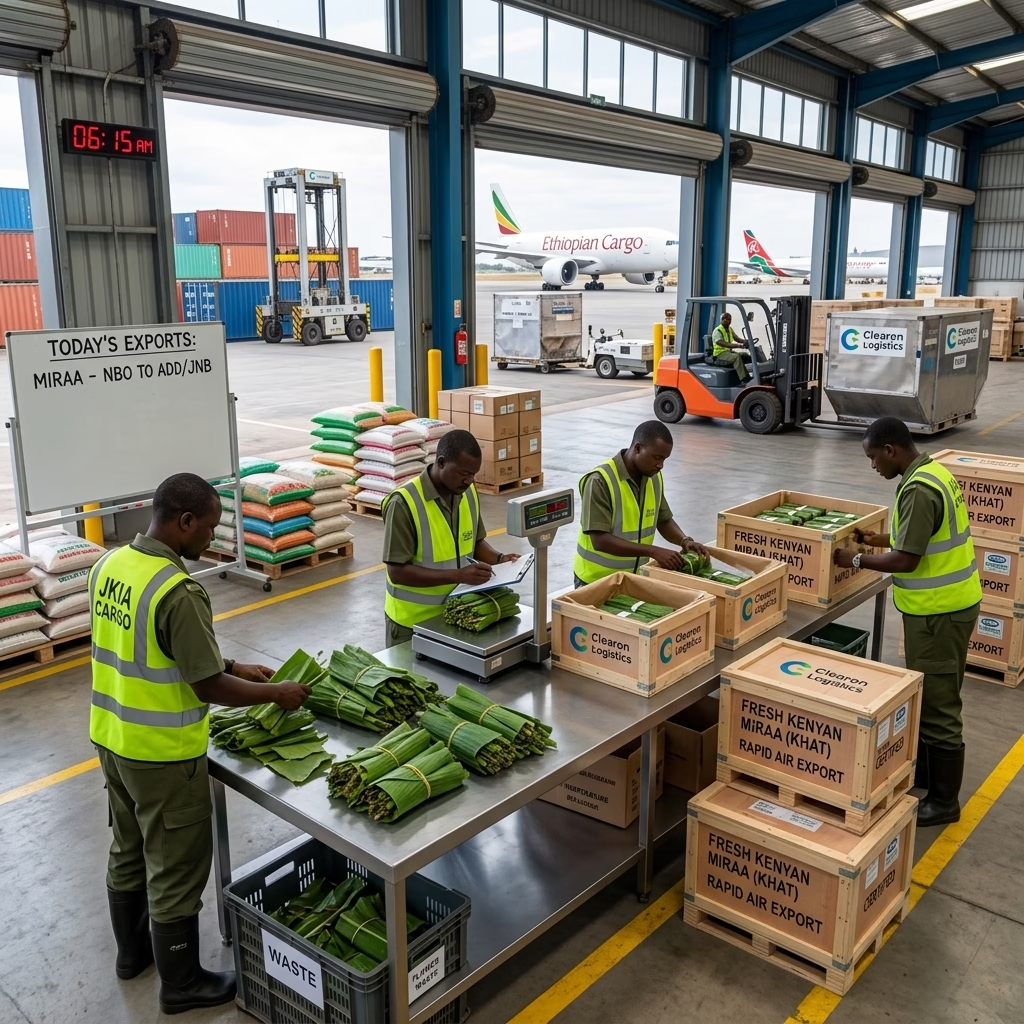
Miraa (khat) export from Kenya is one of the country’s most unusual trade categories — a genuine cash crop worth an estimated $400 million a year, formally recognised in Kenyan law, yet simultaneously listed in the country’s own narcotics legislation. It’s legal to grow, sell, and export from Kenya, and illegal to import in most of the Western world, a contradiction that shapes everything about how this trade actually operates.
Table of Contents
A Crop With a Genuine Legal Split Personality
Miraa was formally recognised as a scheduled cash crop under Kenya’s Crops Act 2013, and further regulated through the Miraa Regulations 2022, which specifically obligate government to allocate funding for the crop’s farming, licensing, promotion, transportation, aggregation, sale, marketing, and export. At the very same time, miraa (and its close relative muguka) appears in Kenya’s Narcotic Drugs and Psychotropic Substances Control Act — creating a genuine legislative contradiction that’s fuelled ongoing calls for clearer regulation, and that occasionally surfaces in political and legal disputes over the crop’s status.
Who Licenses Miraa Export
Export licensing runs through the Agriculture and Food Authority’s Pyrethrum Directorate, which processes applications, conducts due diligence on whether a proposed destination market will actually accept miraa legally, and issues export permits once that’s confirmed. This due diligence step matters considerably in this trade specifically, given how frequently the map of legally accepting countries has shifted — a licence to export somewhere isn’t just an administrative formality, it’s confirmation that the destination market genuinely permits the product’s entry, which cannot always be assumed.
Why Speed Is the Entire Business Model
Miraa’s potency degrades rapidly from the moment it’s harvested — a challenge that shapes the entire supply chain around one central priority: getting the product from the hills of Meru to buyers in Nairobi, Mogadishu, and other markets as fast as physically possible. This urgency explains why miraa logistics has historically relied heavily on dedicated, fast road and air transport rather than standard commercial freight timelines — a genuinely unusual logistics profile compared to virtually every other export category covered on our blog, where transit time is a cost consideration rather than the defining constraint on whether the product retains any value at all.
The Shrinking Map of Legal Markets
The international market for miraa has contracted significantly over the past decade and a half:
- The Netherlands banned khat in January 2012, classifying it under its Opium Act
- The United Kingdom banned khat in June 2014, ending weekly imports of roughly 56 tonnes into Heathrow — at the time, a market that had remitted an estimated £12.7 million to Kenya in 2010 alone
- The United States, Canada, and most other EU and G8 countries maintain bans on the crop
- Ethiopia, Djibouti, Uganda, and most other Horn of Africa nations continue to permit it legally, alongside Somalia
Following the UK and Dutch bans, Kenyan exporters and the AFA actively pursued new markets in the Nordic countries and Israel, with some traders securing initial supply deals for around 10 metric tonnes weekly to Sweden and Norway — a search for replacement demand that continues as the traditional Western European and North American markets have closed off entirely.
Somalia: The Market That Keeps the Industry Alive, and Volatile
Somalia remains Kenya’s most significant surviving international miraa market, but the relationship has been genuinely turbulent, shaped as much by diplomatic tension as by trade policy. Somalia has imposed and lifted bans on Kenyan miraa multiple times — during the COVID-19 period when international flights were suspended, and separately amid a diplomatic dispute in 2019 tied to a Kenyan official’s engagement with Somaliland, which cost traders an estimated KSh 500 million in a single week when cargo flights to Mogadishu were suspended. Each time, resumption has depended on diplomatic-level resolution rather than a purely commercial or regulatory process — meaning exporters in this specific trade lane carry genuine geopolitical risk alongside standard commercial risk.
Muguka: A Related, Separately Contested Trade
Muguka — a related, lower-cost, and reportedly more addictive variant using only the leaves of the same Catha edulis plant, grown in Embu, Meru, and Tharaka-Nithi counties — has faced its own separate domestic controversy. Several coastal county governments attempted to ban muguka locally, citing public health concerns, before President Ruto overturned the ban and a High Court restraining order blocked the counties from enforcing it. This domestic tension illustrates that even within Kenya, miraa and muguka’s legal status isn’t universally settled — it varies by jurisdiction and remains subject to ongoing political and judicial contest, separate entirely from the international market access questions covered above.
Operating in a Genuinely Unique Trade Category
Few export categories combine this much legal ambiguity, market volatility, and time-sensitive logistics all at once. For anyone in this trade, understanding current export licensing requirements, confirming a specific destination market’s legal status before committing to a shipment, and building genuinely fast logistics into the operation aren’t optional refinements — they’re the core requirements the business depends on.
At Clearon Logistics, while miraa export licensing itself runs through AFA’s Pyrethrum Directorate, we understand the genuinely unusual logistics demands this trade requires and can advise on how time-sensitive export shipments coordinate with broader customs and freight processes.
Involved in miraa or muguka export and need to coordinate time-sensitive logistics? Talk to Clearon Logistics about your specific shipment requirements.
Frequently Asked Questions
Is miraa legal to export from Kenya? Yes — it’s a formally recognised cash crop under the Crops Act 2013, with export licensing administered through AFA’s Pyrethrum Directorate, though it simultaneously appears in Kenya’s own narcotics legislation, creating genuine legal ambiguity.
Which countries currently accept miraa imports legally? Somalia, Ethiopia, Djibouti, Uganda, and most other Horn of Africa nations continue to permit it; the UK, Netherlands, US, Canada, and most other EU and G8 countries have banned it.
Why does miraa export logistics rely so heavily on speed? The crop’s potency degrades rapidly after harvest, making transit time the defining commercial constraint on the product’s value — a genuinely unusual logistics profile compared to most other export categories.
Is the Somalia miraa market stable? No — it’s been repeatedly disrupted by both public health policy shifts and diplomatic disputes between the two countries, with bans imposed and lifted multiple times, sometimes costing traders hundreds of millions of shillings during short suspension periods.
Further Reading
- Agriculture and Food Authority (AFA) Kenya (external, dofollow)
- Institute for Security Studies (ISS Africa) (external, dofollow)
- Related on our blog: Exporting from Kenya: The Documents You Need Before Your Cargo Leaves
- Related on our blog: Air Freight vs Sea Freight to Kenya: 5 Key Factors to Decide
- Our service: International Freight (Air & Sea)









Leave a Reply