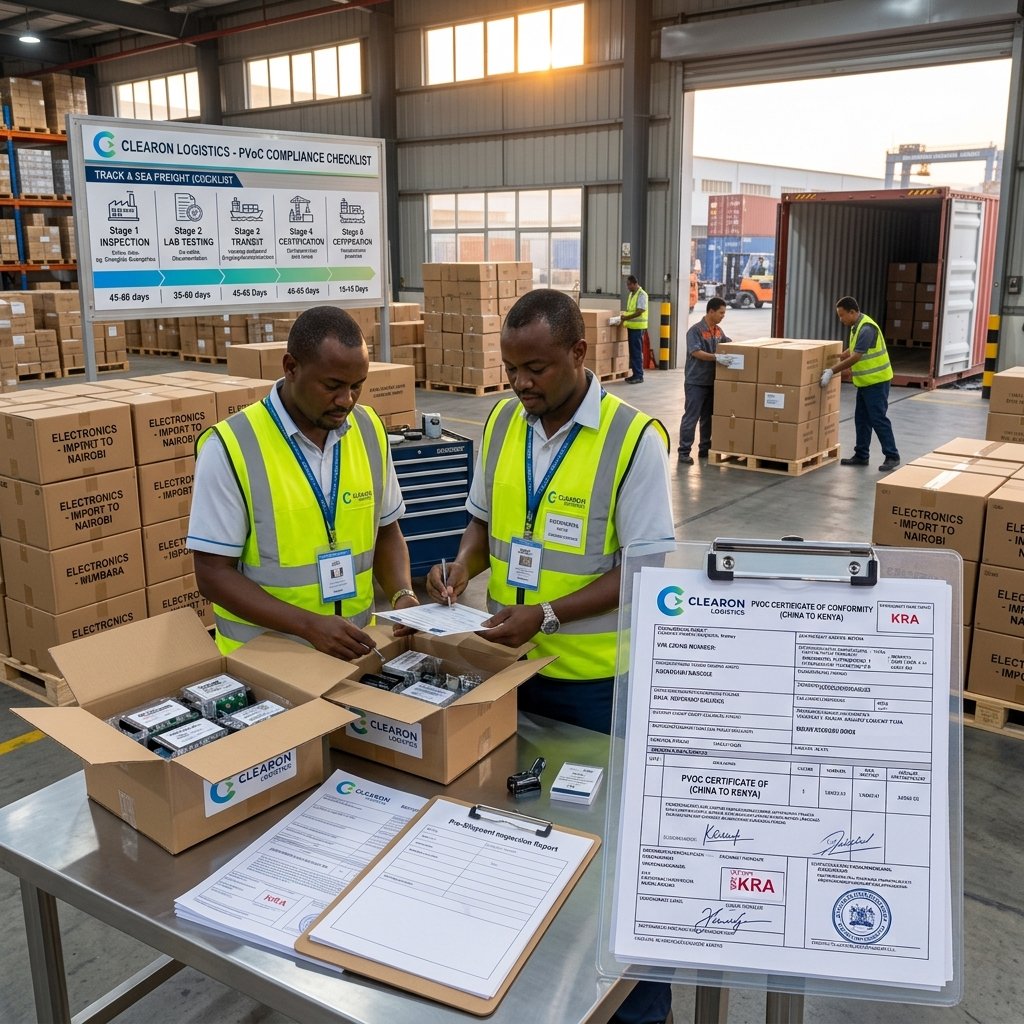
Pre-shipment inspection for China imports means two different things in Kenyan trade, and importers often confuse them. One is a quality check you arrange to make sure the goods match your order. The other is KEBS’s Pre-Export Verification of Conformity, which is a legal requirement for many products and produces the certificate Kenyan customs wants. You may need both, and neither replaces the other.
Table of Contents
Quality Inspection: Protecting Your Order
A quality inspection is something you commission, usually from an independent inspection company, to check goods before you pay the balance. Typical checks cover quantity, specification, workmanship, packaging, labelling and a sample test against agreed acceptance levels. It reduces the risk of receiving faulty or wrong goods, and gives you evidence if there is a dispute with your supplier. Nobody requires it, but for larger orders it’s good practice.
PVoC: The Legal Requirement for Regulated Products
Many categories of goods imported into Kenya must go through KEBS’s Pre-Export Verification of Conformity, in which a KEBS-appointed inspection body in the country of export verifies the goods against Kenyan standards and issues a Certificate of Conformity. On arrival, the Import Standardization Mark follows. Without the certificate, goods can face destination inspection at the port, at a penalty cost, and delay. Apply before the goods ship.
How the Two Differ
| Quality inspection | PVoC | |
|---|---|---|
| Who requires it | You | Kenyan law, for regulated products |
| Who does it | Independent inspector you choose | KEBS-appointed inspection body |
| Output | Report for you | Certificate of Conformity |
| Purpose | Protect your order | Allow clearance in Kenya |
Passing one does not satisfy the other.
Timing: Build It Into the Schedule
Inspections need goods ready, so they sit between production and shipping. Allow time for sampling, testing and any rework, and don’t let a booking date force you to ship goods that haven’t been certified. Our timeline guide shows where inspection fits.
Check Certificates Against the Shipment
A certificate is only useful if it describes exactly what ships. Models, quantities and ratings on the invoice, packing list and Certificate of Conformity should agree line by line, as KEBS actions on mismatched cable shipments have shown. See our common clearance mistakes.
Not sure whether your product needs PVoC, or what to inspect? Send us your product details, and we’ll tell you what applies before you pay your supplier.
Frequently Asked Questions
Is a factory quality inspection the same as PVoC? No. A quality inspection protects your order; PVoC is a legal requirement for many products and produces the Certificate of Conformity.
What happens if I don’t have a Certificate of Conformity? Goods can face destination inspection at the port at a penalty cost, plus delay.
Do I need to inspect every order? It’s not required, but for larger or higher-risk orders it’s good practice.
When should PVoC be arranged? Before the goods ship, between production and loading.
Further Reading
- Kenya Revenue Authority: Advance Cargo Declaration platform (external, dofollow)
- Kenya Bureau of Standards (KEBS) (external, dofollow)
- Related on our blog: Certificate of Conformity Guide
- Related on our blog: KEBS Marks Explained
- Related on our blog: Supplier Documents Checklist for Kenya
- Our service: China to Kenya Shipping Service






Leave a Reply