
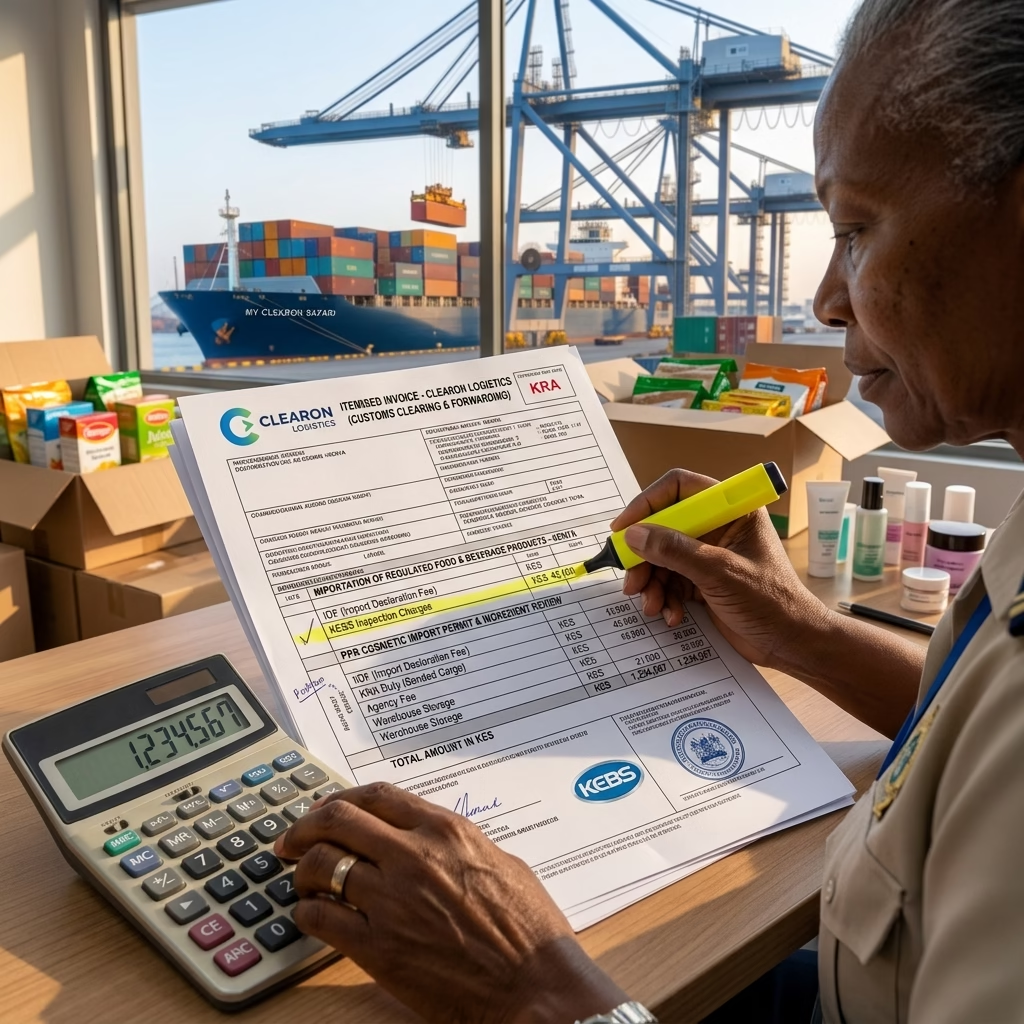
Reading a clearing agent’s quote line by line is a skill most importers never develop, because most quotes never actually give them the chance — a single lump-sum figure with no breakdown, taken largely on trust. If you’ve ever looked at a clearing invoice and had no real idea which parts were government charges, which were the agent’s own fee, and which shouldn’t have been there at all, this is exactly the gap worth closing before your next shipment.
Table of Contents
Why a Lump-Sum Quote Should Make You Pause
A single number — “clearance will cost you KSh X” — tells you what you’ll pay, but nothing about why, or whether it’s actually correct for your specific shipment. This matters for two reasons: first, you have no way to verify the figure is accurate rather than padded; second, if your actual costs later come in differently, you have no baseline to understand which part changed and why. A properly itemised quote solves both problems, which is exactly why its absence is worth questioning rather than accepting as normal industry practice.
The Government Charges That Should Appear Separately
These are charges the agent collects and passes on to KRA and other authorities — not their own revenue, and they should be clearly labelled as such:
- Import Duty, calculated on your goods’ CIF value at the applicable rate for your HS code classification
- Import Declaration Fee (IDF), currently around 2.5% of CIF value
- Railway Development Levy (RDL), 2% of CIF value
- VAT, 16%, calculated on CIF value plus duty, IDF, and RDL combined
- Any category-specific levies — excise duty, EPR fees, or others that apply to your specific goods
A legitimate quote should show these as distinct line items, ideally with the calculation basis visible, not folded into one unexplained government charges figure.
The Agent’s Own Fees
This is the part that’s actually the agent’s revenue, and it should be presented separately from government charges, not blended together to make the total feel more like “the cost of clearance” and less like “what we’re charging you for our work.” A transparent agent has no reason to obscure this — their fee is what they’re being paid for their expertise and effort, and hiding it inside a bigger number tends to suggest either the fee is higher than they want you to notice, or they’d rather you not compare it directly against another agent’s quote.
Third-Party Charges That Aren’t the Agent’s Fee
Several costs in a clearance process are genuinely third-party charges the agent facilitates but doesn’t set or profit from:
- Port and terminal handling charges
- Container Freight Station storage fees, where applicable
- Marine cargo insurance premium, now mandatory from a local insurer
- Inland transport costs, from the port to your final destination
- Demurrage or storage charges, if applicable — though a well-managed shipment should minimise or avoid these entirely
These should also appear as their own line items, since bundling them into “agent fees” makes it impossible to tell whether the agent is charging you fairly for their own work, or marking up third-party costs without disclosure.
Red Flags Hiding in a Quote
- A single total with no breakdown at all — the clearest sign a quote isn’t built to be scrutinised
- Vague line items like “miscellaneous charges” or “processing fee” with no further explanation
- Government charges that don’t match a rough independent estimate — worth cross-checking major figures like duty and VAT against your own landed cost calculation before accepting them at face value
- A quote that changes significantly once you’ve committed, without a clear explanation tied to something that genuinely changed about your shipment
How to Actually Compare Two Quotes
Comparing two agents’ quotes properly means comparing them item by item, not just the bottom line:
- Separate the government charges in each quote — these should be roughly identical between agents, since duty, IDF, RDL, and VAT are calculated the same way regardless of who’s clearing your goods
- Compare the agent fees specifically — this is the actual basis for comparing value between providers
- Check what’s included and what isn’t — one quote might include inland transport, another might not, making a direct total-to-total comparison misleading
- Ask about anything unclear before committing, not after
A quote that’s genuinely lower on the agent’s own fee, with identical government charges and clear inclusions, is a fair basis for choosing on price. A lower total that turns out to have hidden exclusions or vague line items isn’t actually cheaper — it’s just less transparent about where the real cost is going to show up later.
Insisting on a Quote You Can Actually Read
A clearing agent who gives you a properly itemised quote isn’t doing you a special favour — it’s a reasonable baseline for any transaction involving real money and cargo you’re trusting them with. If a quote doesn’t let you distinguish government charges from agent fees from third-party costs, that’s worth asking about directly before you commit to anything.
At Clearon Logistics, every quote we provide breaks down exactly what you’re paying and why — government charges, our own fee, and any third-party costs, each clearly separated — so you can actually compare it against any alternative and know precisely what you’re agreeing to.
Want a quote you can actually read line by line? Talk to Clearon Logistics for a fully itemised breakdown before your next shipment.
Frequently Asked Questions
Should government charges like duty and VAT be the same regardless of which agent I use? Yes — duty, IDF, RDL, and VAT are calculated the same way for the same goods regardless of who’s clearing them, so these figures should be roughly identical between different agents’ quotes for the same shipment.
Why would an agent avoid giving me an itemised breakdown? It could simply be their standard practice rather than anything sinister, but it also removes your ability to compare their fee directly against alternatives or verify the government charges are accurate — worth asking for a breakdown regardless of the reason.
What’s the difference between the agent’s fee and third-party charges? The agent’s fee is what they charge for their own work; third-party charges (port handling, CFS storage, insurance, inland transport) are costs they facilitate on your behalf but don’t set or profit from — both should appear as separate line items.
How can I check if the duty and VAT figures on my quote are accurate? Run a rough independent calculation using your goods’ CIF value, applicable duty rate, and the standard IDF, RDL, and VAT formula, then compare it against what’s quoted — significant discrepancies are worth asking about directly.
Further Reading
- Kenya Revenue Authority — Customs & Border Control (external, dofollow)
- PwC Kenya — Tax Summaries (external, dofollow)
- Related on our blog: How to Calculate Your Landed Cost in Kenya
- Related on our blog: The Real Cost of Choosing a Clearing Agent on Price Alone
- Our service: Clearing and Forwarding Services in Kenya








Leave a Reply