
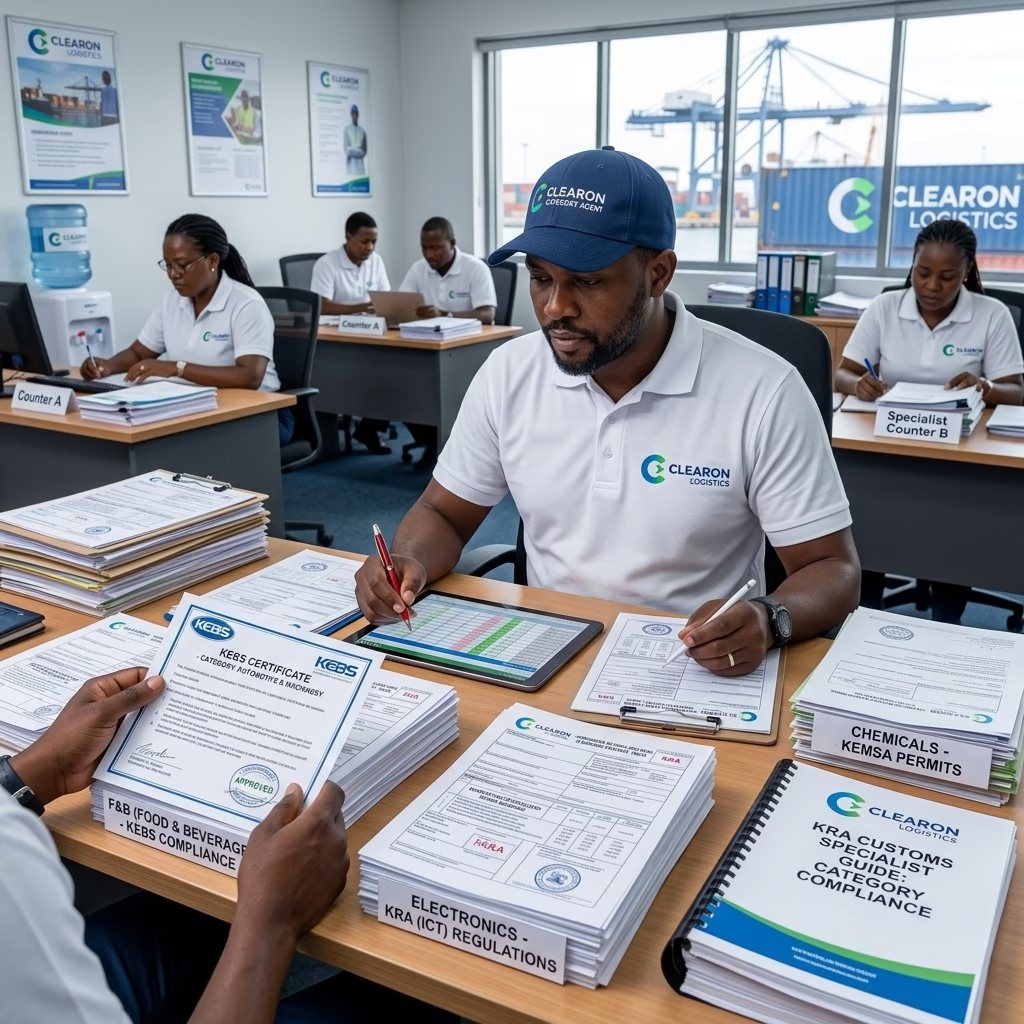
Does your import need a specialist clearing agent is a question worth asking before you assume any licensed agent can handle any shipment equally well. Clearing a container of general consumer goods and clearing a shipment of pharmaceuticals, agrochemicals, or telecommunications equipment involve genuinely different bodies of knowledge — and an agent who’s excellent at one doesn’t automatically transfer that competence to the other.
Table of Contents
Why “Licensed” Doesn’t Mean “Equally Experienced Everywhere”
A KRA customs agent licence authorises someone to lodge declarations and handle clearance broadly — it doesn’t certify deep familiarity with every regulated product category’s specific requirements. This gap matters more than it might seem, because Kenya’s import compliance landscape spans dozens of sector-specific regulators, each with their own rules, documentation, and failure points: the Pharmacy and Poisons Board for medical products, the Pest Control Products Board for agrochemicals, the Communications Authority for ICT equipment, EPRA for energy-consuming appliances, and many more. An agent who’s genuinely excellent at clearing general consumer goods can still be unfamiliar with the specific documentation sequence a pharmaceutical import or an agrochemical shipment requires.
Categories Where Specialist Knowledge Genuinely Matters
Some categories carry enough regulatory complexity, or enough consequence for getting it wrong, that experience with that specific category isn’t optional:
- Pharmaceuticals and medical devices — where product registration and per-consignment import permits follow a specific PPB sequence most general agents rarely encounter
- Agrochemicals and pesticides — where PCPB registration is independent of any approval elsewhere, and evidentiary requirements are technical
- Vehicles, particularly EVs — where age rules, CRSP valuation, and a genuinely fast-moving incentive landscape require staying current
- Telecommunications and ICT equipment — now involving both type approval and a newly mandatory CED Licence with real penalties for gaps
- Construction materials — where KEBS standards compliance has documented, serious safety implications if handled carelessly
- Diplomatic and NGO imports — which run through an entirely separate exemptions framework most agents rarely handle at all
Working with an agent unfamiliar with your specific category doesn’t mean your shipment definitely fails — but it does mean you’re relying on them to learn the specifics correctly, in real time, on your shipment, rather than benefiting from experience already built through handling similar goods before.
What a Generalist Handles Perfectly Well
To be fair, most commercial imports don’t require narrow specialist knowledge — general consumer goods, standard equipment, routine commercial shipments with straightforward HS classification and no unusual permit requirements are well within the competence of any properly licensed, experienced agent. The distinction matters specifically when your goods fall into a category with its own dedicated regulatory framework, documented complexity, or a track record of catching out agents unfamiliar with its specifics.
How to Tell If You’re Talking to a Genuine Specialist
- Ask directly: “Have you cleared this specific category of goods before, and how recently?”
- Listen for specificity: a genuine specialist can speak to the actual regulatory sequence for your category — which agency, what documents, typical timelines — not just general customs process
- Ask about a recent example: an agent with genuine category experience can usually describe, in reasonable detail, a similar shipment they’ve actually handled
- Notice whether they flag category-specific risks unprompted: this is often the clearest signal, since it’s hard to know what to warn about in a category you haven’t actually worked in before
The Risk of Assuming General Competence Covers Everything
The cost of this mismatch tends to show up exactly where it’s most expensive to discover: a missing PPB import permit holding pharmaceutical stock in quarantine, an agrochemical shipment without proper PCPB registration, a telecommunications import missing the new CED Licence. These aren’t failures of general customs competence — they’re gaps in category-specific knowledge that a generalist agent, doing their honest best, simply may not have encountered before.
Why Breadth and Depth Aren’t Mutually Exclusive
The ideal isn’t necessarily a narrow specialist who only handles one category — it’s an agency with genuine depth across the specific categories that matter to your business, built through actually handling those shipments repeatedly rather than encountering them occasionally. An agency that’s developed real expertise across pharmaceuticals, construction materials, agrochemicals, vehicles, and general commercial goods alike offers something a narrow specialist can’t: the ability to handle your full range of import needs without you needing a different agent for every category.
At Clearon Logistics, we’ve built genuine working knowledge across the regulated categories our clients actually import — from pharmaceuticals and construction materials to vehicles, agrochemicals, and general commercial goods — precisely because assuming general competence transfers automatically to every specialised category is exactly the kind of gap that causes preventable problems.
Importing something outside the ordinary — a regulated, specialised, or unfamiliar category? Talk to Clearon Logistics about our specific experience with your type of goods before you commit.
Frequently Asked Questions
Does a KRA customs agent licence guarantee expertise in every product category? No — the licence authorises general customs clearance activity, but it doesn’t certify specific familiarity with every sector regulator’s requirements, which vary considerably across categories like pharmaceuticals, agrochemicals, and telecommunications equipment.
How do I know if my import needs a specialist rather than a general clearing agent? If your goods fall under a dedicated regulator beyond standard customs — PPB, PCPB, the Communications Authority, EPRA, or similar — it’s worth specifically asking any prospective agent about their direct experience with that category before assuming general competence covers it.
Is it more expensive to use an agent with specific category experience? Not necessarily — the relevant comparison isn’t the fee alone, but the risk of delays, penalties, or compliance gaps from working with someone unfamiliar with your specific category, which can cost considerably more than any difference in fee.
Can one clearing agency genuinely handle multiple specialised categories well? Yes, provided they’ve actually built repeated, direct experience across those categories rather than encountering them occasionally — depth across several relevant categories is achievable for an agency that’s deliberately developed that expertise.
Further Reading
- Kenya Revenue Authority — Customs & Border Control (external, dofollow)
- Kenya International Freight and Warehousing Association (KIFWA) (external, dofollow)
- Related on our blog: How a Good Clearing Agent Handles a Problem Shipment
- Related on our blog: Importing Pharmaceuticals into Kenya: 5 Critical PPB Steps to Know
- Our service: Clearing and Forwarding Services in Kenya


Leave a Reply