
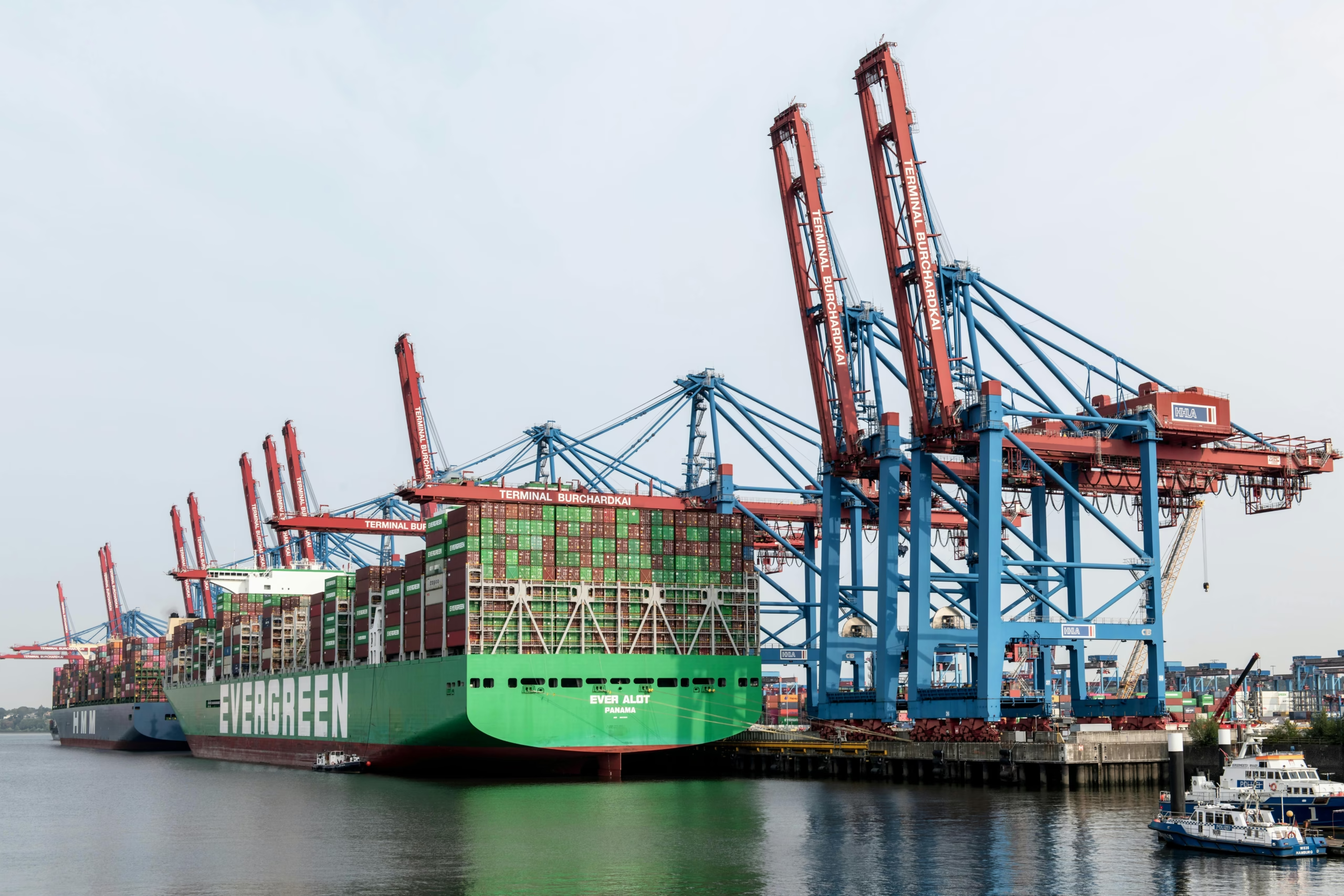
Many importers in Kenya believe they know how much their shipment will cost before it arrives.
They calculate the supplier’s invoice, add freight charges, and assume they have a clear picture of their costs.
Then the cargo arrives.
Suddenly, there are customs duties, VAT, Import Declaration Fees, Railway Development Levy charges, port handling fees, transport costs, storage fees, and sometimes even demurrage charges.
What initially appeared to be a highly profitable import venture becomes a disappointing financial reality.
This is one of the biggest reasons why some importers consistently grow their businesses while others struggle despite selling the same products.
The difference often comes down to understanding one critical concept:
True Landed Cost.
At Clearon Logistics, we frequently encounter importers who focus heavily on product pricing but overlook the full cost of bringing goods into Kenya. This mistake can significantly impact pricing decisions, profitability, inventory planning, and overall business growth.
Understanding landed cost is not simply an accounting exercise. It is one of the most important skills any importer can develop.
What Is Landed Cost?
Landed cost refers to the total cost of getting a product from the supplier’s location to your warehouse, shop, project site, or business premises in Kenya.
Many people mistakenly assume landed cost means:
Product Cost + Shipping Cost
In reality, landed cost includes much more.
A proper landed cost calculation may include:
- Product cost
- Freight charges
- Insurance
- Import duty
- VAT
- Import Declaration Fee (IDF)
- Railway Development Levy (RDL)
- Port charges
- Customs clearance costs
- Transportation costs
- Storage charges (if applicable)
- Demurrage charges (if applicable)
Only after accounting for all these expenses can you accurately determine your true cost per unit.
Why Most Importers Calculate Costs Incorrectly
The majority of importers focus on what they can easily see.
For example:
A supplier quotes:
USD 10,000
Shipping cost:
USD 1,000
The importer assumes:
Total Cost = USD 11,000
The problem is that customs and logistics costs often represent a substantial portion of the final cost structure.
This becomes even more significant for products with lower profit margins.
The Hidden Danger
If your calculations are wrong before the shipment leaves the supplier’s warehouse, every business decision you make afterward may also be wrong.
This affects:
- Selling prices
- Profit forecasts
- Inventory purchases
- Cash flow planning
- Expansion decisions
Many importers don’t realize they have made a mistake until the cargo arrives.
By then, it is too late.
The Difference Between Cost Price and Landed Cost
Let’s examine a practical example.
Scenario
A business imports 1,000 electric kettles from China.
Supplier Cost:
USD 8 per unit
Total Product Cost:
USD 8,000
Freight Cost:
USD 1,200
Insurance:
USD 100
At this point, many importers assume their cost per unit is:
USD 9.30
This is incorrect.
The shipment still has to pass through customs and be delivered to the business premises.
Once customs charges and logistics expenses are included, the actual landed cost may be significantly higher.
The Real Cost
Assume the following additional expenses:
Import Duty: USD 2,250
VAT: USD 1,930
IDF: USD 280
RDL: USD 180
Transport to the shop: USD 450
Customs Clearance and Handling: USD 300
Total Additional Costs:
USD 5,390
Total Landed Cost:
USD 14,690
Actual Cost Per Unit:
USD 14.69
Not USD 9.30.
This means the importer underestimated their cost by nearly 58%.
That difference can completely destroy a pricing strategy.
Why Landed Cost Determines Business Success
Two importers may purchase identical products from the same supplier.
Yet one consistently makes money while the other struggles.
Why?
The profitable importer understands landed cost.
The struggling importer focuses only on supplier pricing.
Importer A
Calculates full landed cost before placing the order.
Knows exact profit margins.
Prices products correctly.
Maintains healthy cash flow.
Importer B
Focuses only on product cost.
Discovers additional charges after cargo arrives.
Raises prices unexpectedly.
Loses competitiveness.
Experiences cash flow pressure.
Over time, this difference compounds.
The Biggest Landed Cost Mistakes Kenyan Importers Make
Mistake #1: Ignoring Customs Charges
Many first-time importers assume freight charges cover everything.
Unfortunately, freight and customs are completely different cost categories.
Customs charges often exceed freight costs.
Ignoring them creates serious budgeting problems.
Mistake #2: Forgetting VAT
VAT is often one of the largest import costs.
Many businesses calculate duty but forget to account for VAT.
This can create significant cash flow challenges when cargo arrives.
Mistake #3: Underestimating Local Transportation
Importers often calculate costs up to Mombasa or Nairobi but forget final delivery expenses.
For businesses outside Nairobi, transport can represent a meaningful portion of overall logistics costs.
Mistake #4: Not Planning for Delays
Every importer hopes cargo clears immediately.
Reality is different.
Documentation issues, inspections, payment delays, and operational bottlenecks can create additional expenses.
Storage and demurrage charges can quickly erode profits.
Mistake #5: Pricing Products Too Early
Some businesses advertise products before calculating actual landed cost.
When final expenses exceed expectations, profit margins disappear.
How Smart Importers Calculate Landed Cost Before Shipping
Successful importers work backward.
Before purchasing inventory, they ask:
What Will My Total Cost Be?
Not:
What Does the Supplier Charge?
This shift in thinking changes everything.
Instead of buying first and calculating later, successful importers calculate first and buy second.
A Practical Example
Imagine a retailer wants to import office chairs.
Supplier Price:
USD 25 per chair
Expected Selling Price:
KES 6,500
At first glance, the opportunity appears attractive.
However, after calculating:
- Freight
- Customs duty
- VAT
- IDF
- RDL
- Delivery
the true landed cost may reveal a very different profit margin.
The retailer can then make an informed decision before committing capital.
This is how experienced importers reduce risk.
Why Low Product Prices Can Be Misleading
One of the biggest traps in importing is chasing the cheapest supplier.
A lower supplier price does not always mean a lower landed cost.
Example
Supplier A:
Product Price: USD 9
Supplier B:
Product Price: USD 10
Many importers automatically choose Supplier A.
However:
- Supplier A may have higher shipping costs.
- Supplier A may use less efficient packaging.
- Supplier A may create additional compliance challenges.
The result may be a higher overall landed cost despite the lower product price.
The smartest importers evaluate total cost, not just purchase price.
How Landed Cost Impacts Pricing Strategy
Your selling price should never be based solely on supplier pricing.
It should be based on landed cost.
A proper pricing strategy considers:
- Landed cost
- Desired profit margin
- Market competition
- Operating expenses
- Business growth objectives
Without accurate landed cost calculations, pricing becomes guesswork.
And businesses rarely grow through guesswork.
Why Businesses Work With Clearon Logistics Before Shipping
One of the most valuable ways to reduce importing risk is to understand potential costs before cargo moves.
At Clearon Logistics, we help importers gain visibility into the logistics side of importing before shipments arrive.
This allows businesses to:
Improve Budgeting
Understanding likely costs improves financial planning.
Protect Profit Margins
Businesses can make informed purchasing decisions.
Avoid Surprises
Unexpected charges become less likely.
Plan Cash Flow More Effectively
Importers know what to expect when cargo reaches Kenya.
For growing businesses, this visibility can make a significant difference.
The Future Belongs to Data-Driven Importers
The import industry is becoming increasingly competitive.
Businesses that rely on assumptions often struggle.
Businesses that understand their numbers make better decisions.
Understanding landed cost allows importers to:
- Price products accurately
- Improve profitability
- Manage inventory efficiently
- Reduce financial risk
- Scale with confidence
In many cases, landed cost analysis is the difference between a successful import business and an unprofitable one.
Final Thoughts
Most importers focus on what they pay suppliers.
The most successful importers focus on what it actually costs to get products into their warehouse.
That difference may sound small, but it has enormous implications for profitability.
Understanding landed cost is not just about customs clearance or freight forwarding.
It is about making smarter business decisions.
Before placing your next order, take the time to calculate the full journey of your cargo—not just the supplier invoice.
Your profit margins depend on it.
At Clearon Logistics, we help importers understand the complete logistics picture, from international shipping and customs clearance to final delivery, allowing businesses to make informed importing decisions with greater confidence. Get in touch with us!


Leave a Reply