
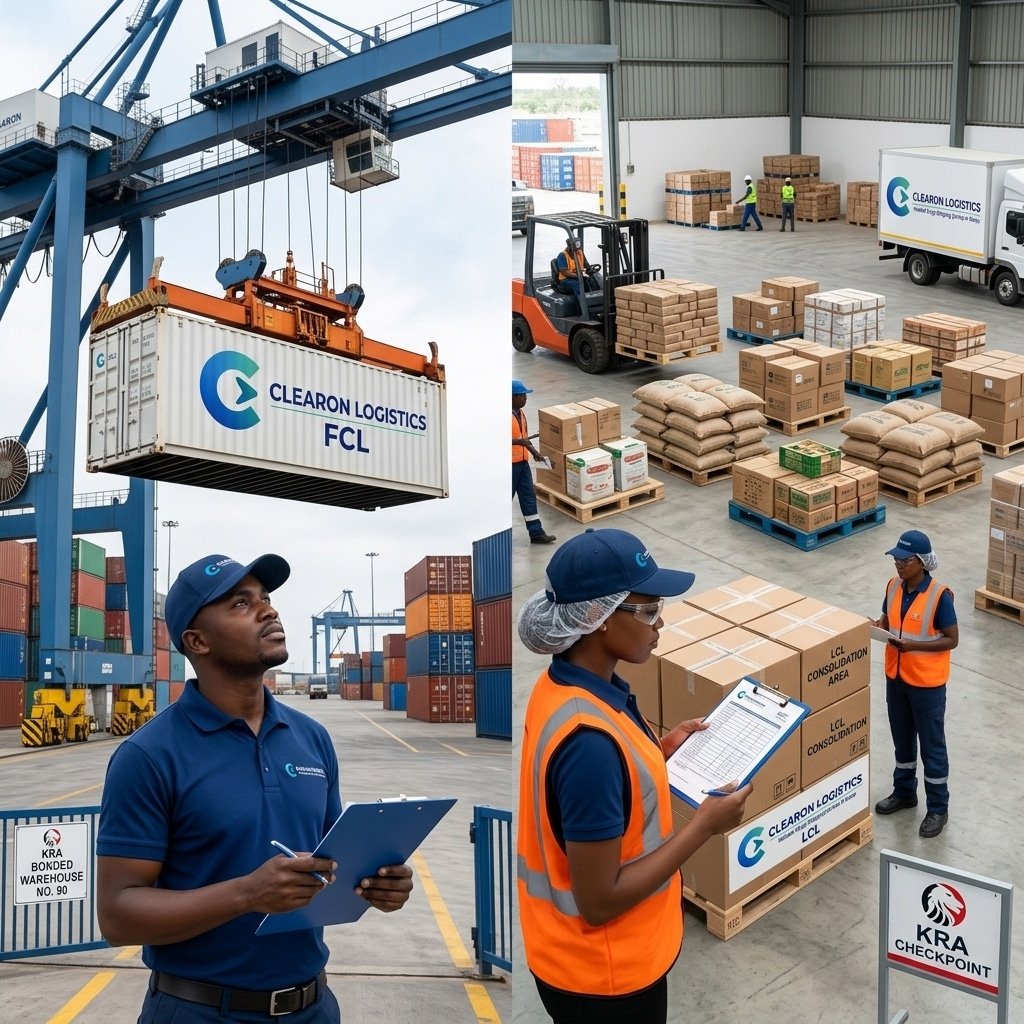
A clearing agent for a full container vs shared cargo needs to handle genuinely different logistics, and knowing which situation you’re in — and what to specifically ask your agent — makes a real difference in cost and timeline. If you’re comparing quotes right now and not sure which questions actually matter, here’s the practical breakdown.
Table of Contents
FCL vs LCL: The Core Difference
FCL (Full Container Load) means your goods fill an entire container by themselves — you’re the sole cargo owner on that box. LCL (Less than Container Load), also called shared cargo means your goods share container space with other importers’ shipments, consolidated together by a freight forwarder and split apart again on arrival. Both move through Kenyan customs, but the practical clearing process differs meaningfully between them.
What Changes for Your Clearing Agent With FCL
With a full container, your clearing agent deals with a single, straightforward consignment — one Bill of Lading, one declaration, one set of customs scrutiny applied to your goods specifically. This tends to mean a more predictable, directly traceable process: the container is yours, the documentation is yours, and any customs query relates entirely to your shipment, not a shared one.
What Changes for Your Clearing Agent With LCL
Shared cargo introduces real additional complexity your agent needs to manage. Your goods need to be correctly identified and separated from everyone else’s within the shared container upon arrival, your documentation needs to be accurate specifically for your portion of a larger shared shipment. An agent handling LCL cargo for you needs genuine, current familiarity with how LCL cargo is being valued and assessed right now, not just general clearing competence.
The Documentation Difference That Matters Most
For FCL, your Bill of Lading covers your goods exclusively. For LCL, you’ll typically be working with a House Bill of Lading issued by the consolidator, alongside the Master Bill of Lading covering the whole container — your agent needs to correctly reconcile both documents, and any discrepancy between them is a common source of delay specifically in shared shipments. If you’re importing LCL, ask your agent directly whether they’re experienced specifically in working with House Bills and consolidator documentation, not just standard single-shipper clearance.
Questions to Ask Based on Your Shipment Type
If you’re shipping FCL:
- “What’s your experience clearing full containers of [your specific cargo type]?”
- “Will you handle CFS nomination and coordination directly?”
If you’re shipping LCL:
- “How do you handle House Bill of Lading reconciliation for consolidated cargo?”
- “Will you follow up on cargo stripping and de-consolidation in the CFS?”
Getting the Right Expertise for Your Shipment Type
Whether you’re shipping FCL or LCL, the underlying principle is the same: your agent’s specific, recent experience with your exact shipment structure matters more than general competence claims. An agent who’s excellent with full containers isn’t automatically equally sharp on the documentation nuances of consolidated cargo, and vice versa.
At Clearon Logistics, we handle both FCL and LCL shipments regularly, with the specific documentation expertise each requires. We’ll confirm exactly which category your shipment falls into and quote accordingly, with full transparency on how that cost was calculated.
Shipping a full container or LCL cargo into Kenya? Talk to Clearon Logistics for a clearing quote specific to your shipment type.
Frequently Asked Questions
Is LCL clearing more complicated than FCL? Generally yes — LCL involves additional documentation reconciliation (House Bill vs Master Bill) requiring an agent with specific, current experience in LCL cargo.
Can the same clearing agent handle both FCL and LCL shipments equally well? Many can, but it’s worth confirming specific, recent experience with whichever category applies to your shipment, since the documentation and valuation considerations genuinely differ between the two.
Further Reading
- Kenya Ports Authority — Mombasa Port (external, dofollow)
- Kenya International Freight and Warehousing Association (KIFWA) (external, dofollow)
- Related on our blog: Cargo Stuck at the Port With No Clearing Agent? Here’s What to Do Today
- Related on our blog: Need a Clearing Agent at Mombasa Port? Here’s What to Check First
- Our service: Clearing and Forwarding Services in Kenya



Leave a Reply