
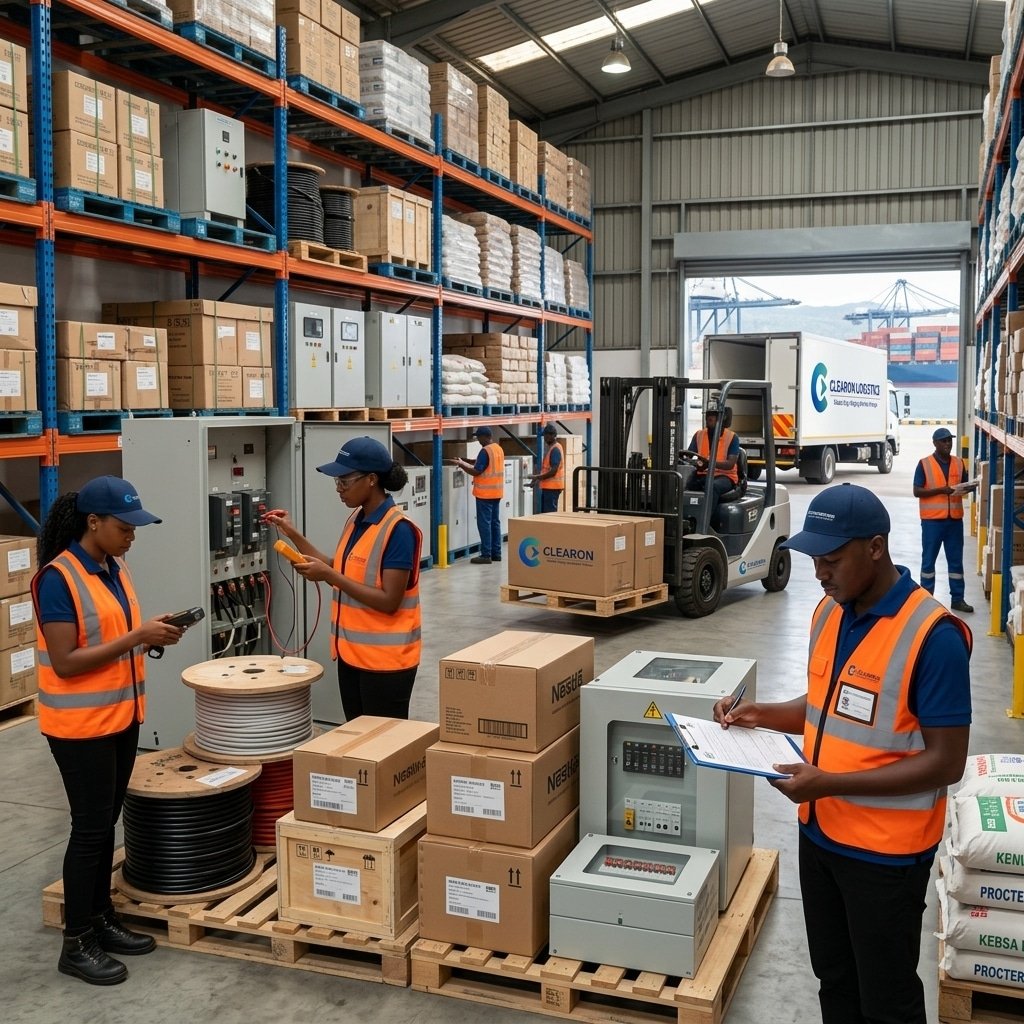
A clearing agent for electrical equipment works in the category KEBS watches most closely. In August 2026, KEBS reported intercepting around 24,000 power extension cables after the model in the consignment didn’t match the model on the accompanying Certificate of Conformity, with the goods facing return or destruction at the owner’s cost. For importers of cables, switchgear, transformers, lighting, motors and distribution equipment, that is the risk in a nutshell: the paperwork has to describe exactly what’s in the box.
Table of Contents
Why Electrical Imports Face the Tightest Scrutiny
Substandard electrical products are a genuine fire and safety hazard, so regulators concentrate enforcement here. A mismatch between a certificate and the actual goods, even an innocent one, can turn a routine consignment into a seizure. Importers who rely on a supplier’s assurance without checking the paperwork against the product are the ones who get caught.
The Regulator Map for Electrical Cargo
Most electrical equipment falls under KEBS pre-export verification, producing a Certificate of Conformity and, on arrival, the Import Standardization Mark. Beyond that, other regimes can apply depending on the product: EPRA energy performance registration for refrigerators, air conditioners, motors and lighting (see our appliances guide), Communications Authority type approval for anything with wireless capability (see our telecoms equipment guide), refrigerant rules for cooling equipment, and Extended Producer Responsibility obligations covered in our EPR guide.
The Certificate Must Match the Consignment Exactly
Model numbers, ratings, quantities and manufacturer details on the invoice, packing list and Certificate of Conformity should agree line by line. Don’t accept a certificate for a similar model, an earlier production batch, or a different rating, and don’t allow suppliers to substitute models after certification. Have your agent reconcile these documents before shipping, because errors discovered at the port are far more expensive to fix.
Transformers, Switchgear and Cables for Contractors and Utilities
Large electrical items are usually ordered against tender specifications. Suppliers should obtain PVoC before shipment, equipment should carry the technical documentation your client will require, and crating must meet ISPM 15 wood packaging rules where wooden crates are used. Heavy items also need lifting and axle-load compliant transport to site, so plan the delivery as part of the clearance.
Installation Is a Separate Licensing Question
Importing electrical equipment and installing it are different activities. Installation and contracting work carries its own licensing and competence requirements under the energy sector regime. If you import for resale, confirm that your customers’ installers are properly licensed; if you import for your own projects, confirm your own contracting status separately from the import.
Documentation Pack for Electrical Equipment
- Itemised invoice with model numbers, ratings and quantities
- Packing list consistent with the invoice
- Certificate of Conformity matching the exact models shipped
- Certificate of Origin, export declaration document and Advance Cargo Declaration reference
- EPRA, Communications Authority or EPR documents where applicable
- Technical datasheets and test reports
- Local marine cargo insurance certificate
Working With Clearon Logistics on Electrical Imports
We reconcile invoice, packing list and certificate before your goods ship, flag any regulator beyond KEBS that applies, and itemise every cost so your landed price is accurate.
Importing cables, switchgear, lighting or other electrical equipment? Talk to Clearon Logistics before shipping, and we’ll check your documents against your product line by line.
Frequently Asked Questions
Why was a cable shipment recently intercepted by KEBS? KEBS reported that the model in the consignment did not match the model on the Certificate of Conformity, which can lead to return or destruction at the importer’s cost.
Is KEBS the only regulator for electrical imports? No. EPRA, the Communications Authority, environmental rules for refrigerants and EPR obligations can also apply depending on the product.
Does importing electrical equipment allow me to install it? Not necessarily. Installation and contracting activities carry separate licensing requirements from importing.
What’s the safest way to avoid certificate problems? Check that model numbers, ratings and quantities on the invoice, packing list and Certificate of Conformity match line by line before the goods ship.
Further Reading
- Kenya Bureau of Standards (KEBS) (external, dofollow)
- Energy and Petroleum Regulatory Authority (external, dofollow)
- Related on our blog: What Happens If You Ship Goods to Kenya Without a Certificate of Conformity?
- Related on our blog: Importing Household Appliances into Kenya
- Related on our blog: KEBS Marks Explained
- Our service: Clearing and Forwarding Services in Kenya












Leave a Reply