
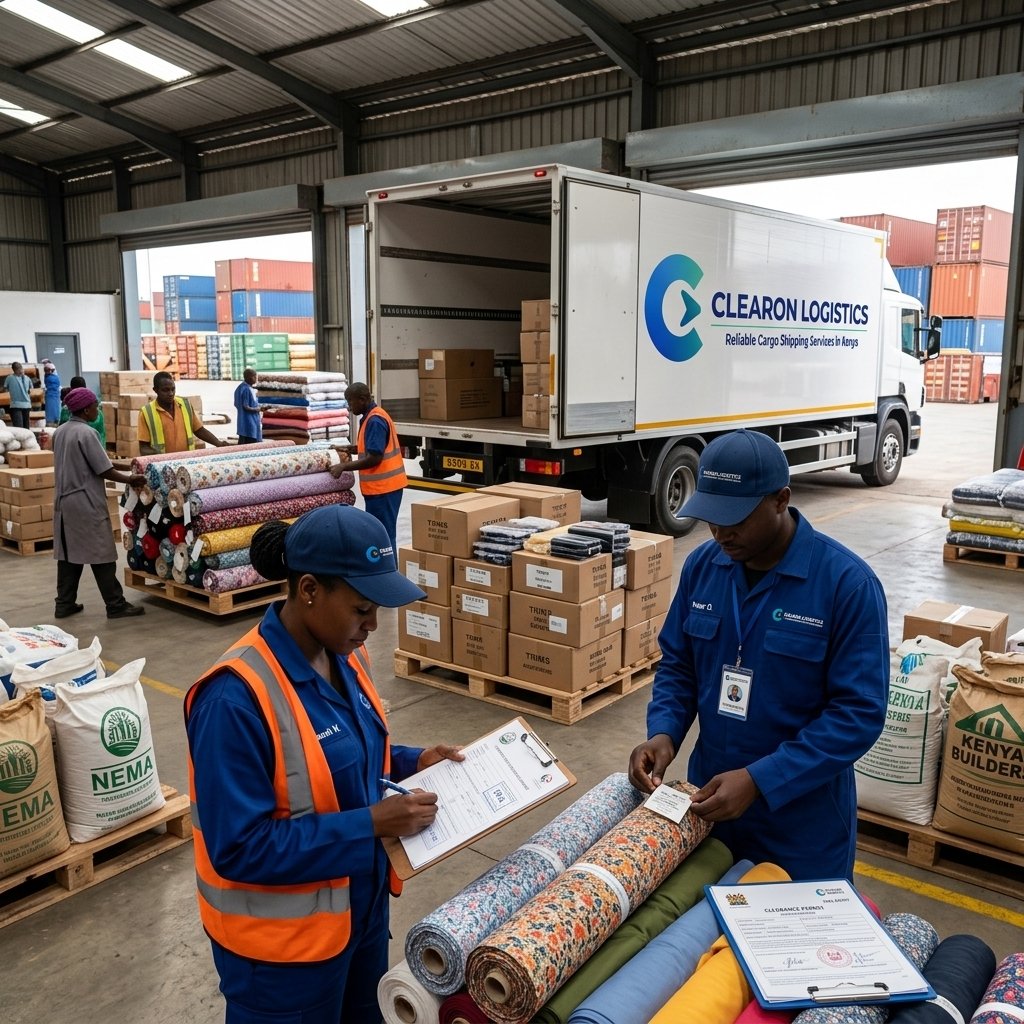
A clearing agent for garment manufacturers has to understand a business that lives or dies on lead times and rules of origin. Kenya’s apparel sector imports most of its fabric and trims and exports finished garments, benefiting from duty-free access to the US and preferential access to Europe and the UK. In 2025 factories shipped a record volume of garments while export value slipped, so margins are tight and delays or compliance errors are costly.
Table of Contents
The Business Model Depends on Imported Inputs
Most export garment factories source fabric from outside Kenya. That’s workable because the US AGOA programme, extended to 31 December 2028, retains the third-country fabric provision, as covered in our AGOA guide. But it makes the import side central to profitability: inputs must arrive on time, at predictable cost, with documentation that survives scrutiny.
Choose the Right Regime Before Importing Inputs
Export-oriented manufacturers commonly use export processing zones, special economic zones, Manufacture Under Bond or duty remission to reduce input costs. EPZ enterprises generally must export most of their output, while other schemes have their own conditions; see our SEZ versus EPZ guide and incentives guide. The choice shapes how every input shipment is documented and cleared, so decide it first.
Rules of Origin Start With Your Records
Preferential access under AGOA, COMESA and the EU and UK agreements depends on proving where inputs came from and what processing happened in Kenya, with documentation that differs by agreement; see our EU and UK trade guide and COMESA and EAC guide. Keep supplier declarations, invoices, production records and import documents together by order, since you will need to evidence origin months after the fabric arrived.
Dyes, Finishing Chemicals and Packaging
Textile processing uses dyes and finishing chemicals that may fall under NEMA’s hazardous chemicals rules, and packaging brings EPR obligations. Confirm status per input using our chemicals guide and EPR guide, and don’t let a small chemical line hold a whole fabric shipment.
Lead Times, Air Freight and Production Schedules
Garment orders run to tight buyer deadlines. Use sea freight for planned volume, but budget air freight for urgent trims and fabric, accepting the cost where a missed ship date would cost more. Avoid shipping critical inputs into peak congestion windows without buffer, and make sure documentation is checked before fabric leaves the supplier.
Documentation Pack for Textile Inputs
- Itemised invoice by fabric type, composition, width and weight
- Packing list with roll counts and weights
- Certificate of Origin, export declaration document and Advance Cargo Declaration reference
- Scheme documentation (EPZ, SEZ, MUB or remission approvals)
- Certificates of analysis for dyes and chemicals
- Supplier declarations to support later origin claims
- Local marine cargo insurance certificate
Working With Clearon Logistics for Garment Manufacturers
We help apparel manufacturers align clearance with scheme conditions and buyer deadlines, keep origin-ready records, and itemise every cost so margins stay visible.
Importing fabric, trims or textile chemicals for export production? Talk to Clearon Logistics before your next order, and we’ll check your scheme, origin records and schedule.
Frequently Asked Questions
Can garment manufacturers import fabric duty-free? Often through zone regimes or duty relief schemes, but conditions apply and they must usually be in place before importing.
Does AGOA require Kenyan fabric? No. The third-country fabric provision was retained in the extension through 31 December 2028, allowing imported fabric.
Why do origin records matter months later? Because preferential access requires evidence of input origin and processing, and authorities may ask to verify it long after shipment.
Do dyes and finishing chemicals need special registration? They may, under hazardous chemicals rules. Confirm per product before importing.
Further Reading
- Export Processing Zones Authority (external, dofollow)
- AGOA.info (external, dofollow)
- Related on our blog: AGOA and Kenya’s Textile Exports
- Related on our blog: SEZ vs EPZ Kenya
- Related on our blog: Kenya’s EU and UK Trade Agreements
- Our service: Clearing and Forwarding Services in Kenya






Leave a Reply