
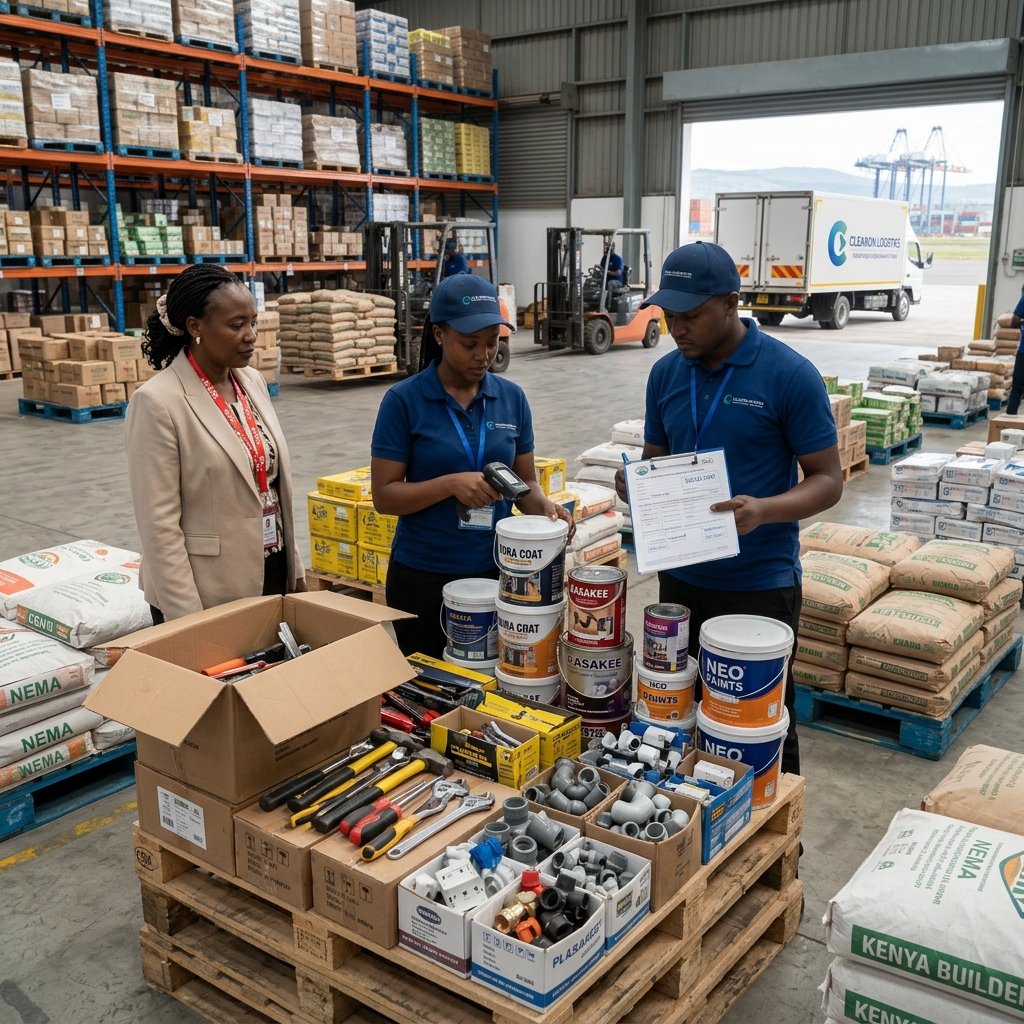
A clearing agent for hardware wholesalers deals with the most mixed cargo in trade: tools, fasteners, locks, plumbing fittings, paints, sanitaryware, electrical accessories, ladders and roofing can share a container and still follow different rules line by line. Hardware margins are thin and stock turns slowly, so a misclassified line or a held paint shipment ties up cash the business can’t spare.
Table of Contents
Mixed Containers Need Line-by-Line Discipline
Each hardware product has its own classification, duty treatment and certification path. A container declared as “hardware” is an invitation to reassessment. Ask suppliers for itemised invoices and packing lists by product, with sizes, materials and values, and agree classification with your agent before shipping. See our HS code guide and commercial stock importers guide.
Paints, Solvents and Chemical Lines
Paints, thinners and similar products can fall under NEMA’s toxic and hazardous chemicals registration, with per-consignment permit fees, and their packaging can carry EPR obligations. Dangerous-goods rules also apply in transit. Read our chemicals guide and EPR guide before adding chemical lines to a mixed order.
Electrical Accessories and Certificates
Sockets, plugs, extension cables, lighting and similar items are regulated electrical products. KEBS has acted against cable shipments whose models didn’t match their certificates, so match certificates to exact models; see our electrical equipment guide.
Steel, Cement and Roofing
Heavy building lines come with KEBS standards and counterfeit risk. Verify marks using the SMS check described in our building materials guide and cement guide, and note that duty on steel products has changed through EAC stays, so confirm current rates before pricing.
Packaged Goods and Quantity Labels
Products sold by weight, volume or count, such as nails, adhesives and paints, must carry accurate net quantity declarations in metric units. Non-compliant packaging can be blocked, as explained in our weights and measures guide. Check labels before production, not at the port.
Counterfeits, Cash Flow and Container Choice
Branded tools and fittings are counterfeited; keep supplier and brand documents and read our Anti-Counterfeit Authority guide. Slow-moving stock strains cash, so consider LCL consolidation for smaller lines and a bonded warehouse for bulky, slow lines. Build per-SKU landed costs using our landed cost formula.
Working With Clearon Logistics for Hardware Importers
We split mixed orders into their regulated and unregulated lines, check certification and packaging before shipping, and itemise costs so you can see which products really earn their shelf space.
Importing mixed hardware stock? Talk to Clearon Logistics with your order list, and we’ll flag which lines need certificates, permits or special handling.
Frequently Asked Questions
Can I ship all my hardware lines in one container? Yes, but each product line should be itemised, since classification and regulation differ by line.
Do paints need special registration? They can fall under NEMA’s toxic and hazardous chemicals rules and EPR, so confirm per product.
Why do electrical accessories get checked so closely? Because mismatched or substandard electrical products are a safety hazard, and KEBS has acted on certificate mismatches.
Are steel duty rates fixed? No. Rates can change through EAC stays and annual gazettes, so confirm before pricing.
Further Reading
- Kenya Bureau of Standards (KEBS) (external, dofollow)
- National Environment Management Authority (external, dofollow)
- Related on our blog: Clearing Agent for Building Materials Importers
- Related on our blog: Importing Chemicals into Kenya
- Related on our blog: Weights and Measures Compliance Kenya
- Our service: Clearing and Forwarding Services in Kenya


Leave a Reply