
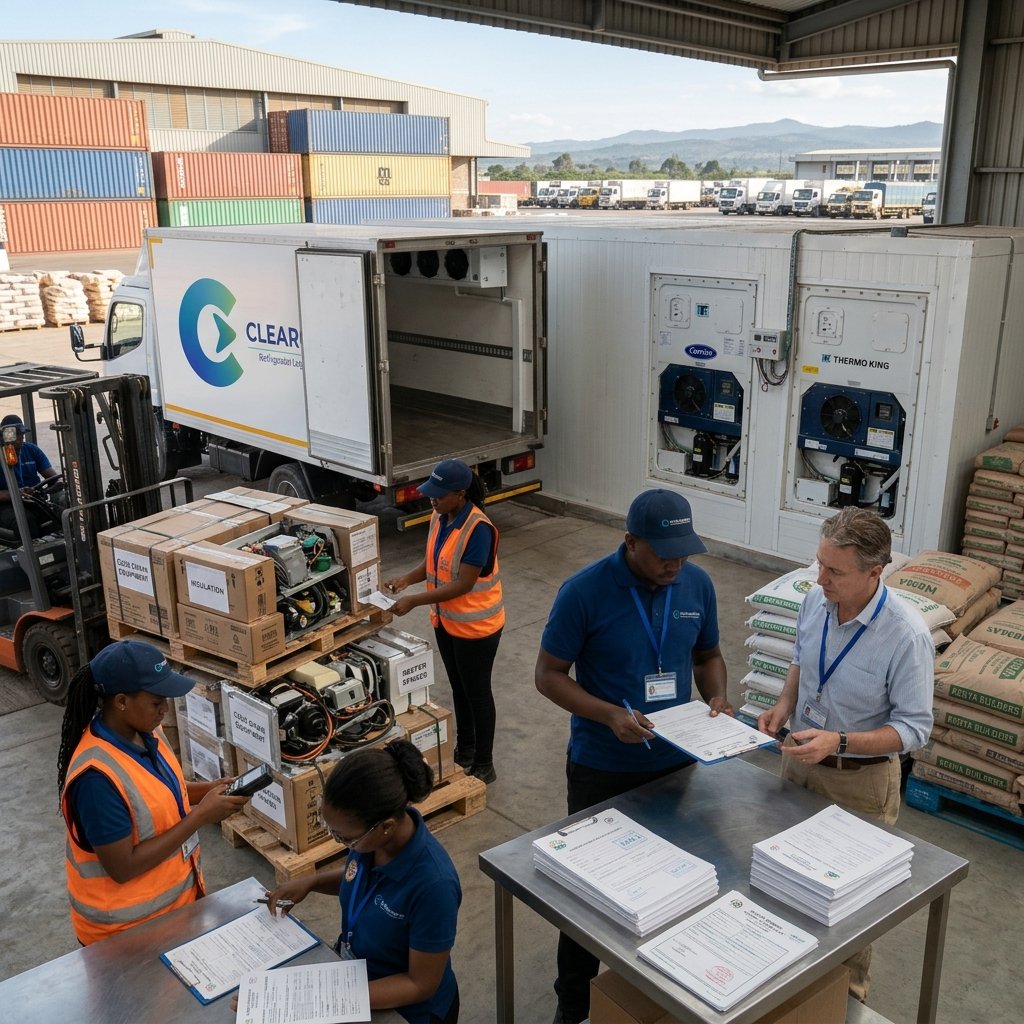
A clearing agent for cold chain operators supports businesses where a temperature failure ends the product’s value: fresh produce exporters, dairy and meat processors, pharmaceutical distributors and food wholesalers. Cold rooms, refrigeration plant, reefer trailers and monitoring equipment are the infrastructure those businesses rely on, and importing them involves vehicle rules, electrical certification, energy standards and refrigerant considerations all at once.
Table of Contents
Why Cold Chain Equipment Is Mission-Critical
Kenya’s horticulture exporters have learned that a cold chain that breaks at any point is both a quality failure and a compliance failure; see our fresh produce export guide. Equipment that arrives late, or that can’t be commissioned because of a missing certificate, can cost a whole season of exports. Plan equipment imports well ahead of the harvest or distribution peak.
Refrigerated Vehicles: Check the Used-Truck Rules First
Refrigerated trucks are commercial vehicles, so the restrictions in our fleet owners guide apply: used rigid trucks of 3.5 to 30 tonnes were barred from import under the 2022 KEBS notice, which pushes many operators towards new or locally built refrigerated bodies. Confirm the current rules before you buy a vehicle or a body, and check how trailers are treated.
Cold Rooms, Compressors and Condensing Units
Commercial refrigeration equipment generally needs KEBS conformity documentation and may fall under energy performance registration and refrigerant-related environmental rules, as described in our hotel and restaurant equipment guide and electrical equipment guide. Insulated panels, doors and controls should be itemised separately from machinery, because each classifies differently.
Power Backup Is Part of the Cold Chain
A cold room without reliable power is a liability. Generators and standby systems follow the rules in our industrial equipment guide, while solar and battery installations follow our solar equipment guide. Decide the backup design early so it can be imported and commissioned together with the refrigeration plant.
Licensing the Premises and Handling Food or Medicines
Cold stores handling food need public health licensing; see our food hygiene licensing guide. Facilities storing medicines must also satisfy pharmaceutical regulators’ storage expectations; see our pharmaceuticals guide. Clearing the equipment doesn’t license the operation.
Documentation Pack for Cold Chain Equipment
- Itemised invoice with models, capacities and refrigerant types
- Certificates of Conformity matching exact models
- Energy performance and EPR documents where applicable
- Technical specifications and installation drawings
- Vehicle documents (chassis numbers, body details) for refrigerated vehicles
- Certificate of Origin, export declaration document and Advance Cargo Declaration reference
- Local marine cargo insurance certificate
Working With Clearon Logistics for Cold Chain Projects
We plan cold chain imports around your operating calendar: vehicle rules checked first, certificates matched to models, and delivery timed so installation and commissioning finish before you need the capacity.
Importing cold rooms, refrigeration plant or refrigerated vehicles? Talk to Clearon Logistics with your project timeline, and we’ll plan the clearance around it.
Frequently Asked Questions
Can I import a used refrigerated truck? Used rigid trucks of 3.5 to 30 tonnes were barred under KEBS’s 2022 notice, so many operators buy new or locally built bodies. Confirm the current position.
Does cold room equipment need certification? Generally yes, with KEBS conformity and possibly energy performance and refrigerant-related requirements, depending on the product.
Does importing the equipment license my cold store? No. Food or medicine storage premises need their own public health or regulatory approvals.
Why plan power backup with the import? Because refrigeration depends on reliable power, and backup equipment has its own import rules and lead times.
Further Reading
- Kenya Plant Health Inspectorate Service (external, dofollow)
- Energy and Petroleum Regulatory Authority (external, dofollow)
- Related on our blog: Clearing Agent for Fleet Owners and Transporters
- Related on our blog: Exporting Fresh Produce from Kenya
- Related on our blog: Clearing Agent for Hotel and Restaurant Equipment
- Our service: Clearing and Forwarding Services in Kenya


Leave a Reply