
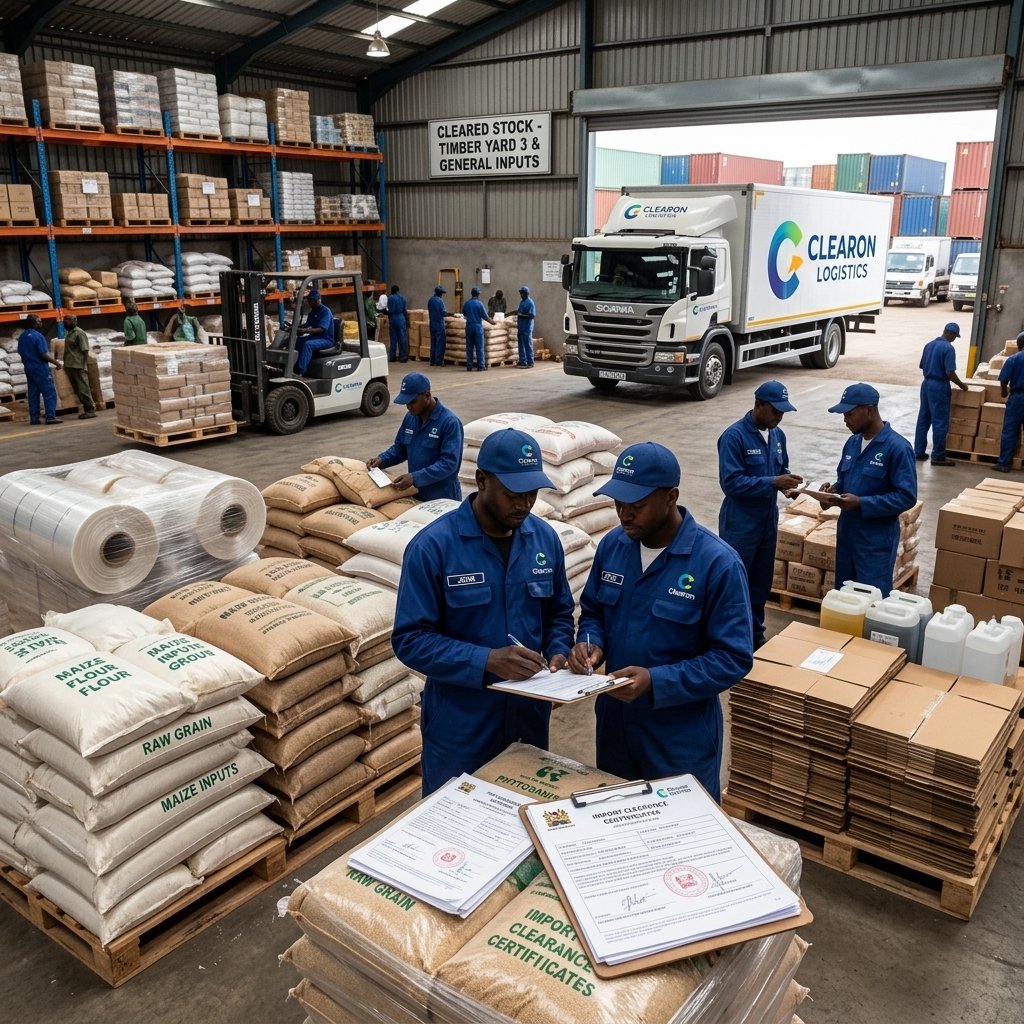
A clearing agent for manufacturers importing raw materials is protecting a production line’s supply, and its margins. Manufacturers face a stack of costs and compliance obligations that trading importers don’t: input duties, incentive-scheme rules, hazardous-substance registration, packaging obligations and, since the 2025 overhaul, a turnover-based standards levy. Get the structure right and the savings are substantial; get it wrong and you pay duty you could have avoided, or hold a line because one input was never registered.
Table of Contents
Start With the Incentive Question, Before the Purchase Order
Schemes such as Manufacture Under Bond, duty remission and the zone regimes can remove or defer duty on inputs, but they generally have to be in place before the goods are imported. Duty remission operates under a customs bond with limited validity, and eligible raw materials are determined at EAC level, not by Kenya alone. Our guides to manufacturing incentives and SEZ versus EPZ compare the options, including the export-orientation trade-offs. Decide the scheme first, then place the order.
Certification for Inputs Used in Your Own Production
KEBS has published exemption routes, summarised by JETRO in 2024, for raw materials and machinery imported by manufacturers for their own use, on conditions and with an application fee. Not every input qualifies, and conditions change, so confirm the current position for each input before you rely on it. Where an exemption doesn’t apply, standard pre-export verification and a Certificate of Conformity are the default.
Hazardous Chemicals and Packaging Need Their Own Registration
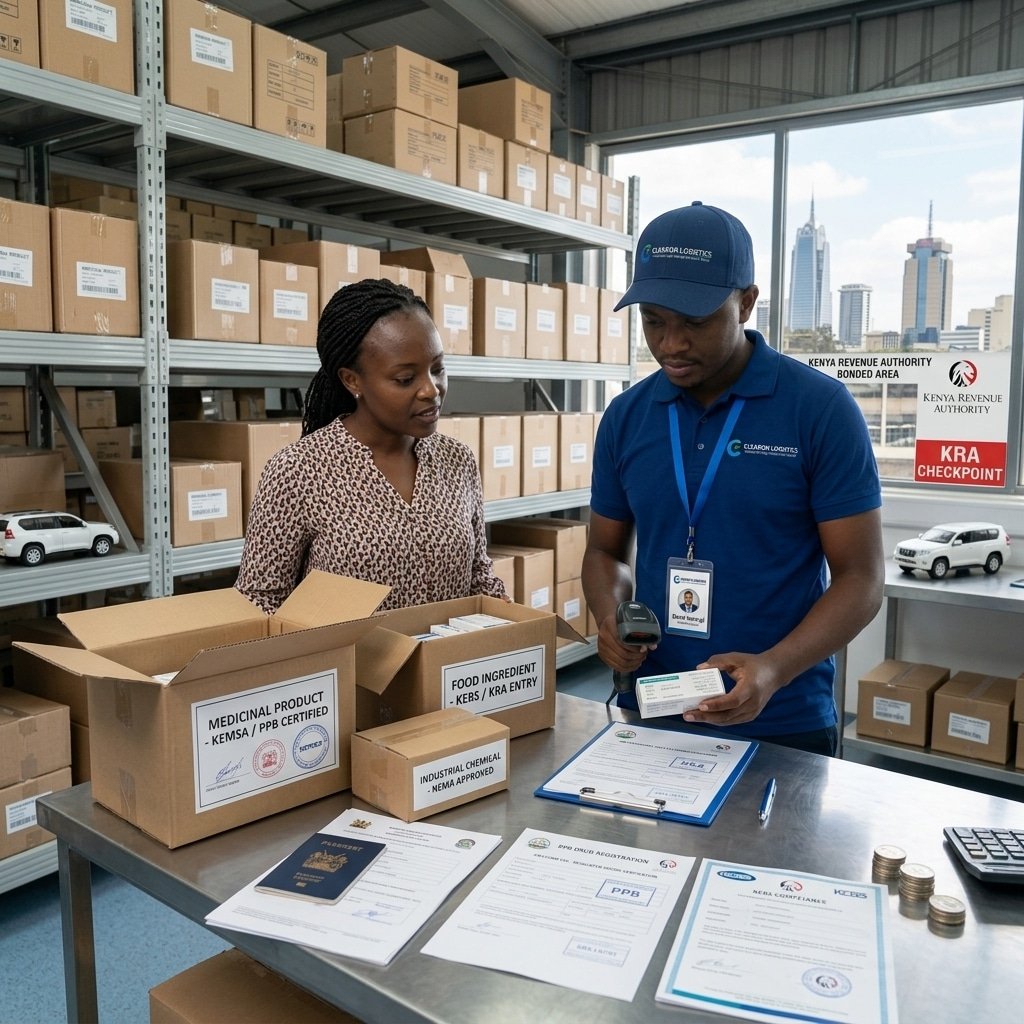
Many manufacturing inputs are industrial chemicals, solvents, resins, oils or coatings. Under NEMA’s toxic and hazardous chemicals regulations, importing them without registration is a criminal offence, with per-consignment permit fees on top of annual licensing; see our chemicals guide. Packaging, whether you import it or use it for finished goods, falls under Extended Producer Responsibility, and hazardous-product packaging is specifically covered; see our EPR guide. Check both before you finalise any supplier.
The Standards Levy and Your Real Cost Picture
Manufacturers also pay the KEBS Standards Levy of 0.2% of monthly turnover, subject to an annual cap, a cost that sits alongside import charges rather than inside them; see our Standards Levy guide. Build it into your total cost model together with duty, IDF, RDL, VAT and port charges, using our landed cost formula, so your product pricing reflects reality.
Classification Discipline Protects You
Raw materials can be blended, partially processed or sold in tiers that attract different duty rates. The ongoing investigation into palm oil misdeclaration, covered in our commercial stock importers guide, shows how closely authorities now watch inputs whose classification depends on processing level. Describe materials accurately, keep supplier specifications and certificates of analysis, and don’t let a vague invoice choose your classification for you.
Cash Flow, Buffer Stock and Bonded Options
Manufacturers need steady supply without tying up cash. Options include bonded warehousing to defer duty until release into production, scheduled call-off shipments, and buffer stock sized to realistic port and peak-season delays. Discuss what makes sense for each input with your agent rather than applying one policy to everything.
Working With Clearon Logistics for Manufacturers
We help manufacturers choose the incentive route before ordering, check certification and registration for each input, itemise every cost line, and keep documentation audit-ready. Records matter: KRA can review imports for up to five years.
Manufacturing in Kenya with imported inputs? Talk to Clearon Logistics before your next purchase order, and we’ll map the scheme, certification and cost picture for your inputs.
Frequently Asked Questions
Can manufacturers import raw materials duty-free? Sometimes, through schemes like Manufacture Under Bond or duty remission, but these must generally be arranged before importing. Eligibility depends on the scheme and the specific input.
Do raw materials need KEBS certification? Often yes, though exemption routes exist for certain manufacturer own-use imports on conditions. Confirm per input.
Do industrial chemicals need registration? Yes. NEMA’s toxic and hazardous chemicals regulations require registration, and importing without it is an offence.
Is the Standards Levy charged at the border? No. It’s a monthly levy on a manufacturer’s turnover, separate from import charges.
Further Reading
- Kenya Investment Authority (external, dofollow)
- National Environment Management Authority (external, dofollow)
- Related on our blog: Importing Machinery into Kenya: Incentives
- Related on our blog: Importing Chemicals into Kenya
- Related on our blog: KEBS Standards Levy Kenya
- Our service: Clearing and Forwarding Services in Kenya






Leave a Reply