
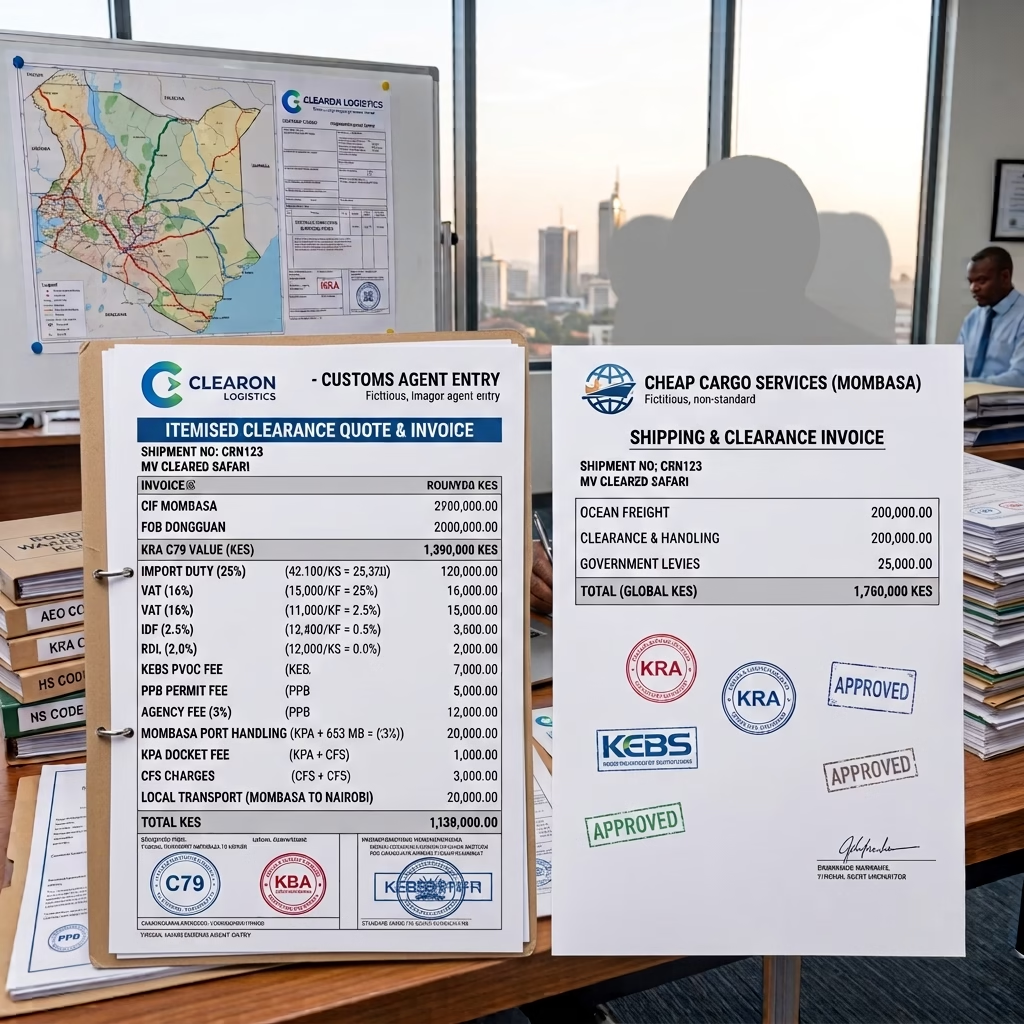
The real cost of choosing a clearing agent on price alone rarely shows up on the original quote — it shows up later, in the form of a shipment held over a permit nobody checked, a duty reassessment nobody warned you about, or a supplier document gap nobody caught before your goods were already at sea. The cheapest quote and the cheapest actual outcome are two very different numbers, and conflating them is one of the most common, and most expensive, decisions importers make.
Table of Contents
Why the Lowest Quote Is Rarely the Full Picture
A quote that looks noticeably cheaper than everyone else’s is either genuinely more efficient — entirely possible — or it’s missing something that will show up as an additional cost, a delay, or a compliance gap once your cargo is already committed. The problem is you generally can’t tell which one you’re looking at from the quote alone, which is exactly why comparing agents on price alone, without understanding what’s actually included, is a genuinely risky basis for a decision involving real money and real cargo.
Where the Corners Actually Get Cut
When an agent’s fee is unusually low, the savings tend to come from somewhere specific:
- Skipping pre-shipment verification — not checking HS codes, permits, or documentation requirements before your goods ship, meaning problems only surface once cargo has already arrived and options are far more limited
- Minimal or no communication — a cheap service often means you’re not getting proactive updates, just a final “your cargo is ready” message, leaving you unable to react to anything along the way
- Underestimating costs to win the business, then presenting the real figure once you’re already committed and switching agents mid-process feels impractical
- Cutting corners on documentation accuracy, since getting things right the first time takes more careful, time-consuming work than getting them roughly right and hoping nothing gets flagged
None of this means every affordable agent is cutting corners — but it does mean an unusually low quote deserves specific questions about what’s actually included, not just gratitude for the lower number.
The Compliance Gap That Doesn’t Show Up Until Later
This is where the real financial risk sits. Kenya’s compliance requirements have moved fast throughout 2026 — the Certificate of Origin requirement, the Advance Cargo Declaration, mandatory local marine insurance, and a wave of other changes covered across our blog. An agent charging less because they’re not actively tracking these changes, or not building the time into their process to confirm compliance before shipping, isn’t actually saving you money — they’re deferring a cost (and a delay) to a point in your shipment where it’s far more expensive and disruptive to fix. A held container accruing demurrage because of a missed requirement costs considerably more than whatever you saved on the agent’s fee.
What “Value” Actually Looks Like in a Clearing Agent
Value isn’t the same as expensive, and it isn’t the same as cheap — it’s the relationship between what you pay and what you actually get for it. A genuinely good-value agent typically offers:
- A transparent, itemised cost breakdown upfront, so you know exactly what you’re paying for and why
- Proactive compliance checking before your goods ship, catching problems while they’re still cheap and easy to fix
- Regular, unprompted updates throughout your shipment’s journey, not just a response when you chase them
- Current licensing, bond status, and professional credentials you can verify, not just take on faith
- A fee that reflects genuine thoroughness, not the lowest possible number achieved by skipping steps that matter
How to Compare Quotes Properly
Rather than comparing headline figures alone, ask each agent the same specific questions:
- What exactly is included in this quote — duty and levy estimates, agent fees, or both?
- What happens if my duty estimate turns out to be wrong — is that my problem or yours to have caught earlier?
- Will you check my documentation and permits before my goods ship, or only once they arrive?
- What does your communication look like during transit — do I hear from you proactively, or only when I ask?
Two quotes that look wildly different on price often turn out to include very different levels of actual service once you ask these questions directly — and the gap in price usually maps quite closely to the gap in what’s actually being done for you.
When the Cheap Option Genuinely Is Fine
To be fair to lower-cost agents: for a simple, low-risk, routine shipment with an established supplier and no unusual compliance considerations, a leaner service genuinely can be the right fit, and paying for a more comprehensive service you don’t need isn’t smart either. The point isn’t that cheap is always wrong — it’s that price alone tells you very little about what you’re actually getting, and for anything beyond the simplest shipment, that gap in visibility is a real risk worth pricing in.
Making the Comparison That Actually Matters
The right question isn’t “who’s cheapest” — it’s “who gives me the best outcome for what I’m paying, given what my specific shipment actually needs.” That comparison requires understanding what’s included in a quote, not just the number at the bottom of it.
At Clearon Logistics, we give every client a transparent, itemised breakdown upfront specifically so this comparison is possible — you can see exactly what you’re paying for, weigh it against any other quote you’re considering, and make a genuinely informed decision rather than choosing blind on price alone.
Comparing clearing agent quotes for your next shipment? Talk to Clearon Logistics for a transparent breakdown you can actually compare against anything else you’re considering.
Frequently Asked Questions
Does a higher clearing agent fee always mean better service? Not necessarily — price alone doesn’t tell you what’s included. The better approach is asking specifically what each quote covers, rather than assuming either the cheapest or most expensive option is automatically the better value.
What’s the biggest hidden risk of choosing the cheapest clearing agent quote? Often it’s a compliance gap — skipped pre-shipment checks on permits, documentation, or current regulatory requirements — that doesn’t show up as a cost until your cargo is already at the port and options for fixing it are far more limited and expensive.
Is it reasonable to ask a clearing agent exactly what’s included in their quote? Yes, and a professional agent expects this question — a transparent, itemised breakdown is a reasonable standard to hold any quote to before comparing it against alternatives.
Is a cheap clearing agent ever the right choice? For simple, low-risk, routine shipments with an established supplier and no unusual compliance considerations, a leaner service can genuinely be appropriate — the risk grows with the complexity and value of what you’re importing.
Further Reading
- KRA — Customs & Border Control (external, dofollow)
- Kenya International Freight and Warehousing Association (KIFWA) (external, dofollow)
- Related on our blog: Clearing Agent Red Flags Kenya: 6 Warning Signs to Watch For
- Related on our blog: What a Clearing Agent Does: 5 Stages of Your Shipment Explained
- Our service: Clearing and Forwarding Services in Kenya






Leave a Reply