EXW vs FOB for China to Kenya shipments is a decision most importers make by accident, because it appears as three letters on a supplier’s quotation and gets accepted without a second thought. It decides who arranges Chinese export clearance, who moves the goods from the factory to the port, and whether the price you were quoted can be compared with anything else. We handle both EXW and FOB, so here is the honest comparison.
Table of Contents
Who Does What
| Step | EXW | FOB |
|---|---|---|
| Collect goods from the factory | Buyer’s side | Supplier |
| Truck to the Chinese port | Buyer’s side | Supplier |
| Chinese export clearance | Buyer’s side | Supplier |
| Loading on board | Buyer’s side | Supplier |
| Ocean or air freight | Buyer | Buyer |
| Insurance | Buyer | Buyer |
| Kenyan clearance and duty | Buyer | Buyer |
Under both terms, the main freight, insurance and everything in Kenya are yours. The difference is everything that happens in China up to loading.
The Export Clearance Problem Nobody Mentions at Quote Stage
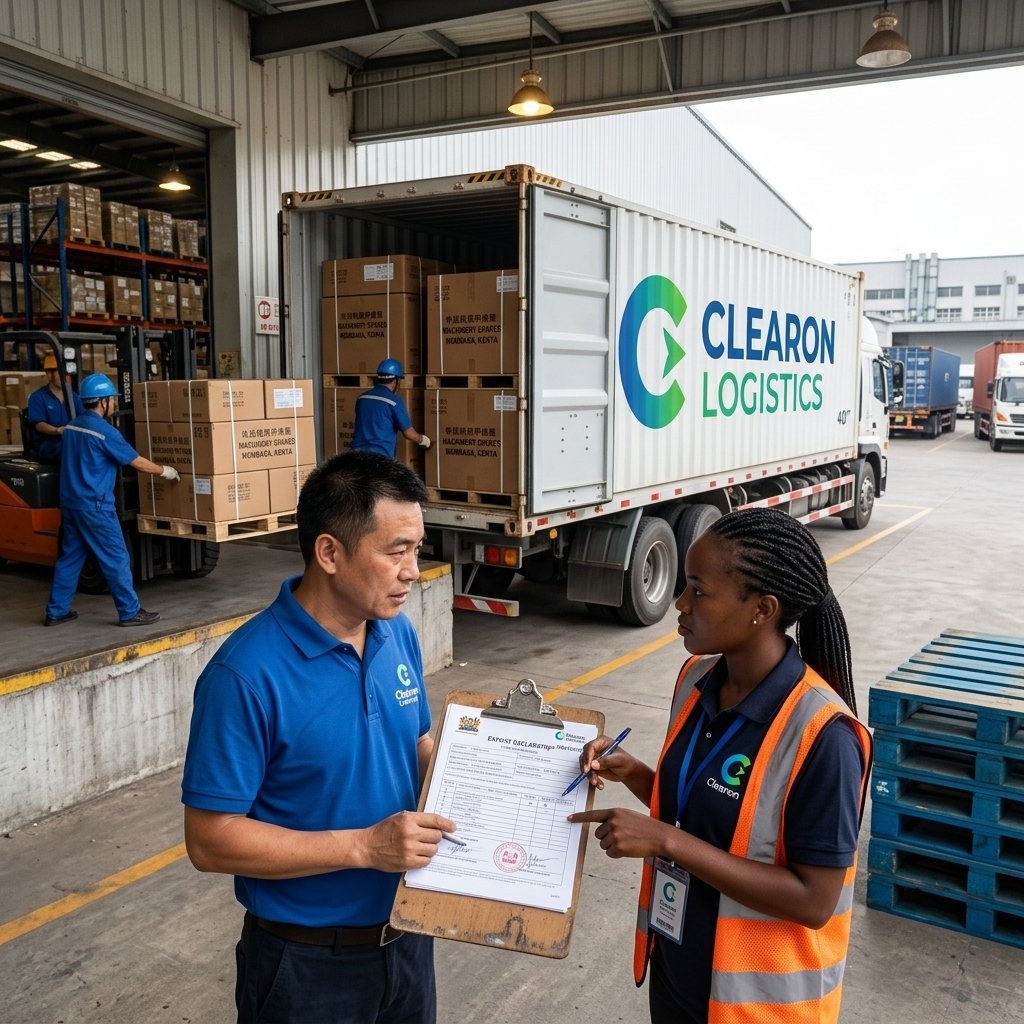
Under EXW, the buyer is formally responsible for export clearance. In China, a foreign buyer typically cannot file the export declaration itself, so a licensed party must do it on your behalf, and some suppliers are reluctant to help. That is why many guides describe EXW as hiding costs and complications behind a low headline price, and why FOB is the most common term for China-origin shipments, since the supplier already has the licences and local knowledge to clear goods for export. If your supplier quotes EXW, ask who will file the export declaration, and expect a specific company name and a price.
When FOB Makes Sense
FOB is usually the better fit when your supplier is an experienced exporter, when you are importing from China for the first time, or when you want fewer moving parts. The supplier delivers to the port, clears the goods and loads them. Just make sure the contract also obliges the supplier to provide the documents Kenya now requires, such as the Certificate of Origin and the export declaration document, because those come from the China side regardless of the term.
When EXW Makes Sense
EXW can work well when you buy from several factories and want to consolidate them into one shipment, when you want control of the freight leg, or when your supplier is a small factory that does not export often. It needs a forwarder who can arrange pickup and the export formalities properly. Tell us before you agree EXW and we’ll explain how we handle it for your shipment, so the arrangement is clear, and priced, before you commit.
Compare Quotes on a Landed-Cost Basis
An EXW price and an FOB price are not the same thing. The FOB price is typically the EXW price plus inland delivery to the port, export clearance and port charges. Before you compare suppliers, add every missing step to the EXW quote, then continue through freight, insurance, duty and levies using our landed cost formula. Treat a supplier who quotes EXW but resists letting you appoint your own forwarder as a warning sign.
The Kenya Rules That Apply Either Way
Whichever term you choose, someone must obtain the Advance Cargo Declaration reference for containerised sea cargo before loading, your cargo needs a CFS nomination, and insurance must come from a Kenya-licensed insurer, as explained in our marine insurance guide. Because the buyer arranges insurance and main freight under both EXW and FOB, a contract that leaves these unclear can end with duplicated cover or a container that cannot be loaded.
Tell Us the Term Before You Sign
Send us your supplier’s proforma invoice before you pay a deposit. We’ll tell you what the Incoterm means for your shipment, which documents the supplier must provide, and what to ask them to change.
Comparing an EXW and an FOB quote from China? Send your proforma invoice to Clearon Logistics and we’ll explain who does what and what it will really cost to land the goods in Kenya.
Frequently Asked Questions
Is FOB better than EXW for China imports? For most importers, especially first-timers, FOB is simpler because the supplier handles pickup, export clearance and loading. EXW can suit buyers consolidating several suppliers with a capable forwarder.
Why is EXW harder from China? Under EXW, the buyer is responsible for export clearance, which a foreign buyer usually cannot file directly, so a licensed party must act on your behalf.
Who arranges insurance under EXW and FOB? The buyer, and in Kenya it must now come from a Kenya-licensed insurer.
Do I still need the Certificate of Origin under FOB? Yes. Kenya requires it for every import, and it must come from the China side, so your supplier must be able to provide it.
Further Reading
- Kenya Revenue Authority: Advance Cargo Declaration platform (external, dofollow)
- Kenya Ports Authority (external, dofollow)
- Related on our blog: Shipping from China to Kenya: FCL, LCL and Air Compared
- Related on our blog: Incoterms Explained for Kenya Imports
- Related on our blog: Sourcing from China: Tips for Kenyan Importers
- Our service: Clearing and Forwarding Services in Kenya



Leave a Reply