
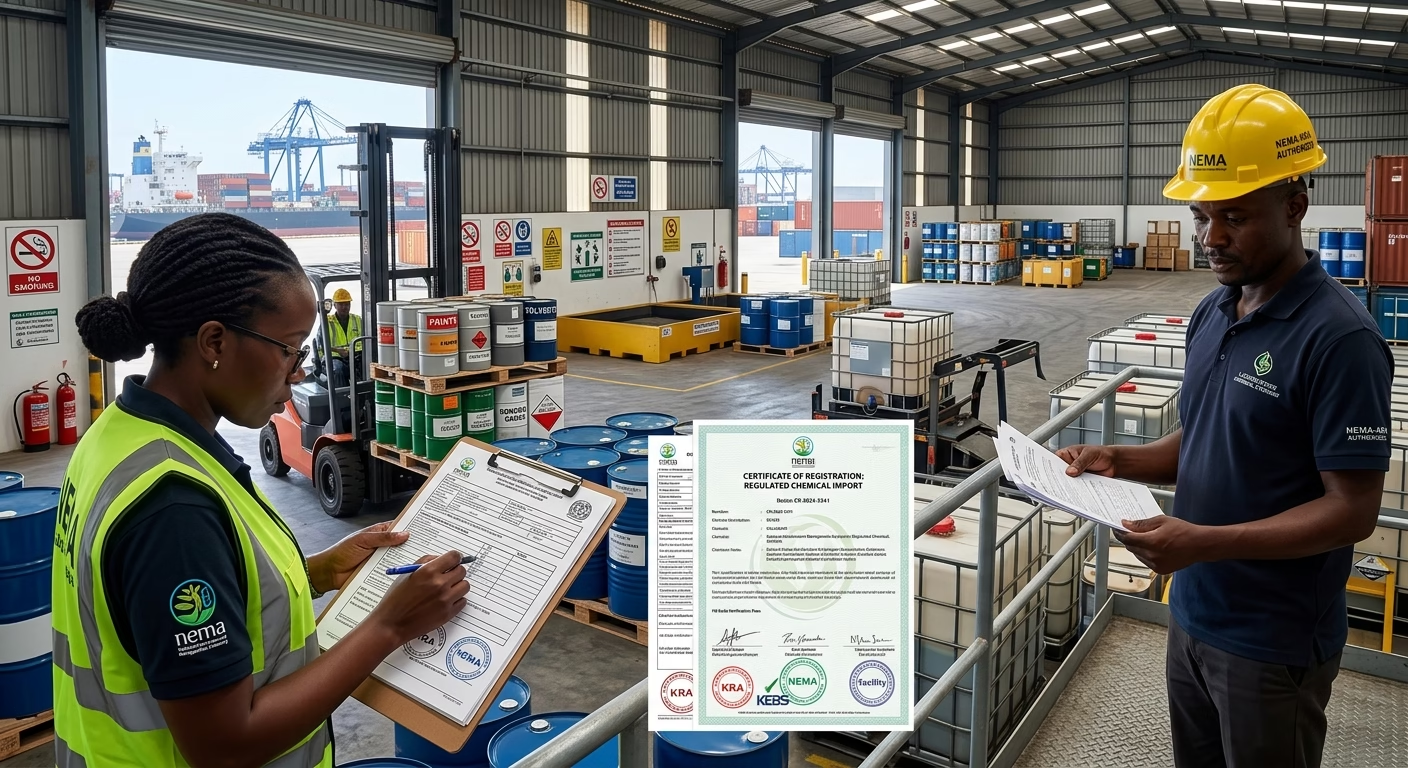
Importing paints and industrial chemicals into Kenya now runs through a registration requirement that took full legal effect only recently, and enforcement has been active since. Under regulations that became law in November 2024, NEMA has directly warned that handling toxic or hazardous industrial chemicals without registration — including importing them — is a criminal offence, not a paperwork formality to sort out eventually.
Table of Contents
What Changed and When
The Environment Management and Coordination (Management of Toxic and Hazardous Chemicals and Materials) Regulations, 2024 came into force through Kenya Gazette Supplement No. 199 on 4 November 2024, under the Environmental Management and Coordination Act, CAP 387 — regulations that had actually been in draft development since 2013 before finally being finalised. NEMA followed up with a direct public notice in February 2025, explicitly warning that anyone intending to import, export, manufacture, distribute, or supply a toxic or hazardous industrial chemical or material must register before engaging in that activity at all, with non-compliance constituting a criminal offence under CAP 387.
What Counts as “Toxic and Hazardous”
The regulations apply broadly to industrial chemicals and materials — a category that includes far more than obviously dangerous substances. Paints, solvents, industrial chemicals, oils and lubricants, and agrochemicals are explicitly named in related NEMA regulatory schedules as hazardous product categories, meaning importers who may not think of their business as “chemicals importers” in the traditional sense — paint distributors, industrial solvent suppliers, coating manufacturers — fall squarely within this framework’s scope.
What Registration Actually Requires
The registration application is genuinely technical, going well beyond basic business documentation. Applicants need to provide, among other details:
- CAS number (Chemical Abstracts Service number) — a unique identifier for the specific chemical substance
- HS code — the standard customs classification code for the product
- Toxicity data, covering effects on test animals, bees, fish, birds, soil microorganisms, and other relevant categories
- Environmental persistence information — how long the substance remains active or harmful in the environment
- Safety handling measures
- Registration status and references in the country of origin, including evidence the product is legally authorised for market in that country
- Handling, storage, and other relevant technical information
This level of technical detail means registration isn’t something a business can complete quickly without proper preparation — it requires having genuine safety data on the specific chemical, sourced from the manufacturer or supplier, well ahead of any import.
The Fee Schedule
NEMA’s published fee structure for this category is specific and, in several tiers, substantial:
- Registration — KSh 1,000
- Licence to manufacture, distribute, or store — KSh 10,000
- Licence to transport — KSh 10,000
- Licence to import, export, or transit through Kenya — KSh 10,000
- Permit to import, export, or transit through Kenya (per consignment) — KSh 40,000
- Annual licence to transport — KSh 40,000
- Annual licence to manufacture, import, export, distribute, or store — KSh 100,000
Notably, the per-consignment import permit fee (KSh 40,000) applies on top of the annual licensing structure, meaning frequent importers of hazardous chemicals should factor this recurring per-shipment cost into their landed cost calculations, not just the one-time registration and annual licensing fees.
Transporting Chemicals Through Kenya Has Its Own Permit
Beyond straightforward import, anyone transporting toxic or hazardous industrial chemicals through Kenya — including transit cargo destined for neighbouring countries — must apply for a separate transport permit, which requires a copy of prior informed consent from the importing country where applicable, alongside a refundable deposit bond. Packaging for road and rail transport of these materials must also meet relevant Kenyan Standards specifically for hazardous chemical transport, not general commercial packaging standards.
How This Overlaps With EPR
This registration requirement sits alongside, not instead of, other compliance obligations that may apply to the same products. Notably, hazardous products’ packaging — explicitly including industrial chemicals, oils and lubricants, pharmaceuticals, agrochemicals, veterinary products, cosmetics, paints, and solvents — is separately listed under Kenya’s Extended Producer Responsibility framework, meaning an importer of paint or industrial chemicals may need both NEMA’s toxic and hazardous chemicals registration and an EPR Import Certificate for the packaging itself — two separate compliance tracks converging on the same shipment.
Getting Ahead of a Recently Enforced Requirement
Because this registration framework only became fully active and actively enforced within the past couple of years, and because the technical data requirements take genuine preparation to assemble, this is a category where importers who haven’t yet confirmed their compliance status are at real risk of discovering the requirement only once NEMA enforcement catches up with them, rather than proactively.
At Clearon Logistics, we help importers of paints, industrial chemicals, and related hazardous products understand whether NEMA registration applies to their specific product, and how it interacts with EPR and standard customs requirements — so compliance is sorted before a shipment, not discovered as an enforcement action after one.
Importing paints, solvents, or industrial chemicals into Kenya? Talk to Clearon Logistics to confirm your NEMA registration status before you order.
Frequently Asked Questions
When did NEMA’s toxic and hazardous chemicals registration requirement come into force? The regulations took legal effect on 4 November 2024, with NEMA issuing a direct public compliance notice in February 2025 warning that unregistered handling — including importing — is a criminal offence.
Does this registration requirement apply to paint importers specifically? Yes — paints and solvents are explicitly named among the hazardous product categories covered under related NEMA regulatory schedules, meaning paint importers fall within this framework’s scope even if they don’t think of themselves as “chemical importers.”
Is there a fee for every individual chemical shipment, or just an annual licence? Both — a per-consignment import permit fee of KSh 40,000 applies on top of the annual licensing structure (up to KSh 100,000 for manufacture, import, export, distribution, or storage), meaning frequent importers should budget for recurring per-shipment costs.
Does NEMA registration replace the need for an EPR Import Certificate on the same product? No — they’re separate compliance tracks. Hazardous product packaging (including paints, chemicals, and related categories) is separately covered under Kenya’s EPR framework, meaning both may apply to the same shipment.
Further Reading
- National Environment Management Authority (NEMA) — Chemicals Management Regulations (external, dofollow)
- NEMA — Controlled Substances (external, dofollow)
- Related on our blog: EPR Import Certificate Kenya: 5 Essential Facts
- Related on our blog: Importing Agrochemicals into Kenya: 4 PCPB Facts to Know First
- Our service: Clearing and Forwarding Services in Kenya







Leave a Reply