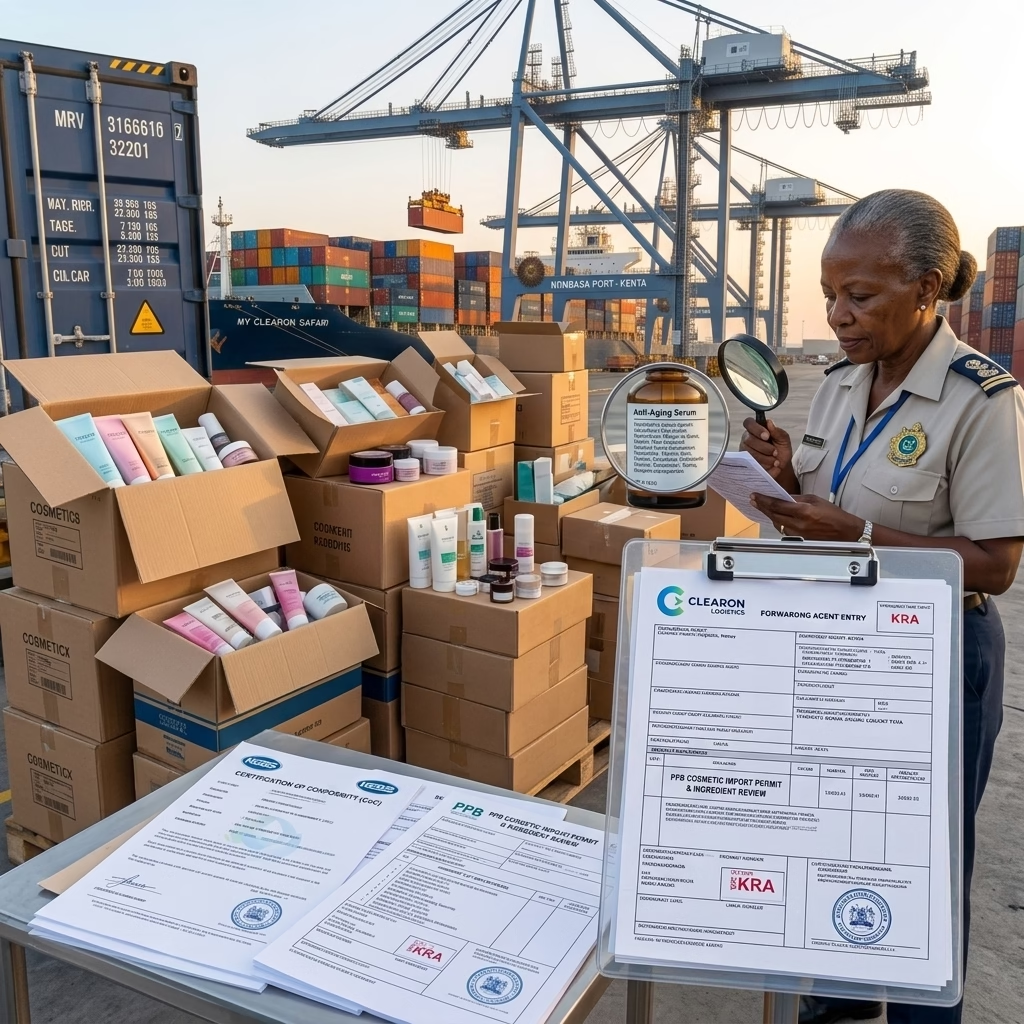
Importing cosmetics into Kenya puts you at the intersection of two separate regulatory bodies, and which one governs your specific product depends on a distinction that trips up a lot of importers: whether your product is a genuine cosmetic, or one that crosses the line into making a medicinal claim. Get that classification wrong, and you can find yourself filing the wrong paperwork with the wrong authority entirely.
Table of Contents
Two Regulators, One Product Category
Kenya’s cosmetics regulatory framework runs through two separate authorities working in parallel: the Kenya Bureau of Standards (KEBS), which handles general cosmetic product quality, labelling, and standards compliance, and the Pharmacy and Poisons Board (PPB), which regulates products that cross into pharmaceutical or medicinal territory. Most everyday cosmetics — moisturisers, cleansers, shampoos, makeup — fall under KEBS. Products making stronger claims, or containing pharmacologically active ingredients, fall under PPB instead, following the same registration framework used for pharmaceuticals more broadly.
The Line Between Cosmetic and Medicinal
This distinction is genuinely consequential, not just bureaucratic. A cosmetic is defined around external application — cleaning, perfuming, protecting, or changing the appearance of skin, hair, nails, lips, or teeth. Claims like “moisturises,” “cleanses,” or “conditions” sit comfortably in cosmetic territory. The moment a product’s labelling or marketing claims something closer to a therapeutic effect — treating a medical condition, altering body function beyond appearance — it risks being reclassified as a medicine, pulling it into PPB’s full registration process instead of the lighter KEBS notification route.
This matters enormously for sourcing decisions: a supplier’s marketing language for the same physical product can push it toward one regulatory pathway or the other, depending entirely on how it’s labelled and what claims appear on the packaging you’re importing.
The KEBS Notification and PVoC Path
For general cosmetics, the process runs through KEBS via notification rather than the fuller registration required for regulated pharmaceutical-adjacent products:
- Complete the relevant application form (STA/1 or STA/3, available through KEBS)
- Submit product documentation — ingredient lists, safety data, and supporting information
- Facility inspection — a KEBS officer may visit the manufacturing facility to verify compliance
- Sign a scheme of supervision and undergo testing and sampling as required
- Receive a permit to use the KEBS mark, authorising the product’s sale in Kenya
Cosmetics also typically fall under the Pre-Export Verification of Conformity (PVoC) programme, meaning a Certificate of Conformity from a KEBS-appointed inspection agent in the country of export is generally required before shipment — the same PVoC framework that applies across many other regulated import categories.
Labelling Requirements You Can’t Skip
Every cosmetic product sold in Kenya must comply with KS EAS 346, the specific standard governing cosmetic product labelling. This isn’t a minor formality — it requires mandatory information including the product name, manufacturer details, and a full ingredient list, generally expected in descending order of concentration using INCI nomenclature (the internationally recognised naming system for cosmetic ingredients). Any claims made on the label need to be truthful and substantiated — exaggerated or misleading claims are themselves a compliance risk, separate from the underlying product’s classification.
Packaging matters too: containers need to be appropriately sealed to prevent contamination, and product safety standards reference international benchmarks like KS ISO 16212 for microbiological criteria, with a risk-based assessment determining whether a specific product needs full microbiological testing or qualifies as low-risk.
When PPB Registration Applies Instead
If your product — or its marketing — crosses into medicinal territory, it needs full PPB registration rather than KEBS notification. This is a materially heavier process, following the same structure used for pharmaceuticals: product registration, followed by import permits for each specific consignment, coordinated through the Kenya National Trade Net System. Products in this “borderline” category — medical cosmetics, cosmeceuticals, anything with an active therapeutic ingredient — are exactly where importers most often discover, later than they’d like, that their chosen classification was wrong.
Getting the Classification Right From the Start
The practical risk in this category isn’t usually about outright non-compliance — it’s about misclassification: assuming a product qualifies for the lighter KEBS notification route when its actual formulation or claims put it under PPB’s fuller registration requirement instead. Discovering this at the port, rather than before you finalise your supplier relationship and product labelling, is one of the more expensive and disruptive mistakes in this category.
At Clearon Logistics, we help cosmetics importers confirm which regulatory pathway genuinely applies to their specific product before committing to a shipment — checking labelling, ingredient claims, and formulation against both the KEBS and PPB frameworks, so you’re not discovering a borderline classification dispute once your consignment has already arrived.
Importing cosmetics into Kenya and not sure whether KEBS or PPB governs your product? Talk to Clearon Logistics before you finalise your labelling and supplier documentation.
Frequently Asked Questions
How do I know if my cosmetic product needs KEBS notification or full PPB registration? It depends on the product’s formulation and the claims made on its labelling — general cosmetics with cosmetic-only claims (cleansing, moisturising, appearance) generally fall under KEBS notification, while products with medicinal claims or pharmacologically active ingredients require PPB registration instead.
What labelling standard applies to cosmetics imported into Kenya? KS EAS 346 governs cosmetic product labelling, requiring specific mandatory information including product name, manufacturer details, and a full ingredient list.
Do cosmetics need pre-shipment inspection before arriving in Kenya? Generally yes — cosmetics typically fall under the Pre-Export Verification of Conformity (PVoC) programme, requiring a Certificate of Conformity from a KEBS-appointed agent in the country of export.
Can the same physical product require different regulatory treatment depending on how it’s marketed? Yes — this is one of the most important nuances in this category. The same formulation can be treated as a general cosmetic or a regulated medicinal product depending on the specific claims made on its packaging and marketing materials.
Further Reading
- Kenya Bureau of Standards (KEBS) (external, dofollow)
- Pharmacy and Poisons Board Kenya (external, dofollow)
- Related on our blog: Importing Pharmaceuticals into Kenya: PPB Registration and What the Process Requires
- Related on our blog: What Happens If You Ship Goods to Kenya Without a Certificate of Conformity?
- Our service: Clearing and Forwarding Services in Kenya







Leave a Reply