Incoterms are three-letter codes tucked into almost every commercial invoice and purchase order — and most importers sign off on whichever one their supplier proposes without fully understanding what it actually commits them to. That’s a costly habit. Your chosen Incoterm decides who pays for freight, who arranges insurance, who’s liable if goods are damaged in transit, and — increasingly relevant since Kenya’s marine cargo insurance rules changed in July 2026 — whether you might end up paying for the same cover twice.
Table of Contents
What Incoterms Actually Are
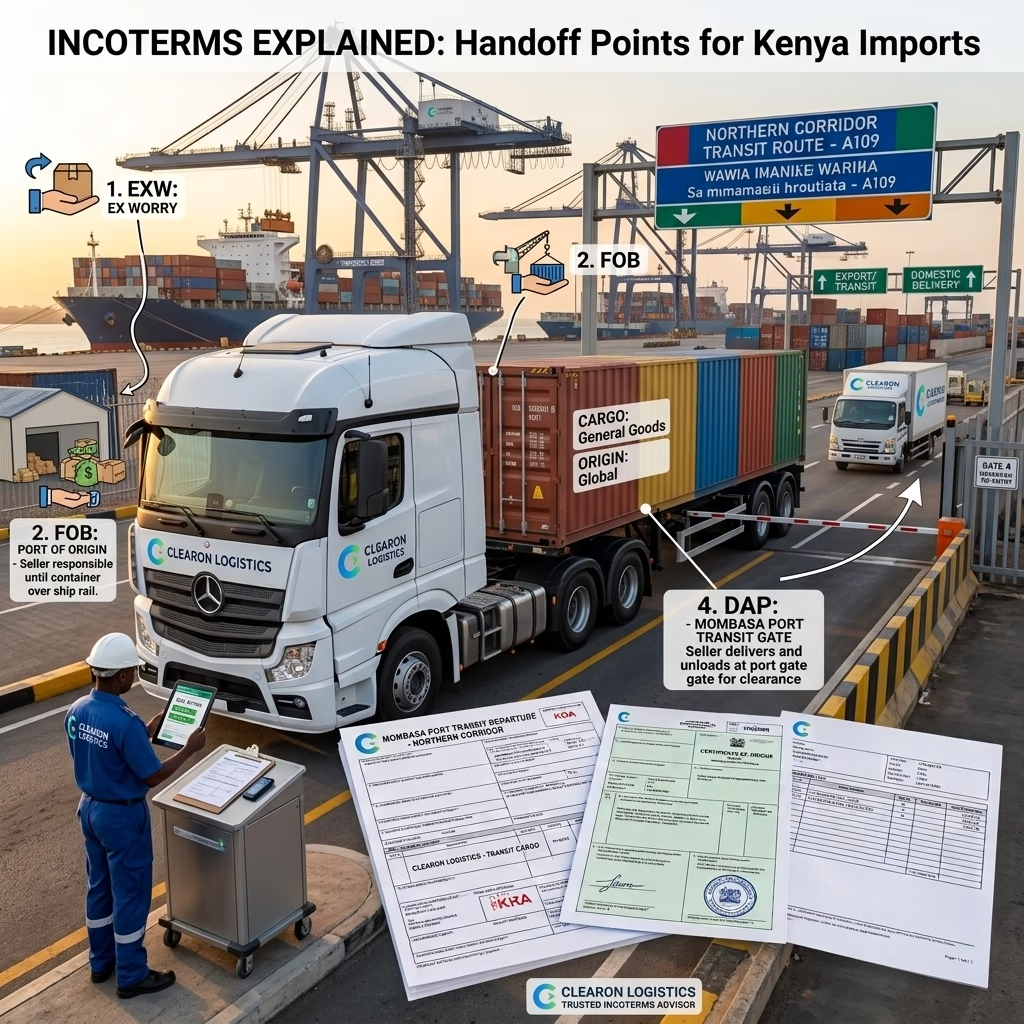
Incoterms (International Commercial Terms) are a standardised set of trade terms, published and maintained by the International Chamber of Commerce, that define exactly where the seller’s responsibility ends and the buyer’s begins — for cost, risk, and logistics arrangements. They’re not Kenya-specific; they’re used globally. What matters for a Kenyan importer is understanding which term your supplier is quoting under, because it fundamentally changes what you’re actually responsible for once goods leave the factory.
The Incoterms Most Common in Kenyan Imports
- EXW (Ex Works) — The buyer takes on almost everything: pickup from the supplier’s premises, export clearance, international freight, import clearance, and delivery. Cheapest quoted price, but the most work and risk on your side.
- FOB (Free on Board) — The seller delivers goods on board the vessel at the port of origin and handles export clearance; the buyer takes over from there, arranging international freight, insurance, and import clearance. This is the most common term for sea freight into Kenya.
- CFR (Cost and Freight) — The seller pays for freight to the destination port, but the buyer arranges insurance separately. This is the term the Shippers Council of Eastern Africa has specifically recommended since mid-2026, precisely because it keeps insurance arrangement clearly on the buyer’s side, matching Kenya’s new mandatory local marine insurance requirement.
- CIF (Cost, Insurance, and Freight) — The seller arranges freight and insurance to the destination port. This is where the double-insurance risk now lives: if your supplier’s CIF quote still includes overseas-arranged cover, you may need to separately obtain a Kenya-licensed policy anyway, effectively paying twice unless the contract is renegotiated.
- DDP (Delivered Duty Paid) — The seller handles everything, including Kenyan duty and clearance, delivering to your door. Convenient, but you have the least visibility into what you’re actually being charged for each stage.
Why Your Incoterm Choice Now Matters More Than Ever
Since local marine cargo insurance became mandatory, the Incoterm on your purchase order isn’t just a shipping-logistics detail — it directly determines whether you’re exposed to paying for insurance twice, or whether your supplier’s overseas-arranged cover is even valid for Kenyan customs clearance purposes at all. A CIF contract negotiated before July 2026, without adjustment, could mean paying your supplier for cover that Kenyan customs won’t actually accept.
The Cost Trade-Off Behind Each Term
A lower quoted price under EXW or FOB doesn’t necessarily mean a cheaper total landed cost — it just shifts more of the arranging (and often, more of the actual cost) onto you. A higher DDP quote might genuinely be more expensive, or it might just be bundling costs you’d have paid anyway, with less transparency about what each part costs. The only way to actually compare offers on an apples-to-apples basis is to work out the full landed cost under each term, not just compare the headline invoice figure.
This is exactly the calculation that’s easy to get wrong without someone checking the math on your behalf before you commit to a supplier’s terms.
How to Choose the Right Incoterm for Your Shipment
- If you want maximum cost visibility and control, FOB or CFR generally give you the clearest picture, since you’re arranging freight, insurance, and clearance directly and can shop each separately
- If you’re a first-time importer without local logistics relationships, DDP removes complexity, but ask for a full cost breakdown so you know what you’re actually paying for
- If your supplier quotes CIF, confirm explicitly whether their insurance is issued by a Kenya-licensed insurer — if not, renegotiate to CFR or budget for local cover separately
- For high-value or fragile cargo, insist on transparency around exactly who’s insuring what, and against what — a vague CIF quote is not the same as confirmed, compliant cover
Getting the Terms Right Before You Sign
Most importers only discover what their Incoterm actually committed them to once something goes wrong — a damaged shipment nobody insured, an unexpected clearance cost nobody budgeted for, a double insurance payment nobody caught. This is exactly the kind of detail worth reviewing before you finalise a purchase order, not after goods are already in transit.
At Clearon Logistics, this is part of what we check with clients before shipping begins — reviewing the Incoterm on your purchase order, flagging where it might expose you to double costs or unclear liability, and giving a transparent breakdown of what your total landed cost actually looks like under the terms you’ve agreed to.
Not sure what your supplier’s Incoterm actually commits you to? Talk to Clearon Logistics before you sign your next purchase order.
Frequently Asked Questions
Which Incoterm is cheapest for importing into Kenya? None is universally cheapest — EXW and FOB often quote lower upfront prices but shift more cost and arrangement responsibility onto you. The real comparison is total landed cost under each term, not the headline invoice figure.
Does my Incoterm affect whether I need to arrange marine insurance myself? Yes — under CFR, you arrange insurance separately (and can ensure it’s Kenya-compliant); under CIF, your supplier arranges it, which may not meet Kenya’s new local-insurer requirement without checking first.
Can I change the Incoterm after a purchase order is signed? It’s far easier to negotiate before signing. Once a contract is finalised, changing the Incoterm typically requires the supplier’s agreement and may affect pricing.
Is DDP always the easiest option for a first-time importer? It removes the most complexity, since your supplier handles freight, insurance, duty, and delivery — but it also gives you the least visibility into individual costs, so it’s worth requesting a full cost breakdown regardless.
Further Reading
- International Chamber of Commerce — Incoterms® 2020 (external, dofollow)
- Shippers Council of Eastern Africa (external, dofollow)
- Related on our blog: Marine Cargo Insurance Now Mandatory in Kenya
- Related on our blog: How Much Does Customs Clearance Cost in Kenya?
- Our service: International Freight (Air & Sea)
Leave a Reply