
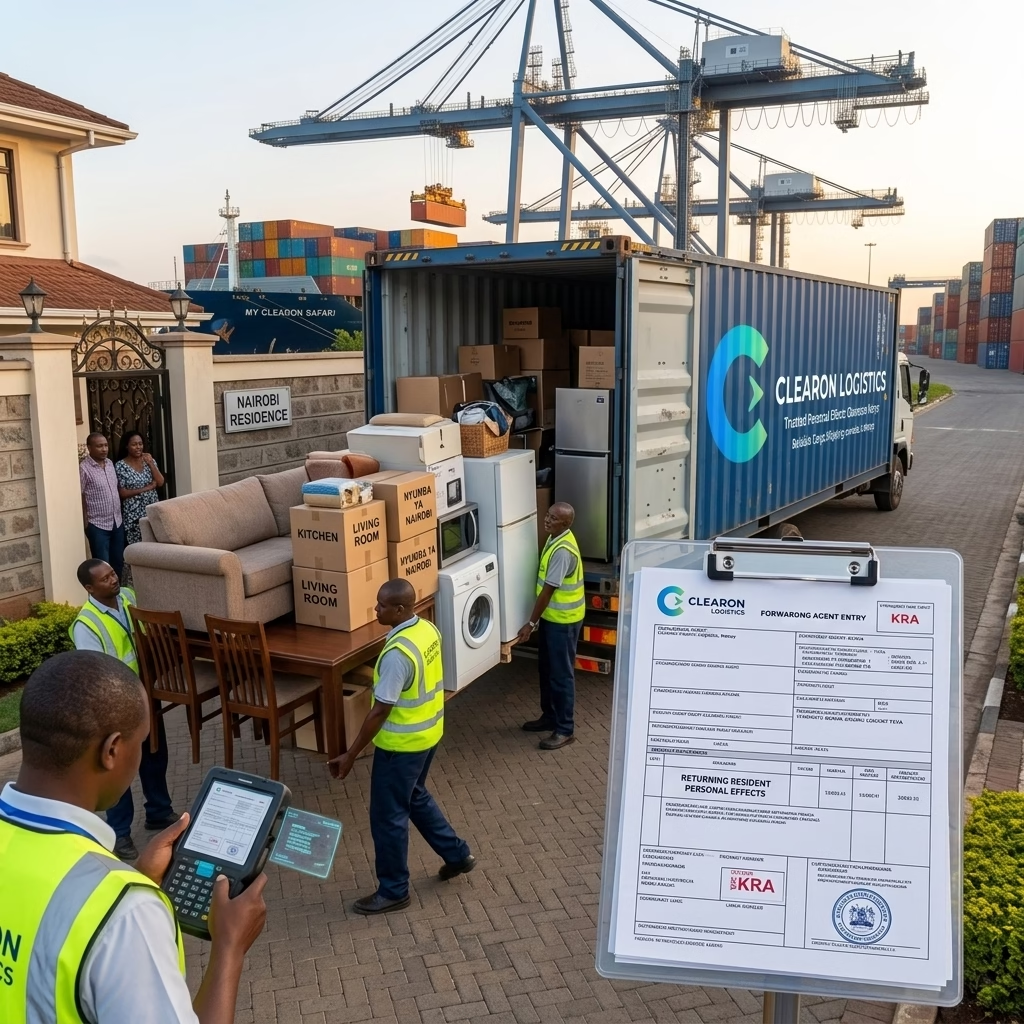
Returning resident personal effects clearance is the process that lets Kenyans moving back home bring their household goods through customs without paying duty on everything they own — provided they meet specific conditions. Moving back home after years abroad comes with a long checklist, and this question often only gets asked once a shipment is already at sea.
The good news is that Kenya’s KRA customs regime does allow returning residents to bring in personal and household effects free of duty, under specific conditions. The less good news is that the process is easy to get wrong, and getting it wrong is expensive. Here’s what the rules actually require.
Table of Contents
Returning Resident Personal Effects Clearance: Who Qualifies
To be treated as a returning resident for customs purposes, you generally need to show:
- You have lived outside Kenya continuously for a qualifying period (commonly cited as at least two years)
- You hold a valid Kenyan passport or equivalent proof of Kenyan residency status
- The goods being imported were genuinely your personal property and in your use abroad — not newly purchased for resale
- You are relocating your residence to Kenya, not making a temporary visit
KRA and your clearing agent will expect supporting evidence — proof of employment or residence abroad, travel history, and a passport showing your relocation.
What Counts as “Personal Effects and Household Goods”
The duty-free allowance is meant for items you actually used in your household abroad, not a shopping list for a new life in Kenya. Typically accepted categories include:
- Furniture and household appliances that were in genuine use
- Clothing, personal items, and books
- Kitchenware and household electronics
- One personal vehicle, if you separately meet the returning-resident vehicle conditions (age limit, RHD, ownership duration)
Items that are brand new, still in original packaging, or clearly intended for resale are the fastest way to lose your duty-free status on the whole shipment — customs officers look closely for exactly this pattern.
Documents You’ll Need Before Your Shipment Arrives
Getting your paperwork ready before your container lands saves weeks of storage charges. At minimum, expect to provide:
- Valid passport with entry/exit stamps or visa history showing time spent abroad
- A detailed packing list of everything in the shipment
- Proof of prior residence abroad (work permit, tenancy agreement, utility bills)
- Bill of Lading or Air Waybill for the shipment
- A letter or application confirming your intent to relocate permanently to Kenya
Common Mistakes That Trigger Duty Assessments
- Shipping goods separately from your own travel. If your container arrives months before or after you do, customs may treat it as a commercial import rather than a relocation shipment.
- Including new, unused, or high-value electronics bought shortly before shipping — these often get assessed at full commercial duty.
- Incomplete or vague packing lists. A generic “household items” description invites a full physical inspection, which slows everything down.
- Missing proof of the qualifying period abroad. Without clear evidence, customs defaults to treating the shipment as a standard commercial import.
Why Timing Matters
The duty-free relief is generally tied to your own relocation — meaning it’s meant to accompany your actual move, not arrive as a separate transaction on its own timeline. Coordinating your shipping date with your own travel, and briefing your clearing agent on your specific situation before the container is packed, is the single biggest factor in whether your relief application goes smoothly.
Work With a Clearing Agent Who Handles Relocations Regularly
Returning-resident clearance is a different animal from a standard commercial import — the documentation, the officer’s questions, and the evidence required are all specific to relocation cases. A clearing agent who handles this regularly will know what KRA expects to see and can flag gaps in your paperwork before your container ever reaches Mombasa.
At Clearon Logistics, we help returning residents prepare their relocation shipment documentation in advance, apply for duty relief correctly, and manage clearance from port arrival through to delivery at your new home.
Planning your move back to Kenya? Talk to Clearon Logistics before you pack — a quick consultation now can save weeks of delay later.
Further Reading
- KRA — Customs Agents Roles and importer guidance
- Kenya Trade Information Portal — official import procedures
- Related on our blog: Best Clearing Agent in Kenya: How to Choose the Right Partner
- Related on our blog: Essential Shipping and Customs Documentation in Kenya
- Our service: International Freight (Air & Sea)
Frequently Asked Questions
How long do I need to have lived abroad to qualify as a returning resident? Requirements are commonly tied to a continuous period abroad (typically cited around two years), along with evidence you genuinely resided there rather than visited. Your clearing agent can confirm current thresholds against your specific case.
Can I bring a car under this relief too? Yes, but a vehicle has its own separate conditions — ownership duration, the 8-year age rule, and RHD requirements — in addition to the general returning-resident criteria.
What happens if my goods include new items? New or unused items are more likely to be assessed for duty individually rather than covered under the general relief, so it’s best to declare them clearly and expect possible duty on those specific items.
Do I need a clearing agent for a personal shipment, or can I do it myself? You can technically handle it yourself, but returning-resident applications require specific supporting documents and officer discretion is involved — a clearing agent familiar with relocation cases significantly reduces the risk of delays or a rejected application.












Leave a Reply