
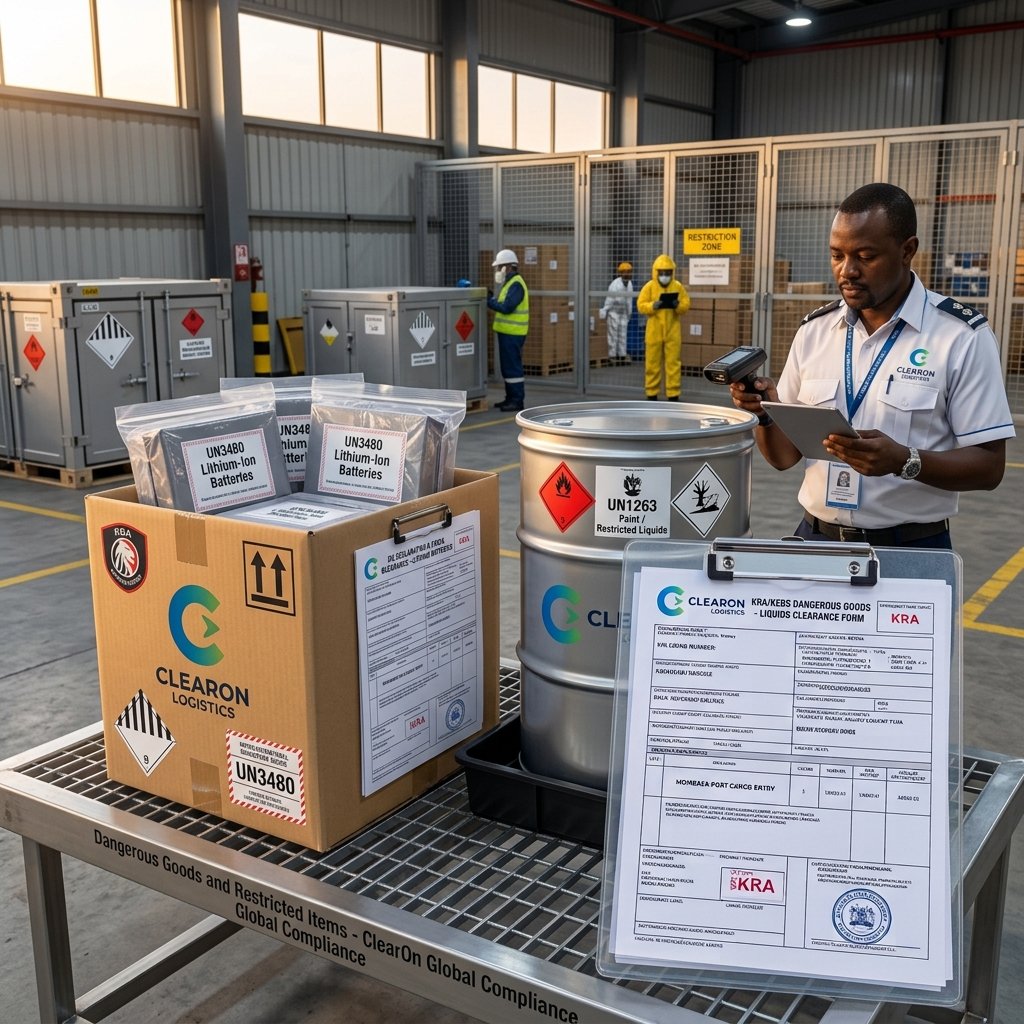
Shipping batteries, liquids and other restricted goods from China to Kenya is where many first-time importers learn that “it fits in the container” and “it can be shipped” are different things. Lithium batteries, power banks, aerosols, flammable liquids, magnets and chemicals can be dangerous goods in transport, and they often need permits or registration on the Kenyan side too. Here is how to find out what applies before you order, not when the cargo is already packed.
Table of Contents
[Image suggestion: photo of boxed lithium batteries and sealed liquid containers labelled for dangerous goods transport. Alt text: “shipping batteries and liquids from China to Kenya – dangerous goods and restricted items”]
Two Different Rules: Transport and Import
Every restricted product has to clear two separate tests. First, can the carrier lawfully carry it by sea or air, and under what packing and documentation? Second, can it lawfully enter Kenya, and does it need certificates, permits or registration? A product can pass one and fail the other, so check both before you place an order.
Lithium Batteries and Power Banks
Lithium batteries, including those packed with or inside equipment and power banks, are regulated dangerous goods in sea and air transport. Carriers typically require correct classification, packaging, marking and test documentation, and may refuse cargo that isn’t properly declared. Air freight has stricter limits than sea. Because rules are updated, confirm requirements with your forwarder before the supplier packs the goods. On the Kenyan side, batteries fall under EPR obligations, and lead-acid batteries carry particular environmental accountability; see our battery guide.
Liquids, Aerosols and Chemicals
Some liquids are ordinary cargo and only need leak-proof packing; flammable liquids, aerosols and many chemicals are dangerous goods. Chemicals can also trigger Kenyan registration requirements, with per-consignment permit fees; see our chemicals guide. Ask your supplier for a safety data sheet for every liquid, powder or chemical product before you order.
Magnets, Powders and Other Surprises
Strong magnets can interfere with aircraft instruments and need special handling by air, and some powders, gels and compressed items are restricted. If your product is unusual, send us the specification and a safety data sheet and we’ll tell you what to expect.
Goods That Need Permission in Kenya
Some products can be shipped but can’t lawfully be sold without approvals: communications equipment (type approval and distributor licence), drones (KCAA permits), CCTV and monitoring devices (PSRA licensing), cosmetics (KEBS or PPB rules) and others. Our prohibited and restricted goods guide lists what is banned or controlled.
Importing batteries, liquids or other special cargo from China? Send us the product details before you order, and we’ll tell you what can be shipped and what Kenya will require.
Frequently Asked Questions
Can lithium batteries be shipped from China to Kenya? Often yes, but they are regulated dangerous goods and need correct packing, marking and documentation, with stricter limits by air. Confirm before the supplier packs them.
Do I need a safety data sheet? Yes, for batteries, liquids, powders and chemicals. Carriers and Kenyan authorities may ask for it.
Are batteries regulated in Kenya as well? Yes. Batteries fall under EPR obligations, and some types carry additional environmental responsibilities.
What if my supplier says it will ‘just ship fine’? Verify with your forwarder. Undeclared dangerous goods can be refused, delayed or seized.
Further Reading
- Kenya Revenue Authority: Advance Cargo Declaration platform (external, dofollow)
- Kenya Bureau of Standards (KEBS) (external, dofollow)
- Related on our blog: Shipping from China to Kenya: FCL, LCL and Air Compared
- Related on our blog: Solar Equipment Import Kenya: Duty Exemptions
- Related on our blog: Importing Chemicals into Kenya
- Our service: China to Kenya Shipping Service


Leave a Reply