
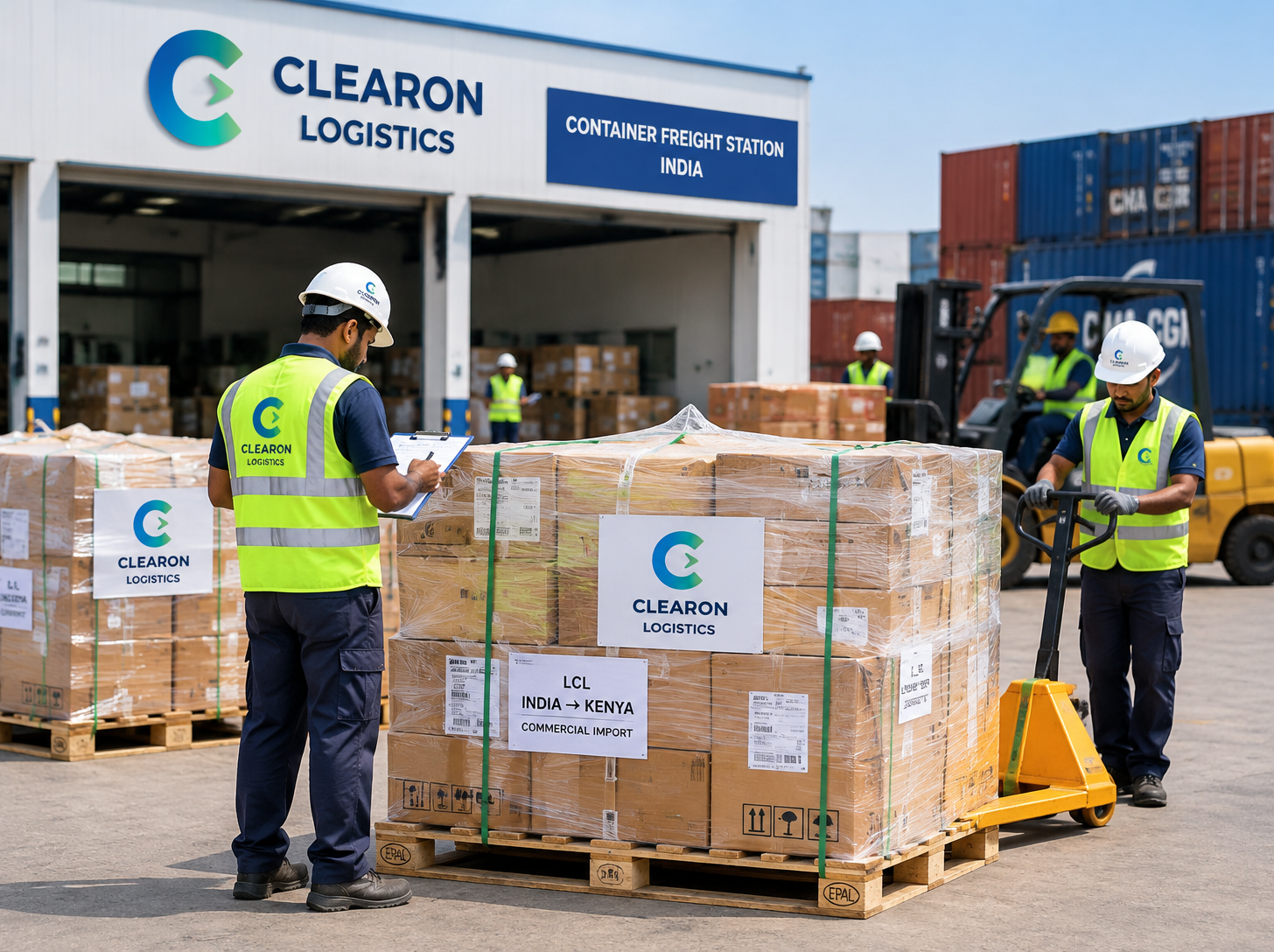
LCL shipping from India to Kenya lets you pay for the space your goods occupy instead of a whole container, which suits businesses ordering smaller or mixed volumes from Indian suppliers. It also adds steps: consolidation at an Indian port, deconsolidation at Mombasa, tighter cut-offs, and extra customs attention on consolidated cargo. We offer both LCL and FCL, so here is how LCL works and how to tell which is cheaper for you.
Table of Contents
How LCL Works on This Lane
Your cargo is delivered, or collected, to a consolidation facility near the Indian port, where it is received, measured and combined with other shippers’ goods into one container. At Mombasa the container goes to a container freight station, where each shipper’s cargo is separated for clearance. You typically receive a House Bill of Lading from the consolidator, while the carrier issues a Master Bill of Lading for the whole container.
How LCL Is Priced
LCL is usually billed per cubic metre or per tonne, whichever is greater, plus origin and destination handling charges. Declared dimensions matter: if the measured cargo exceeds what you declared, you can be re-billed. Get carton counts, dimensions and weights from your supplier and check them against the packing list.
Time: Allow for the Extra Steps
LCL is usually slower than FCL from the same origin, because cargo must wait for consolidation and then deconsolidation. It also depends on the consolidator’s cut-off dates, not your supplier’s readiness. If you buy from several Indian suppliers, each must deliver on time or the shipment waits for the next consolidation.
When Does a Full Container Become Cheaper?
There is no single break-even volume, because rates move with season and route. Compare an actual LCL quote with an actual FCL quote for your volume, including all origin and destination charges. FCL also gives more control over timing and less handling. Our FCL versus LCL guide covers the Kenyan side of the decision.
Mixed and Regulated Goods
LCL often carries mixed products, but regulated goods need their own certificates and permits, such as pharmaceutical import permits, conformity certificates and EPR registration. Plan these before you consolidate regulated and ordinary goods, and don’t let one unpermitted line hold up the whole shipment.
Documents and Kenyan Requirements
Every LCL shipment needs a Certificate of Origin, an export declaration document, accurate invoices and packing lists, and valid local marine cargo insurance. The consolidated container also needs an Advance Cargo Declaration reference before loading.
Importing smaller volumes from India? Request an LCL quote from Clearon Logistics, and we’ll compare LCL with a full container for your cargo.
Frequently Asked Questions
Is LCL from India slower than FCL? Generally yes, because cargo must be consolidated before sailing and deconsolidated on arrival.
How is LCL charged? Usually per cubic metre or tonne, whichever is greater, plus origin and destination handling charges.
Can I mix regulated and ordinary goods in LCL? You can, but regulated goods need their own certificates and permits, so plan them before consolidation.
Further Reading
- Kenya Revenue Authority: Advance Cargo Declaration platform (external, dofollow)
- Kenya Ports Authority (external, dofollow)
- Related on our blog: Shipping from India to Kenya: FCL, LCL and Air Compared
- Related on our blog: FCL Shipping from India to Kenya
- Related on our blog: LCL Shipping from China to Kenya
- Our service: China to Kenya Shipping Service




Leave a Reply