
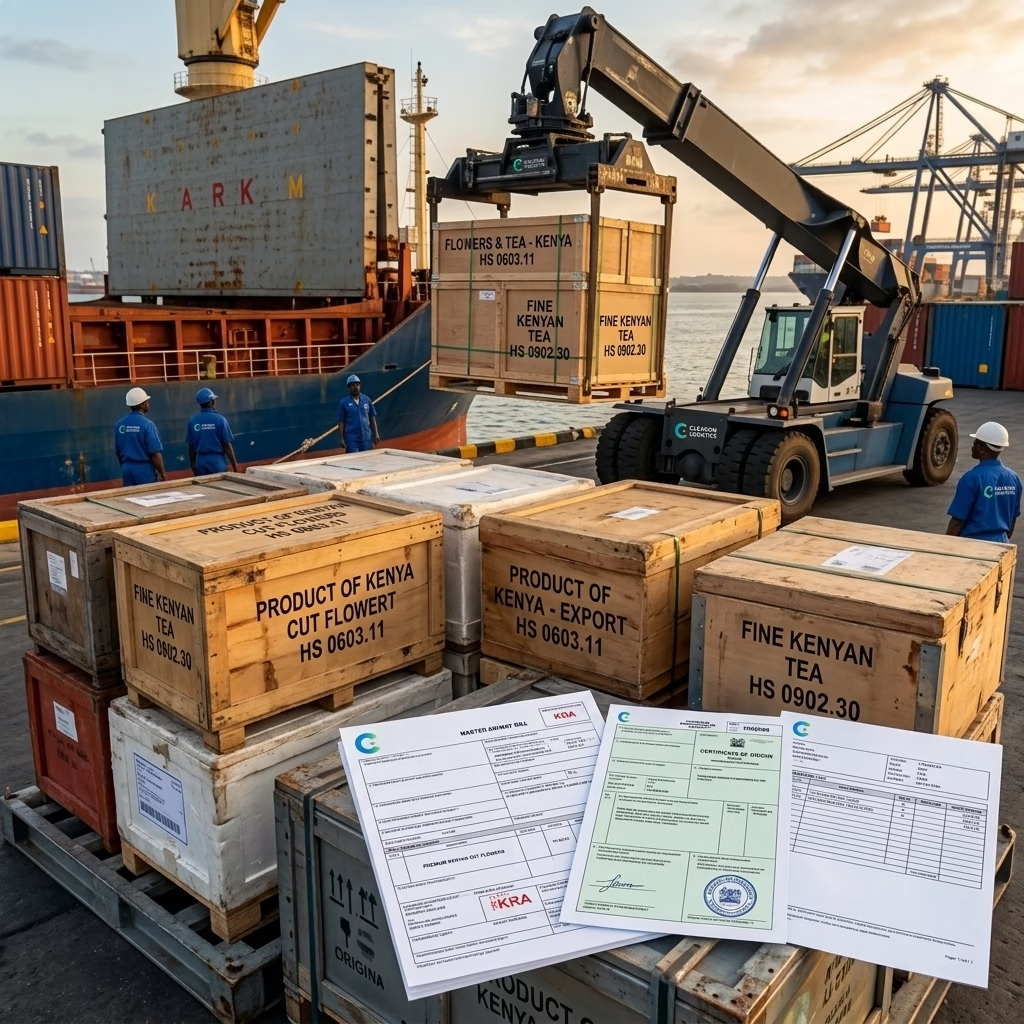
Exporting from Kenya documents requirements catch many first-time traders off guard, largely because most guides to Kenyan customs focus on importing instead. But Kenya is also a major exporter: tea, coffee, cut flowers, fresh produce, apparel, and manufactured goods move out through Mombasa Port and JKIA every day, much of it benefiting from preferential trade agreements that most exporters don’t fully take advantage of.
Table of Contents
If you’re exporting from Kenya for the first time, here’s what actually needs to be in place before your cargo can leave.
The Good News: Exporting Is Less Regulated Than Importing
Kenya’s government actively encourages exports, since they earn foreign exchange — so the documentation burden is generally lighter than what importers face. That doesn’t mean it’s document-free, but the regulatory scrutiny is different in character: less about restricting what leaves, more about certifying quality, origin, and compliance for the destination market.
Exporting from Kenya Documents: The Core Requirements
- Export Declaration (E-entry) — filed electronically through KRA’s Integrated Customs Management System (iCMS) before your goods depart
- Commercial Invoice — describing the goods, quantities, value, and buyer details
- Packing List — detailing how the shipment is packed
- Bill of Lading (sea freight) or Airway Bill (air freight) — issued by the carrier as proof of shipment
Certificate of Origin: Your Ticket to Preferential Tariffs
This is where exporters often leave money on the table. A Certificate of Origin (COO) certifies that goods were produced, manufactured, or substantially transformed in Kenya — and it’s what unlocks reduced or zero duty rates in many destination markets. Depending on where you’re shipping, you’ll need a specific type:
- COMESA Certificate — for exports to Common Market for Eastern and Southern Africa member states
- EAC Certificate of Origin — for trade within the East African Community, issued by KRA
- EUR-1 Form — for exports to the European Union
- GSP Form — for the US, Japan, Australia, and Canada under Generalised System of Preferences arrangements
- AGOA Certificate — for US-bound exports benefiting from the African Growth and Opportunity Act, issued by KRA
- Ordinary Certificate of Origin — for markets like the Middle East, India, and Central Europe, obtainable through the Kenya National Chamber of Commerce and Industry (KNCCI) or the Kenya Export Promotion and Branding Agency (KEPROBA)
Skipping this step doesn’t stop your goods from leaving Kenya — but it does mean your buyer pays full standard duty in the destination country instead of a preferential rate, which can materially affect the competitiveness of your pricing.
Product-Specific Requirements
Beyond the general documents, certain export categories need additional certification:
- Agricultural produce and cereals — a Phytosanitary Certificate from KEPHIS (Kenya Plant Health Inspectorate Service), often alongside a fumigation certificate and, in some cases, a non-GMO certificate
- Cut flowers and horticultural exports — phytosanitary compliance from KEPHIS is critical, and buyers in destination markets typically require it as standard
- Tea — an import/export permit from the Tea Board
- Coffee — a permit from the Coffee Board, alongside KEPHIS clearance
- Eggs and honey — a health certificate and permit from the Veterinary Department
- Manufactured goods for regulated markets — a KEBS quality certificate confirming the product meets the destination country’s standards
If you’re exporting a product category you haven’t shipped before, it’s worth confirming the specific certification requirement early — some of these (like phytosanitary inspection) require lead time and can’t be rushed at the last minute.
Where to Get These Certificates
- Certificates of Origin (COMESA, ordinary) — Kenya National Chamber of Commerce and Industry (KNCCI) or KEPROBA
- EAC and AGOA certificates — issued directly by KRA at stations in Nairobi, Mombasa, Kisumu, Nakuru, and Eldoret
- Phytosanitary certificates — KEPHIS, following physical inspection
- KEBS quality certificates — Kenya Bureau of Standards
Registering your company with KRA and obtaining the necessary reference numbers is typically a prerequisite before any of these certificates can be issued, so it’s worth setting this up well ahead of your first shipment rather than during it.
A Quick Pre-Export Checklist
- Confirm which destination-market trade agreement (if any) your buyer can benefit from, and identify the matching Certificate of Origin
- Check whether your product category needs a specific permit (agriculture, food, tea, coffee) and start that process early
- File your Export Declaration through iCMS before departure
- Prepare your commercial invoice, packing list, and transport document (Bill of Lading or Airway Bill)
- Confirm any destination-country import requirements with your buyer — Kenyan export compliance is only half the picture
Getting Export Documentation Right the First Time
For first-time exporters, the two most common ways shipments get delayed are missing product-specific certification (phytosanitary, veterinary, quality) and skipping the Certificate of Origin — which doesn’t block export, but does cost your buyer money they’ll notice on the next order.
At Clearon Logistics, we help exporters identify exactly which certificates and permits their specific product and destination market require, and manage documentation from declaration through to cargo departure at Mombasa Port or JKIA.
Preparing your first export shipment from Kenya? Talk to Clearon Logistics to confirm your documentation before you book freight.
Further Reading
- Kenya Export Promotion and Branding Agency (KEPROBA) — Certificates of Origin
- KEPHIS — Kenya Plant Health Inspectorate Service
- Related on our blog: Essential Shipping and Customs Documentation in Kenya
- Related on our blog: HS Codes Explained: Why They Matter for Imports and Exports
- Our service: International Freight (Air & Sea)
Frequently Asked Questions
Do I need a Certificate of Origin to export from Kenya, even for a small shipment? It’s not mandatory for your goods to physically leave Kenya, but without it your buyer will pay standard duty in the destination country instead of any available preferential rate — which affects your competitiveness.
How long does it take to get a phytosanitary certificate from KEPHIS? It requires a physical inspection of the goods, so it should be arranged with lead time before shipment — not left until the day cargo is due to depart.
Where do I get an AGOA certificate for exports to the US? AGOA certificates are issued directly by KRA at stations in Nairobi, Mombasa, Kisumu, Nakuru, and Eldoret.
Is exporting from Kenya harder than importing? Generally no — Kenya’s government actively encourages exports, so the documentation burden is typically lighter than importing, though specific product categories (agriculture, food, tea, coffee) still require dedicated certification.



Leave a Reply