
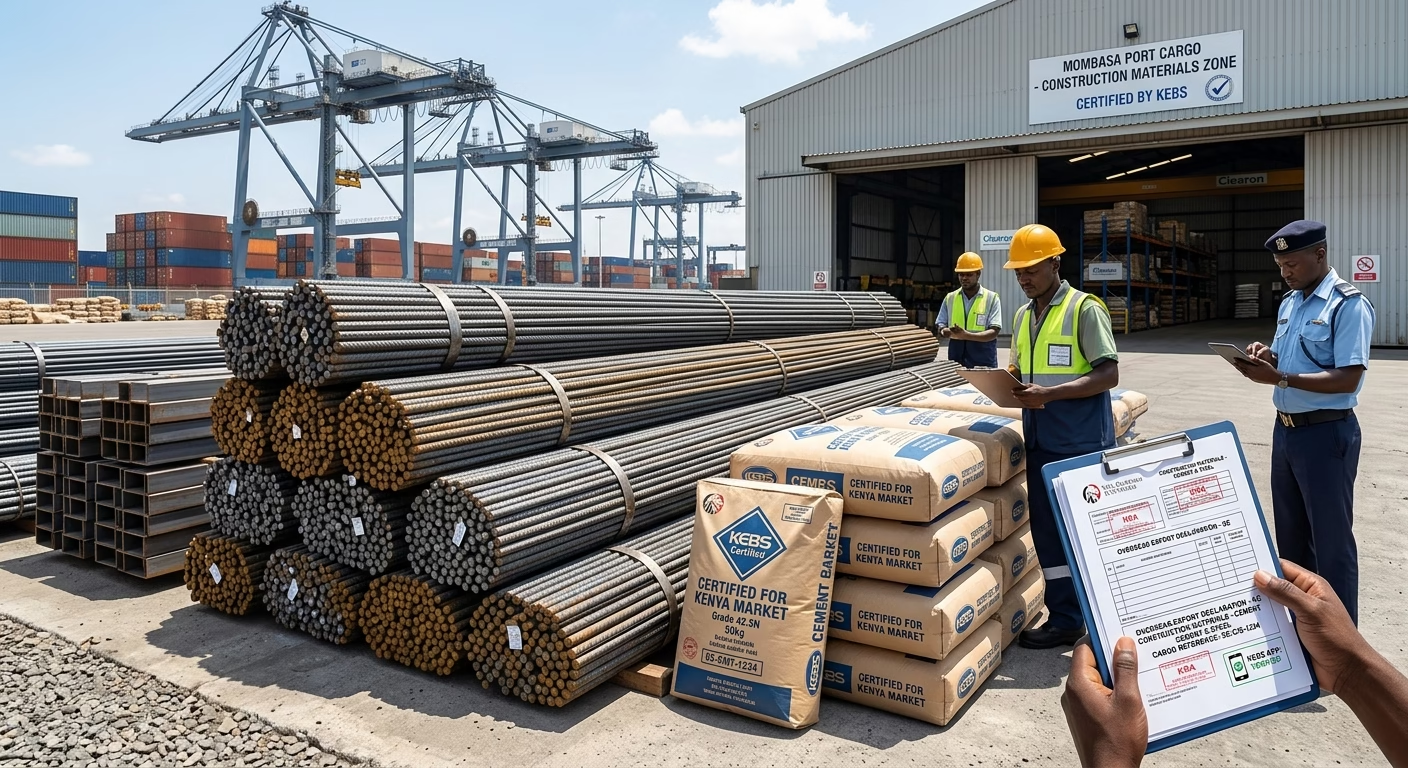
Importing construction materials into Kenya — cement, steel, roofing sheets, tiles, aggregates — moves through Mombasa Port and JKIA in enormous volumes every year, feeding a construction sector that includes everything from individual homebuilders to the government’s affordable housing programme. It’s also a category where KEBS has been tightening standards and enforcement, following well-documented, serious safety failures tied to substandard materials already in the market.
Table of Contents
Why KEBS Scrutiny in This Category Is So High
This isn’t abstract regulatory caution — it’s a response to real, documented harm. Kenya’s National Construction Authority found that roughly 10,791 buildings across the country were unsafe and unfit for habitation, and between 2009 and 2019, 86 buildings valued at over KSh 2.4 billion collapsed nationwide, with substandard cement and steel identified as a leading technical cause. In a 2022 KEBS market surveillance programme, three out of five cement products tested failed to meet required standards — a finding concentrated particularly in the common-grade cement used for ordinary residential construction, the exact category most exposed to risk if quality slips.
This history is precisely why construction materials attract some of the most rigorous standards enforcement of any import category in Kenya, and why cutting corners on compliance here carries risk well beyond a delayed shipment.
The Specific Standards That Apply
KEBS has developed and actively enforces detailed standards across the major construction material categories, including:
- Cement — KS EAS 18-1
- Steel for reinforcement of concrete — KS EAS 412-1, 2 & 3
- Structural steel for construction — KS 572
- Natural aggregates for concrete — KS 95
- Natural building stones — KS 965
- Stabilized soil blocks — KS 1070
- Concrete masonry units — KS 625
- Concrete — KS 594
- Expanded polystyrene (EPS) products — KS 2620
- Clay roofing tiles — KS 431
- Concrete roofing tiles — KS 444
- Burnt clay bricks — KS 300
Each standard specifies precise technical requirements — chemical composition, compressive strength, dimensional tolerances — that imported materials must meet before they can legally be sold or used in Kenyan construction.
The Marks You Need to See
For imported construction materials specifically, the relevant certification is the Import Standardization Mark (ISM) — the KEBS mark awarded to imported products that comply with the applicable Kenyan standard. This sits alongside the Standardization Mark and Diamond Mark of Quality used for locally manufactured products. As an importer, the ISM is what confirms your specific consignment has been verified against the relevant standard — not just that the general product category is regulated.
What Happens to Non-Compliant Materials
KEBS conducts both scheduled and random spot-check market surveillance, collecting samples from retail outlets, construction sites, and manufacturing or import facilities to verify ongoing compliance. Products that fail to meet the approved standard are removed from the market for destruction — a significant loss for an importer who has already paid for, shipped, and cleared a consignment, only to have it pulled after the fact for a quality failure that could have been caught before shipping.
The Pre-Shipment Inspection Step
Like many other regulated categories, construction materials generally fall under Kenya’s Pre-Export Verification of Conformity (PVoC) programme, requiring inspection and certification by a KEBS-appointed agent in the country of export before the goods ship. Arriving without a valid Certificate of Conformity typically means destination inspection instead — adding cost, delay, and risk that a properly arranged pre-shipment certificate avoids.
Practical Steps Before You Import
- Identify the exact KEBS standard applicable to your specific material before finalising a supplier — cement, steel, and aggregates each have distinct, detailed technical specifications, and a supplier’s general assurance of “meeting international standards” isn’t the same as meeting the specific Kenyan standard
- Confirm your supplier can produce test results or certification aligned with the relevant KS or KS EAS standard, not just a generic quality certificate
- Arrange PVoC inspection before shipment, rather than risking a more costly and time-consuming destination inspection
- Be especially cautious with common-grade materials like standard residential cement, since this is precisely the segment KEBS surveillance has found the highest rate of non-compliance in
- Factor compliance verification into your timeline, not just your budget — a shipment that arrives without proper certification can face inspection delays measured in weeks, not days
Why This Category Rewards Careful Sourcing
Construction materials sit at an unusual intersection: high volume, price-sensitive sourcing decisions, and genuinely serious safety consequences if quality standards aren’t met. An importer chasing the lowest landed cost without verifying standards compliance is taking on a risk that extends well past their own business — into the safety of whatever gets built with those materials.
At Clearon Logistics, we help construction material importers confirm the correct KEBS standard applies to their specific product before committing to a supplier, coordinate PVoC inspection ahead of shipment, and give a transparent breakdown of what compliant sourcing actually costs — so quality isn’t the variable that gets quietly compromised to hit a price target.
Importing cement, steel, or other construction materials into Kenya? Talk to Clearon Logistics to confirm your supplier meets the applicable KEBS standard before you order.
Frequently Asked Questions
What’s the Import Standardization Mark and why does it matter? It’s the KEBS mark specifically awarded to imported products verified against the applicable Kenyan standard — for construction materials, it’s the practical confirmation that your specific consignment has been checked, not just that the category is regulated.
Can non-compliant construction materials be cleared and sold if they’re already in Kenya? No — KEBS market surveillance can pull non-compliant products even after they’ve reached the market, resulting in destruction of the goods, which is a significant loss for an importer if it happens after clearance and sale.
Which construction material category has had the most documented quality problems in Kenya? Common-grade residential cement (32.5R) has shown the highest failure rate in KEBS surveillance testing, making it a category worth particular diligence on supplier verification.
Do all construction materials need pre-shipment inspection before arriving in Kenya? Most regulated construction materials fall under the PVoC programme requiring pre-shipment inspection, though the exact requirement depends on the specific product category — confirming this for your specific material before shipping avoids a more costly destination inspection.
Further Reading
- Kenya Bureau of Standards (KEBS) (external, dofollow)
- National Construction Authority (NCA) Kenya (external, dofollow)
- Related on our blog: What Happens If You Ship Goods to Kenya Without a Certificate of Conformity?
- Related on our blog: Prohibited and Restricted Goods Kenya: The Essential 2026 Import Checklist
- Our service: Clearing and Forwarding Services in Kenya









Leave a Reply