
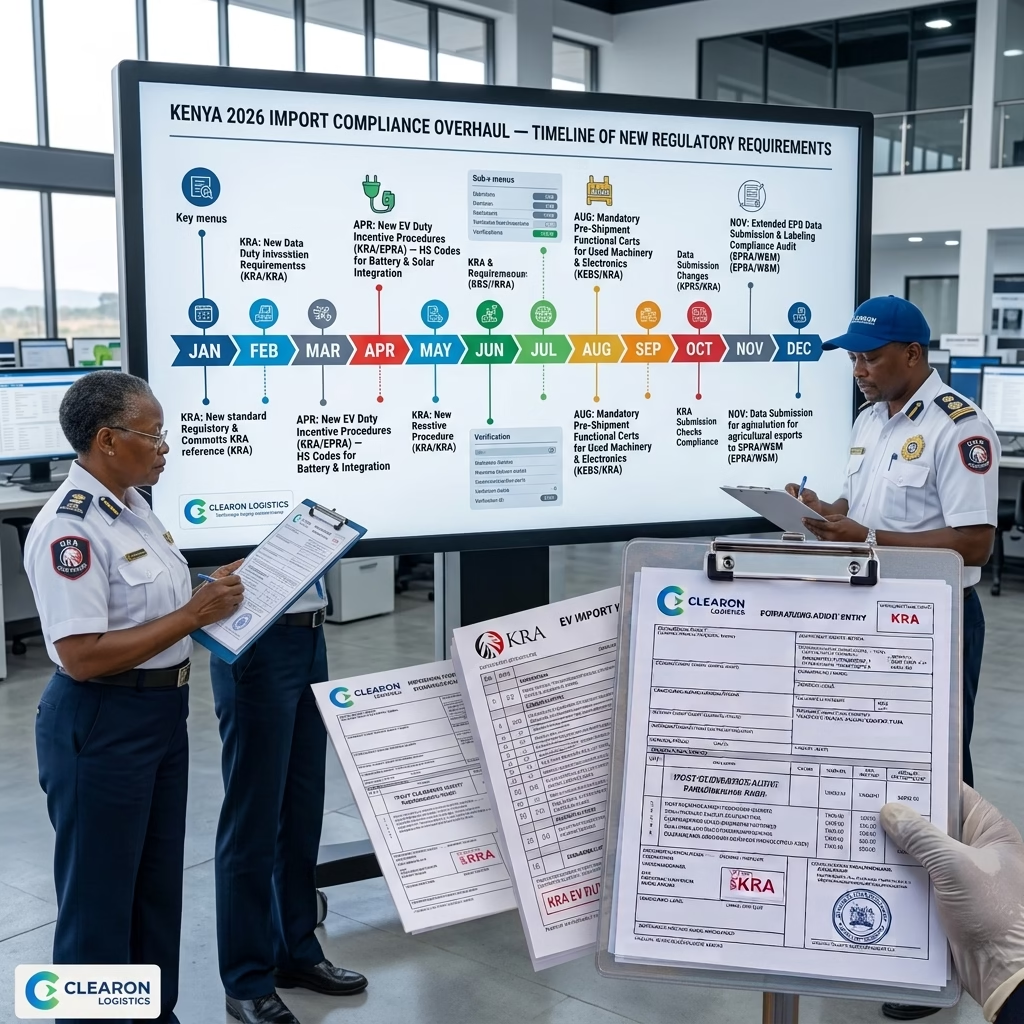
Kenya’s 2026 import compliance overhaul isn’t one single law — it’s a wave of separate, overlapping changes that have landed on importers within the same twelve months, each from a different regulator, each with its own effective date, and each easy to miss if you’re not tracking all of them at once. If you haven’t shipped into Kenya since early 2026, or you’re advising clients on compliance, this is the single reference worth bookmarking: everything that’s changed, in one place, with links to the full detail on each.
Table of Contents
Documentation Requirements That Changed
- Certificate of Origin — mandatory since 1 October 2025. Every import into Kenya now requires a COO, not just shipments claiming a preferential tariff rate. Full details here.
- Export declaration document — Section 23B, effective 1 September 2026. A new Tax Procedures Act requirement obliging importers to obtain, retain, and produce on request proof that goods were lawfully exported from the origin country — distinct from the Certificate of Origin. Full details here.
- Advance Cargo Declaration — full enforcement from 1 September 2026. Containerised sea cargo now needs a validated ACD Reference Code before loading at origin, or carriers can refuse to load it entirely. Full details here.
Insurance and Financial Requirements
- Mandatory local marine cargo insurance — effective 1 July 2026. Cover for commercial imports must now come from a Kenya-licensed insurer; foreign-arranged cover no longer satisfies clearance requirements. Full details here.
- Shifting cargo valuation benchmarks for consolidated cargo. KRA’s move toward transaction-value-based assessment for consolidated shipments has seen the applicable benchmark change more than once through mid-to-late 2026. Full details here.
Port and Logistics Process Changes
- Mandatory Container Freight Station nomination — since 10 December 2025. KPA stopped clearing domestic containerised cargo directly at Mombasa Port; un-nominated cargo now gets auto-allocated to a CFS. Full details here.
- Transit cargo routing changes. Cargo destined for Uganda, Rwanda, South Sudan, and the DRC is now routed through the Naivasha Inland Container Depot as part of ongoing port decongestion efforts. Full details here.
Sector-Specific Licensing Changes
- Communications Equipment Distributor Licence — effective 21 July 2026. Importers and wholesalers of phones, routers, and other telecommunications equipment now need this licence before importing, on top of existing type approval requirements. Full details here.
- EPR Import Certificate — mandatory since 14 March 2026. Extended Producer Responsibility compliance now applies broadly across packaging materials, batteries, chemicals, and electronics, not just narrow electronics categories. Full details here.
Environmental and Compliance Changes
- Proposed 12-year age limit on used electronics. NEMA has been developing regulations that would restrict ageing electronics imports, modelled on the vehicle 8-year rule — worth confirming current implementation status given this was still in draft form as of the most recent detailed reporting available. Full details here.
- AGOA extended through 31 December 2028. Not a new compliance burden, but a significant trade policy change affecting exporters, particularly in textiles and apparel. Full details here.
Why So Much Changed in One Year
There’s a common thread running through nearly all of these changes, even though they come from different regulators and different pieces of legislation: verification. KRA, KPA, NEMA, and the Communications Authority have all, independently, moved toward requiring more upfront proof — of origin, of lawful export, of insurance, of licensing — before goods are allowed to move, rather than relying on post-entry checks and audits alone. Whether this reflects a coordinated policy direction or simply several agencies pursuing similar goals in parallel, the practical effect for importers is the same: more documentation, earlier in the process, with less room to sort it out after the fact.
How to Actually Stay Current
Given how many of these changes have landed within months of each other, and how several were still evolving even as this piece was written, a few practical habits matter more in 2026 than in a calmer regulatory year:
- Don’t rely on documentation from your last shipment as a template for your next one — confirm current requirements each time, particularly if it’s been more than a few months
- Check both the general requirements and anything sector-specific to your goods — a shipment can be fully compliant on standard customs documentation while still missing a category-specific requirement like EPR or a CED Licence
- Build in lead time for anything requiring origin-country coordination — the ACD, the export declaration document, and the Certificate of Origin all need to be sorted before or at the point of shipping, not after arrival
- Treat “draft” or “proposed” regulations as a signal to watch closely, not to ignore — several of 2026’s biggest changes moved from proposal to enforcement faster than historical norms would suggest
Making This Manageable
No single importer can realistically track every regulatory notice from every relevant Kenyan agency in real time — that’s not a reasonable expectation, and it’s exactly why this kind of tracking is worth outsourcing to a clearing partner whose job is to stay current on your behalf.
At Clearon Logistics, monitoring this kind of fast-moving regulatory landscape is a core part of how we work with clients — confirming what’s actually current before a shipment ships, not assuming last year’s, or even last quarter’s, requirements still hold. We’ll keep this page and the linked articles updated as Kenya’s compliance landscape continues to evolve.
Not sure your import process reflects Kenya’s current requirements? Talk to Clearon Logistics for a compliance check before your next shipment.
Frequently Asked Questions
Are all of these changes part of the Finance Act 2026? No — while the export declaration document requirement (Section 23B) does stem from the Finance Act 2026, others come from separate legal instruments: KRA administrative directives, the Insurance Act, NEMA regulations, and Communications Authority licensing rules among them. They’ve simply landed within the same general period.
Do all of these changes apply to every importer? No — some (like the Certificate of Origin and export declaration document) apply broadly to nearly all imports, while others (like the CED Licence or EPR certificate) are sector- or product-specific. Confirming which apply to your specific goods is essential.
Is this list complete, or could more changes be coming? Given how much has changed within a single year already, treating this as a snapshot rather than a permanently complete list is the safer approach — checking current status before each shipment remains good practice regardless.
Where can I get help confirming which of these apply to my business? A clearing agent who actively tracks these changes, like Clearon Logistics, can confirm which requirements apply to your specific goods and origin country before you ship — this is exactly the kind of check worth doing proactively rather than discovering a gap at clearance.
Further Reading
- Kenya Revenue Authority — News and Public Notices (external, dofollow)
- Kenya Ports Authority — Official Notices (external, dofollow)
- Related on our blog: Customs Clearance Mistakes Kenya: 8 Costly Errors Importers Must Avoid
- Related on our blog: First-Time Importer in Kenya: The 6 Steps Before Your First Shipment
- Our service: Clearing and Forwarding Services in Kenya












Leave a Reply